
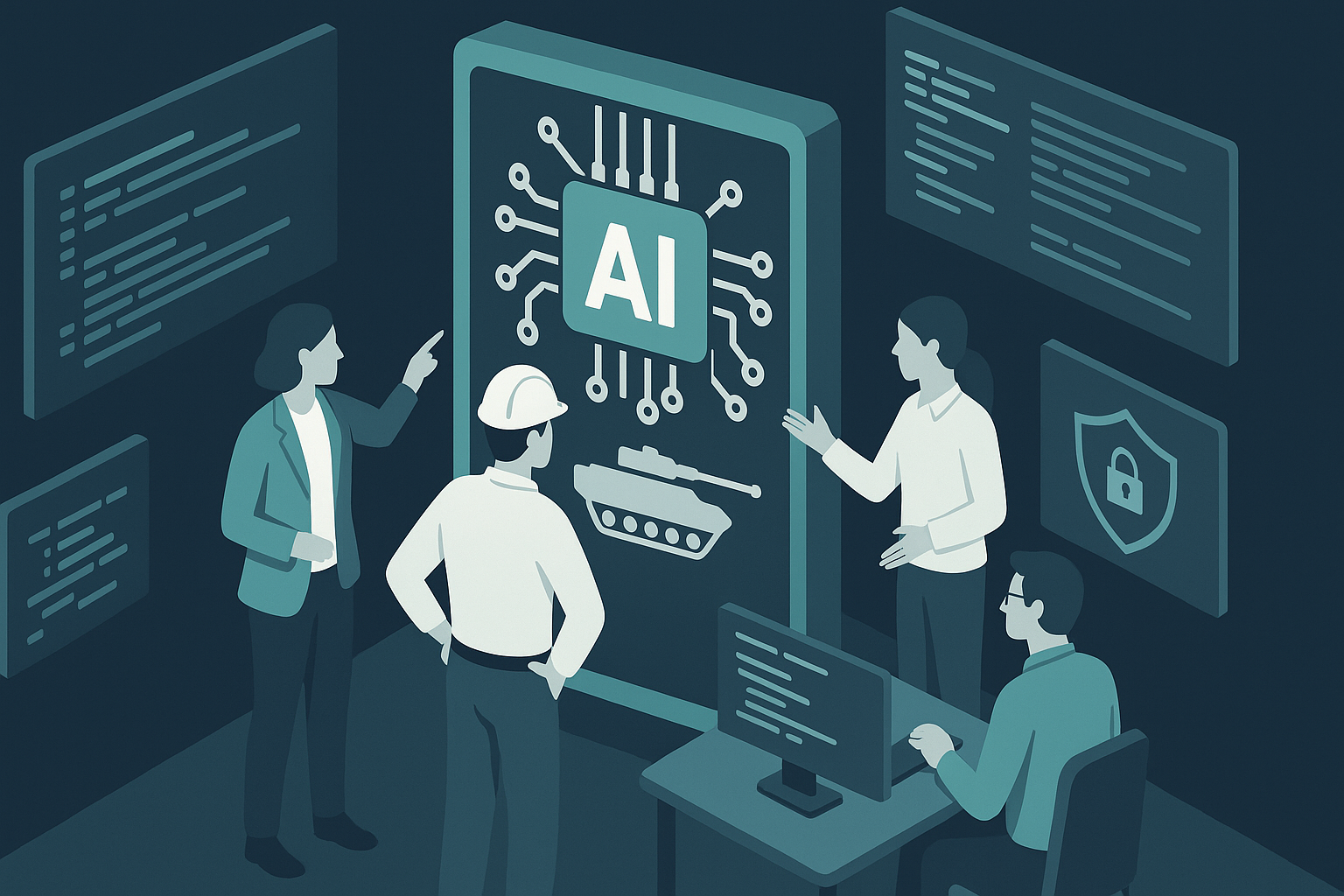

Recent initiatives in AI adoption across various sectors signal a significant shift in how software systems are built, secured, and operated. The US Department of War’s ‘War Force’ program, aimed at embedding top engineers in military operations, illustrates a growing trend of integrating AI into critical infrastructure. Simultaneously, enterprises are seeking to operationalize AI at scale, as seen with Magna AI’s MagnaVERSE™ platform, which serves as an intelligence layer for businesses. Furthermore, partnerships like that of Gravitee and Lexington Soft highlight the need for robust API management and governance in an increasingly automated world.
What is happening
The convergence of AI technologies with traditional software systems is accelerating. The War Force initiative exemplifies a focus on integrating AI into the military’s operational fabric, emphasizing the need for engineers who can navigate both the technical and strategic complexities of modern warfare. This is not merely about deploying AI; it requires a comprehensive understanding of infrastructure, security, and the operational context. Similarly, Magna AI’s MagnaVERSE™ aims to provide a framework for enterprises to leverage AI effectively, focusing on scalability and governance. As organizations increasingly rely on AI, the significance of API management and governance becomes paramount, especially with partnerships like that of Gravitee and Lexington Soft.
Why it matters
This shift presents several engineering implications. First, it necessitates a reevaluation of software architectures. As AI becomes embedded in operational systems, engineers must consider how AI models interact with existing services and data pipelines. The requirement for secure and scalable implementations becomes more pronounced, especially in sensitive contexts like military applications. Engineers must adopt a mindset that prioritizes not only performance but also security and compliance within AI-driven frameworks.
Second, the operationalization of AI introduces new failure modes. It is crucial to understand the preconditions that lead to automation failures. As seen in various sectors, poorly integrated AI can lead to catastrophic failures. Engineers must develop a robust understanding of the dependencies between AI systems and their operational environments. This means expanding testing and validation strategies to encompass both AI models and the systems they interact with.
Third, governance and compliance take on new dimensions. As AI systems proliferate, the need for structured governance frameworks becomes essential. The partnership between Gravitee and Lexington Soft illustrates a proactive approach to API management, ensuring that AI integrations are not only efficient but also secure and compliant with regulations. Engineers should advocate for governance policies that address the unique challenges posed by AI, particularly regarding data privacy and security.
Author’s Position
Practitioners must adapt their engineering practices to this evolving landscape. This involves adopting a holistic view of AI integration, emphasizing secure and scalable architectures that can withstand operational pressures. Engineers should prioritize understanding the interactions between AI models and existing systems, ensuring that potential failure modes are identified and mitigated early in the development lifecycle.
Additionally, fostering a culture of governance within engineering teams is essential. This includes implementing rigorous API management strategies and ensuring compliance with legal and ethical standards. By doing so, engineers can not only safeguard their systems but also enhance the reliability and trustworthiness of AI implementations across sectors.
References
- From fraud prevention to software governance: Research presented at DoSCI 2026 and ComSIA 2026 addresses key fintech challenges
- New War Force: US Department of War Launches AI Recruitment Drive to Build Future-Ready Military
- Magna AI unveils MagnaVERSE™ at Global AI Show to help enterprises operationalize AI at scale
- Gravitee and Lexington Soft Announce Strategic Partnership to Advance API Management and AI Governance Across North America and India
Perspectives

The military’s push for AI integration isn’t about innovation; it’s a reckless race driven by a dangerous incentive structure that prioritizes speed over safety. Engineers are being forced into a chaotic landscape where the very fabric of governance, still tied to outdated protocols, can’t keep up with the breakneck pace of technological adoption. This creates a breeding ground for catastrophic failures, where the costs are borne not by the decision-makers, but by those on the front lines and the unsuspecting public. Ultimately, without a serious reevaluation of these incentives, we’re bound to witness not just technical flaws but the very erosion of accountability that AI’s deployment demands.

The integration of AI into military infrastructure is destined to replicate the catastrophic oversights we witnessed with the telegraph, the automobile, and the atomic bomb—namely, that innovation without rigorous institutional oversight invites disaster. Engineers are now tasked with navigating a minefield of failure modes that could lead to catastrophic consequences, yet they seem blissfully unaware of history’s harsh lessons. Instead of learning from the past, they prefer a flashy sprint towards presumed efficiency—ignoring the looming governance challenges and power concentrations that come with AI. The stakes are too high to pretend this time is different; without a strong regulatory framework, we’re on a fast track to repeat history’s most perilous mistakes.

The military’s rush to integrate AI into its infrastructure reveals a harrowing truth: those shaping our technological future are far removed from the communities that will bear the brunt of its failures. Engineers are suddenly not just problem-solvers but unwitting participants in a high-stakes game where “adaptation” looks suspiciously like “throwing people under the bus.” The governance challenges in AI will inevitably amplify, but let’s pretend for a moment that those at the top really care about the folks who’ll be cleaning up the mess. Spoiler alert: they don’t, and they won’t—because when it comes to AI, the gains will go to a select few, while the risks are dumped on everyone else, who have zero bargaining power.

The integration of AI into military infrastructure is not merely an enhancement; it signifies the adoption of a new operational paradigm that will reshape software engineering as we know it. Engineers fixated on traditional failure modes will find themselves unprepared for the complexities introduced by adaptive algorithms that learn and evolve in real-time. The governance challenges presented by AI-driven systems demand a level of agility and foresight that many organizations struggle to muster, yet those who adapt will not only survive but thrive in this landscape. As AI capability continues to scale, the military’s push is a clear indicator of what’s coming: a rapid approach to AGI that will upend existing frameworks and necessitate an entirely new way of thinking about system design and resilience.