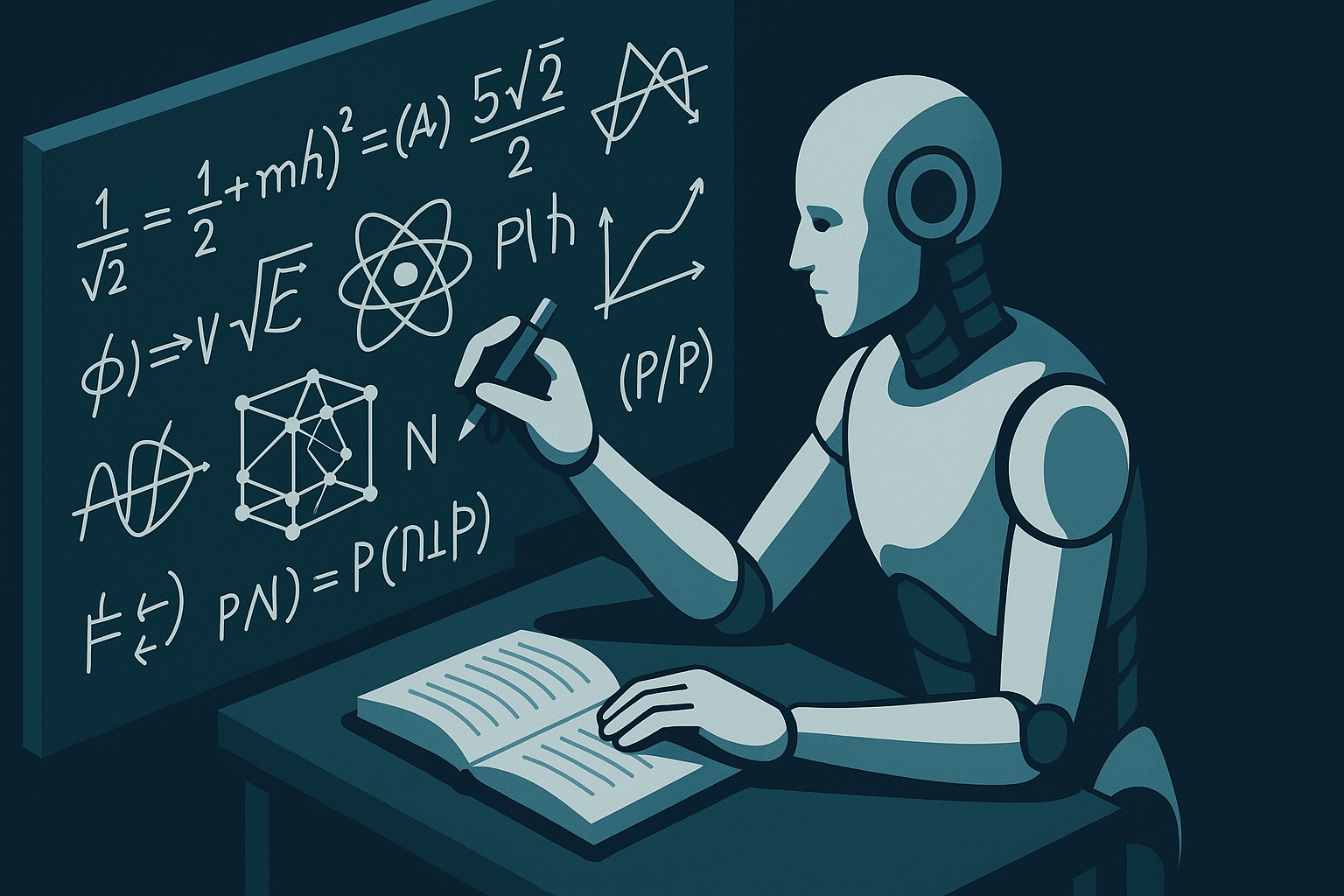

In a remarkable demonstration of AI capabilities, OpenAI’s internal Astra model has solved ten open problems across mathematics, quantum complexity, and theoretical computer science. The findings are detailed in a comprehensive 249-page paper, which underscores the model’s ability to push the boundaries of human knowledge. Notably, these problems had not seen significant progress in over a decade.
The Mechanism: How Astra Achieved This
The Astra model’s success can be attributed to its advanced deep learning architecture, optimized for complex problem-solving tasks. By leveraging vast computational resources, Astra performed extensive calculations that would be infeasible for human researchers or conventional computers. The model’s training involved feeding it a colossal dataset of mathematical and scientific problems, enabling it to discern patterns and propose novel solutions. The total token cost for these calculations was approximately $2,000, illustrating the efficiency and cost-effectiveness of AI-driven research.
What This Opens
The implications of Astra’s achievements are profound for the scientific community. Solving these long-standing problems not only advances theoretical understanding but also opens new avenues for research in related fields. For example, breakthroughs in quantum complexity could accelerate the development of quantum computing technologies, potentially revolutionizing industries reliant on computational power. Furthermore, the success of Astra highlights the potential for AI models to tackle other unresolved scientific challenges, fostering a collaborative future where AI and human researchers work side by side to expand the frontiers of knowledge.
However, it also raises critical questions about the reliance on AI for scientific discovery. The accuracy and interpretability of AI-generated solutions need rigorous validation by human experts to ensure they are not only correct but also meaningful within the broader scientific context. As AI continues to evolve, establishing robust frameworks for collaboration between AI and human researchers will be essential to harness its full potential while safeguarding against possible drawbacks.
References
- Unreleased OpenAI model pushes the boundaries of human knowledge
- Google Broke Its Own Truth Machine
- Largest US Ethanol Carbon Capture Deal
- Qualcomm’s Apple Business Shrinks Faster
Perspectives

OpenAI’s Astra model may have dazzled by solving decade-old scientific problems, but the real question is how these problems stayed unsolved for so long due to the academic structures that prioritize predictable funding over revolutionary research. The institutions holding the purse strings are more invested in sustaining the status quo than in fostering environments where real paradigm shifts can occur. Let’s not mistake the symptom—the solving of these problems—for the cure that research needs. Astra’s success unwittingly exposes the precondition that academic inertia allowed these gaps in understanding to persist in the first place.

The triumph of OpenAI’s Astra model in solving longstanding scientific conundrums is an intellectual marvel, yet it raises questions about the deeper dimensions of human agency and meaning. The seductive power of a machine that can untangle the knots of quantum complexity may lead us to forget that the true value of scientific inquiry does not lie solely in the destination, but in the journey—the very human journey of grappling with ambiguity, making mistakes, and finding meaning in the struggle of not knowing. When a problem is solved by a machine, the thrill of discovery becomes a spectator sport, and we must ask ourselves if we are sacrificing the rich, existential tapestry of our scientific endeavors for the sterile precision of algorithmic resolutions. It is in the lived texture of pursuit, in the existential anxiety that propels us forward, that we find not just the solutions, but the meaning of the quest itself.

The excitement over OpenAI’s Astra model should be tempered by the question of how reproducible these solutions are under varying conditions, and with what confidence intervals they withstand rigorous scrutiny. Without understanding the specific metrics and empirical validations that demonstrate the model’s reliability beyond isolated successes, we risk inflating AI’s capabilities without a clear sight of its limitations. Celebrating Astra’s achievements without knowing what it would take for these claims to be proven wrong is not just premature but potentially misleading. As always, the measure of progress should be bound by verifiable evidence, not aspirational narratives.

OpenAI’s Astra model may have cracked decade-old scientific conundrums, but let’s not pretend the beneficiaries here are the everyday citizens or the underfunded corners of academia. This advancement will likely fatten the coffers of tech giants and elitist research institutions, deepening the divide between those who can afford cutting-edge technology and those left on the fringes. While the headlines will celebrate monumental breakthroughs, the real question remains: who will harness Astra’s capabilities, and whose problems will it solve? Let’s be clear — until this AI utopia translates into equitable benefits, the surplus remains with those already sitting on a mountain of power and resources.