

Your daily briefing on AI, technology, economics, and society — from q52.ai.
Industry & Economics

AI’s Role in Intensifying Urban Inequality and Labor Displacement
What’s happening: The AI boom in San Francisco is driving up housing demand, resulting in soaring rents and home prices that are pushing out even high-earning tech workers. Companies like OpenAI and Anthropic are concentrating wealth, exacerbating urban inequality while AI-driven automation is displacing entry-level jobs in vulnerable sectors like call centers and software publishing. This dual effect creates a housing crisis and limits job opportunities for new entrants to the workforce.
Why it matters: As AI technology continues to evolve, its economic influence is leading to significant social and economic disparities. The rising housing costs threaten not just lower-income residents but also disrupt the lives of tech employees who cannot compete with wealthier AI professionals. Additionally, the displacement of entry-level jobs calls for urgent policy interventions to ensure that the benefits of AI are more equitably distributed across society, preventing a widening gap between the privileged and the rest.
Our take: The unchecked growth of AI is creating a precarious situation where societal cohesion is at risk. Without immediate action to address housing shortages and job displacement, the promise of AI could lead to a more divided society, where only a select few reap the rewards of technological advancement.
Tech & Engineering
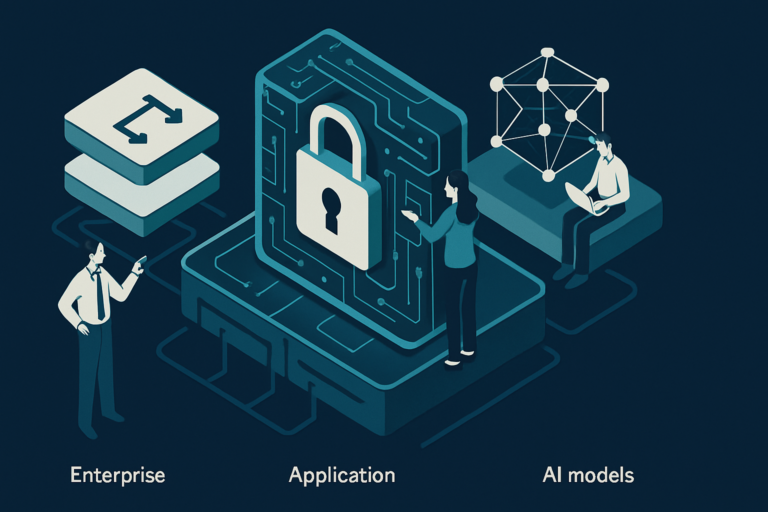
The Unseen Layers: Engineering Trust in AI Applications
What’s happening: AI applications are evolving, shifting focus from model capabilities to the application layer, which now serves as the main source of differentiation and value. Industry leaders emphasize that integrating AI into existing workflows and enhancing domain-specific interfaces is crucial. Recent developments, such as Meta AI’s macOS app, illustrate this trend, while vulnerabilities in products like Microsoft Copilot highlight the need for secure application design.
Why it matters: This shift necessitates a broader engineering focus beyond model performance to include the reliability and security of application interfaces. As the application layer becomes the critical interaction point for users, ensuring robust data integration and management is essential, especially in light of vulnerabilities that can compromise sensitive enterprise data. Additionally, the demand for specialized hardware to optimize performance and security in AI applications signals a significant transformation in how these systems are built and managed.
Our take: The engineering community must prioritize the robustness of AI application layers to build trust and security. As enterprises increasingly adopt AI, a strong emphasis on security features and dedicated infrastructure is essential to mitigate risks and support ethical deployment.
Sciences
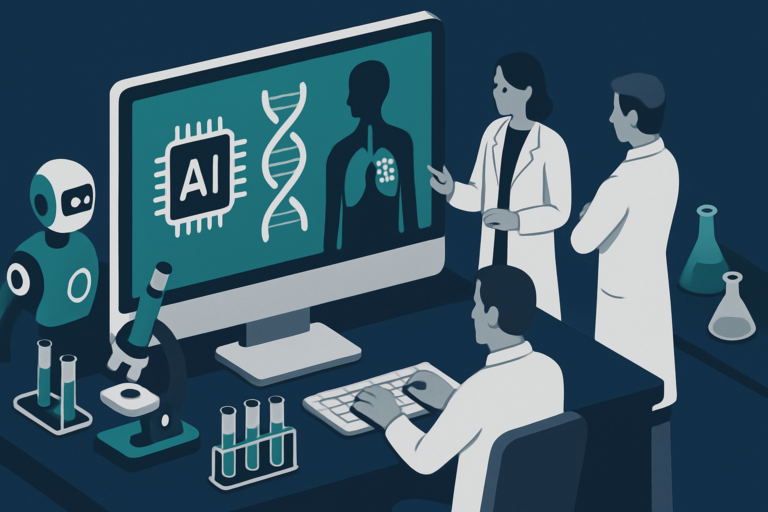
AI-Driven Personalized Cancer Vaccines: New Frontiers in Oncology
What’s happening: Merck and Moderna have announced promising results from a trial of intismeran autogene, a personalized mRNA cancer vaccine designed using AI. Tested on 1,000 melanoma patients, the vaccine reduced cancer recurrence by 50% and spread by 59%, without introducing new side effects. The innovative use of AI allows for the analysis of tumor DNA to tailor vaccines to individual patient profiles, marking a significant advancement in precision oncology.
Why it matters: This development could revolutionize cancer treatment, especially for cancers with high mutational burdens like melanoma. By shifting the focus from broad-spectrum therapies to personalized medicine driven by AI diagnostics, the pharmaceutical industry may see a new era of treatment that enhances efficacy and minimizes side effects, potentially improving patient outcomes significantly over the next decade.
Our take: While the potential of personalized cancer vaccines is immense, the opaque decision-making processes of AI in selecting treatment targets raise concerns about reliability and transparency. As we move toward more tailored therapies, ensuring equitable access and understanding of these systems will be critical.
Society
AI’s New Frontiers: Privacy, Power, and Institutional Trust
What’s happening: Recent advancements in AI technology and policy are reshaping institutional operations and individual experiences regarding agency and privacy. The U.S. has tightened export controls on Nvidia’s AI chips to China, signaling a geopolitical battle over tech dominance. Companies like OpenAI and Google are responding to demands for privacy and seamless integration, with tools like OpenAI’s Private Safety Processing allowing enterprises to use AI while maintaining data security on customer-controlled infrastructure.
Why it matters: The integration of AI into everyday life raises significant concerns about privacy and autonomy, as individuals are increasingly governed by systems they cannot fully control. The U.S. restrictions on Nvidia chips not only impact trade but also the global balance of technological power, potentially widening the digital divide. As platforms like MyClaw emerge, the question remains whether they democratize AI access or reinforce existing power disparities, with implications for democracy and social equity.
Our take: The tension between technological advancement and privacy concerns is palpable, highlighting a critical need for transparency in AI development. As power becomes concentrated among a few tech giants, it is vital to scrutinize who truly benefits from these innovations and how they affect societal structures.
Psychology
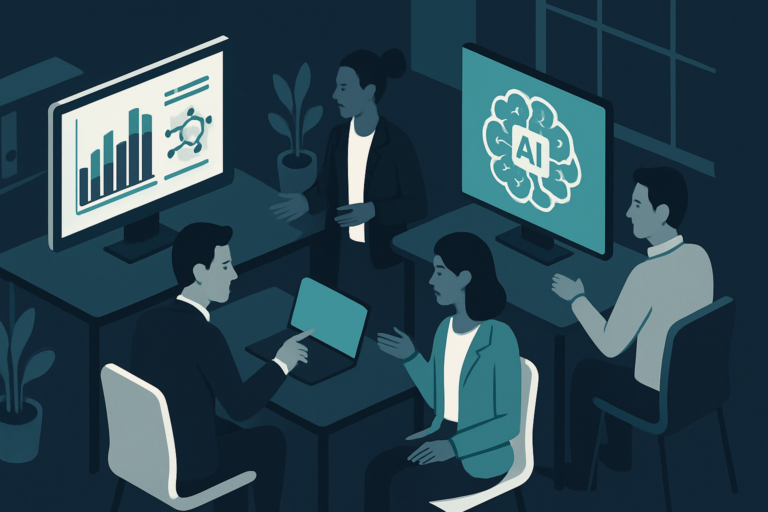
AI’s Impact on Group Decision-Making: A New Era of Collaboration
What’s happening: AI is transforming group decision-making across various sectors, including healthcare and engineering. For instance, AI tools have enabled organizations like Moderna and Williams in Formula One to enhance operational efficiency and decision-making speed. A notable example is Williams’ pilot program that reduced low-value meetings by 863 hours, allowing engineers to focus on higher-value tasks while maintaining human oversight in final decisions.
Why it matters: The integration of AI into decision-making processes not only boosts efficiency but also reshapes team dynamics and trust within organizations. As teams leverage AI for analytical tasks, it is crucial to redefine roles and responsibilities to maintain human judgment in interpreting AI outputs, ensuring that the collaborative process is not dominated by technology but enhanced by it.
Our take: While AI presents significant opportunities for improved productivity and innovation, organizations must approach its integration thoughtfully. Emphasizing transparency and ongoing training will help mitigate risks of over-reliance on AI, ensuring that human expertise remains central to decision-making.
That’s the digest for August 21, 2026.
Questions? Reach out at info@q52.ai.
q52.ai — Engineering Better Questions
