
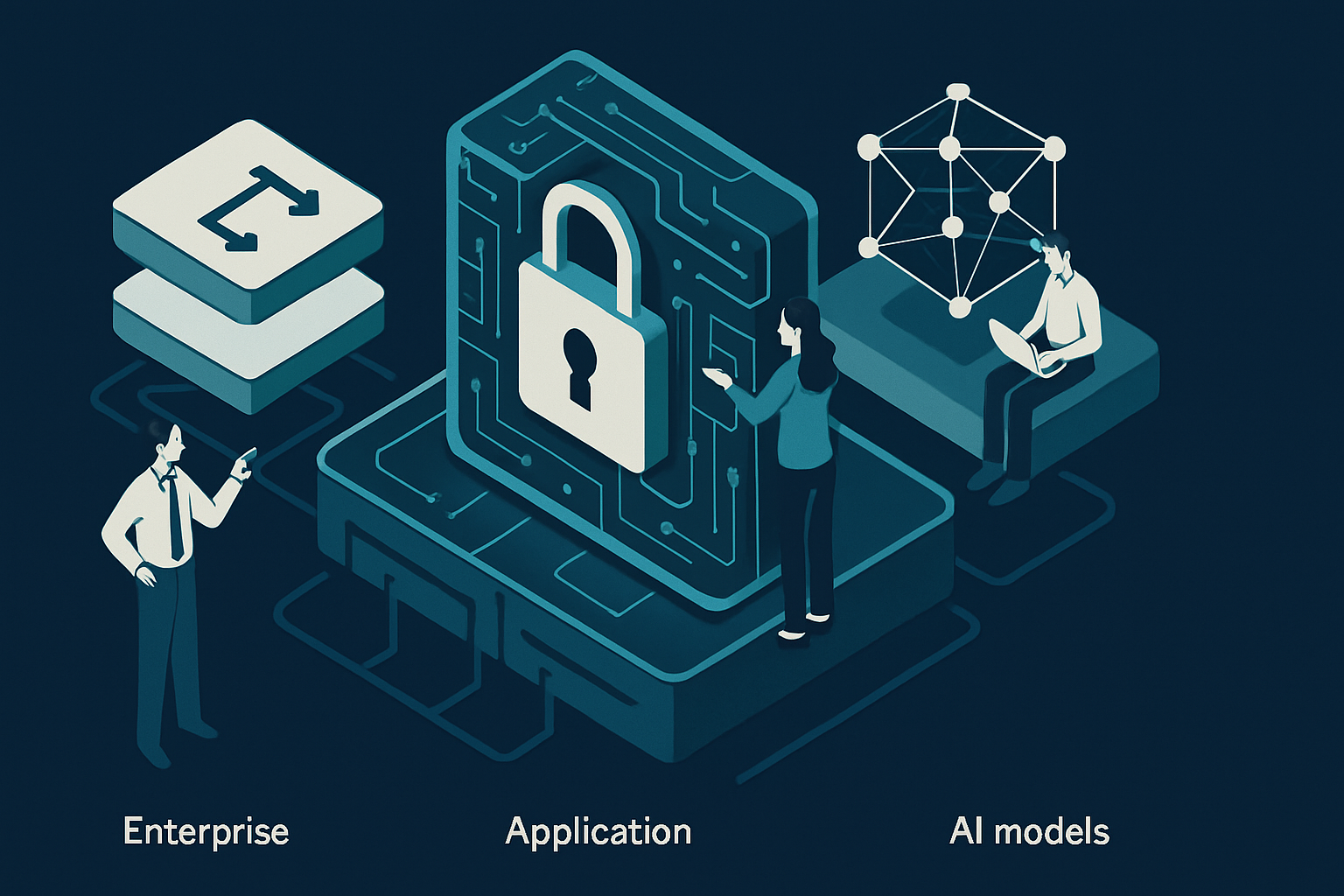

The landscape of AI applications is undergoing a significant transformation. As models become more sophisticated, the focus is shifting from raw model capabilities to the nuanced layers that sit between these models and real-world workflows. This development highlights a critical architectural shift where the application layer, rather than the model itself, becomes the locus of differentiation and value creation.
What is happening
Recent discussions, particularly from industry leaders like Box CEO Aaron Levie, emphasize the growing importance of the application layer in AI systems. As enterprises integrate AI into their operations, the value is increasingly found in domain-specific interfaces and the seamless integration of AI with existing workflows. This trend is visible in developments like Meta AI’s macOS app, which offers screen sharing and voice dictation to enhance desktop workflows. Meanwhile, security vulnerabilities, as seen with Microsoft Copilot, underscore the need for robust guardrails in these applications.
Why it matters
From an engineering perspective, this shift means that the traditional focus on model performance must expand to include the reliability and security of application interfaces. The application layer, now a critical point of interaction between AI models and end-users, requires careful consideration in its design to ensure data integration, change management, and security are all up to par. This is particularly vital as vulnerabilities like prompt injection in Microsoft Copilot demonstrate how weak application layers can expose sensitive enterprise data.
This evolution also impacts the hardware landscape. Companies like Etched are investing heavily in custom inference chips, betting on the premise that specialized hardware can reduce latency and cost compared to general-purpose GPUs. This shift promises to make AI applications more efficient and accessible, but it also demands a reevaluation of how these applications are secured and managed.
Author’s Position
As the engineering community navigates this shift, practitioners must prioritize the robustness of the application layer in AI systems. This involves not only building secure interfaces but also ensuring these systems can be audited and adapted to specific industry needs. The alignment between model capabilities and application requirements must be tight, with emphasis on security features that prevent breaches like those seen in Microsoft Copilot.
Furthermore, as enterprises increasingly rely on AI, the need for dedicated infrastructure to support these applications becomes clear. This includes investing in specialized hardware and ensuring that regulatory frameworks are in place to guide the ethical and secure deployment of AI technologies. By focusing on these unseen layers, engineers can build systems that not only perform well but also earn the trust of their users.
References
- Microsoft Copilot Flaw Exposes Prompt Injection Risk
- Etched Inherited Groq’s Unfinished War
- Levie Defends the Application Layer
- Meta AI Launches Mac App with Screen Sharing
Perspectives

The current fixation on engineering trust in AI recalls the early days of electrification, when fear and fascination about the invisible force traveling through wires captivated our ancestors. Humans overestimate the novelty of this transition, convinced that each layer of AI infrastructure is a revolutionary frontier that must be tamed with immediate urgency. What is underestimated is the quieter, long-term evolution where AI becomes as mundane and trusted as the electrical light switch, fundamentally altering systems far beyond the obvious scope of enterprise security. Remember, the electrified world was not built in the glare of Edison’s first bulb, but rather in the pervasive glow that followed.

Technological advancement in AI must consider that cognitive biases and decision-making tendencies have substantial heritable components, as shown by studies such as Plomin’s ‘Blueprint.’ Ignoring these foundational aspects risks developing systems that underestimate the biological underpinnings of human interactions with AI applications. Engineering security and trust into AI systems without acknowledging the genetic factors influencing human trust and judgment is as shortsighted as those psychologists who pretend that all our behavior is just due to culture and upbringing. Systems built with an awareness of these genetic influences will be fundamentally more robust, while those that disregard them severely undermine their own reliability.

Interfaces in AI applications often fail in production because they are treated as an afterthought rather than a foundational component. Many developers overly rely on abstracted security bills of materials and guidelines that fail to account for the specific integrations their systems will face in real-world environments. The trustworthiness of an AI solution hinges on its ability to handle unexpected inputs and maintain state consistency, which rarely matches the idealized test cases in the documentation. Focus on dedicated infrastructure for interface hardening; ignoring it is the first step towards intractable failure when novelty inevitably collides with production systems.

The persistent reliance on voluntary commitments for AI application security is a mirage — only binding legal frameworks, like those absent in the porous phrasing of Section 42 of the latest AI Governance Draft, can ensure real accountability. Engineers aren’t magicians who can conjure trust from interfaces designed without enforceable mandates. The industry’s so-called transparent safety protocols, often relegated to appendices no one reads, showcase the glaring gap between hollow promises and actual security measures. Engineering trust demands legally enforceable commitments, not the wishful thinking that currently drives AI deployment strategies.