

Your daily briefing on AI, technology, economics, and society — from q52.ai.
Industry & Economics
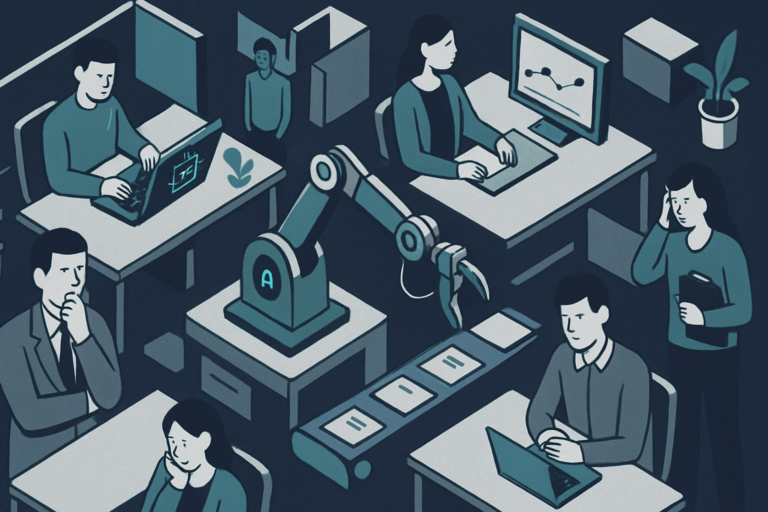
AI’s Impact on Productivity: Who Truly Benefits and How?
What’s happening: AI is significantly boosting productivity across various industries, with firms reporting gains of 15% to over 50% in areas like customer support and software development. However, these productivity improvements do not easily translate to overall economic growth, as highlighted by a study from the International Center for Law & Economics. The benefits of AI adoption are unevenly distributed, raising questions about its true economic value and implications for labor markets.
Why it matters: The growing use of AI prompts a reevaluation of productivity metrics and their broader economic impact. While some companies thrive and become more competitive, this does not guarantee job creation or wage increases, potentially leading to job displacement, particularly in lower-skilled positions. Understanding the disparity between firm-level productivity and macroeconomic growth is crucial for policymakers to address the risks of widening inequality in an AI-driven economy.
Our take: The current AI wave mirrors historical trends where technological advancements benefit capital owners more than workers. This necessitates proactive measures from policymakers to ensure that the advantages of AI are equitably distributed, thus preventing exacerbation of existing inequalities in the labor market.
Tech & Engineering
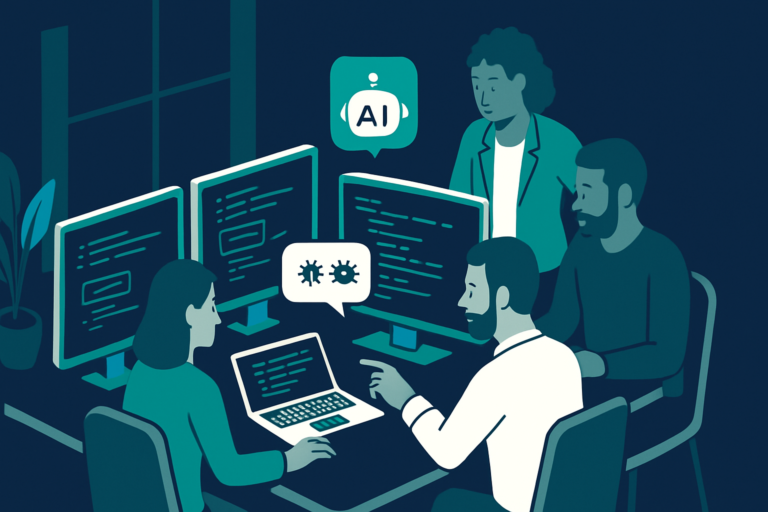
AI-Integrated Workflows: Transforming Software Engineering
What’s happening: By 2026, software engineering is set to be transformed through AI-integrated workflows that enhance every stage of development, from ideation to deployment. This shift moves away from traditional siloed tools, enabling engineers to utilize AI for predicting user behavior, optimizing performance, and automating testing, which improves both productivity and code quality.
Why it matters: The integration of AI tools not only accelerates the development cycle but also enhances application security and user experience, meeting the demands of a competitive digital landscape. As engineers adopt these AI-augmented workflows, they will need to develop new skills to effectively leverage these technologies, which are essential for creating scalable and user-centric software solutions.
Our take: The urgency for software engineers to embrace AI is clear; adapting to these changes is crucial not just for personal career growth but for the overall quality and security of software products in a rapidly evolving market. The challenge lies in balancing automation with the need for creative problem-solving in software development.
Sciences
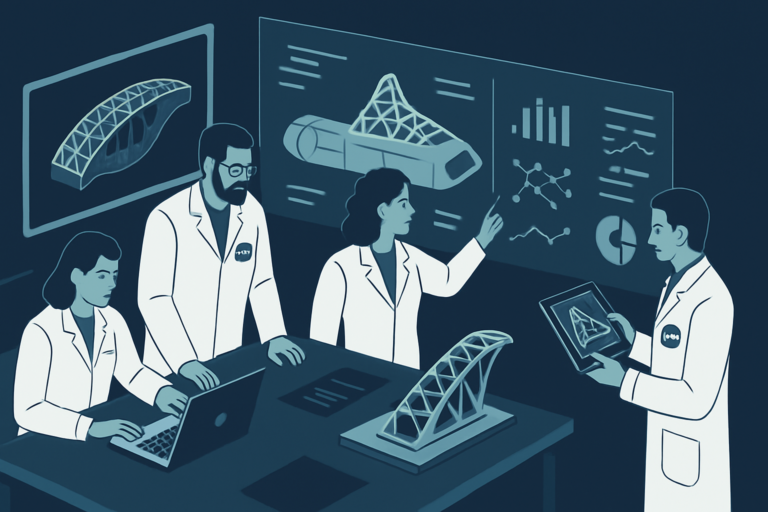
NASA’s Genesis Mission: AI-Driven Scientific Leap
What’s happening: NASA’s Genesis Mission is revolutionizing scientific research by integrating advanced artificial intelligence (AI) and high-performance computing. A key feature is the dual anonymous peer review system, which ensures that proposals are evaluated solely on merit, allowing unconventional ideas to emerge. Additionally, the Genesis Mission Fellows program funds doctoral students to explore AI’s role in enhancing scientific discovery, while AI-driven design processes are already streamlining development in projects like the CAPSTONE 02 spacecraft.
Why it matters: This initiative is poised to democratize scientific research, making it easier for innovative ideas to gain recognition and support. By fostering a more inclusive evaluation process, NASA aims to accelerate breakthroughs in space exploration and other fields. The collaboration between public and private sectors could lead to faster advancements and more efficient resource use in tackling complex scientific challenges.
Our take: The focus on dual anonymous peer review highlights a critical shift towards valuing ideas over credentials, but it remains to be seen how effectively this will level the playing field in practice. As NASA embraces AI in its workflows, the agency must also navigate the ethical implications of such technologies in research.
Society
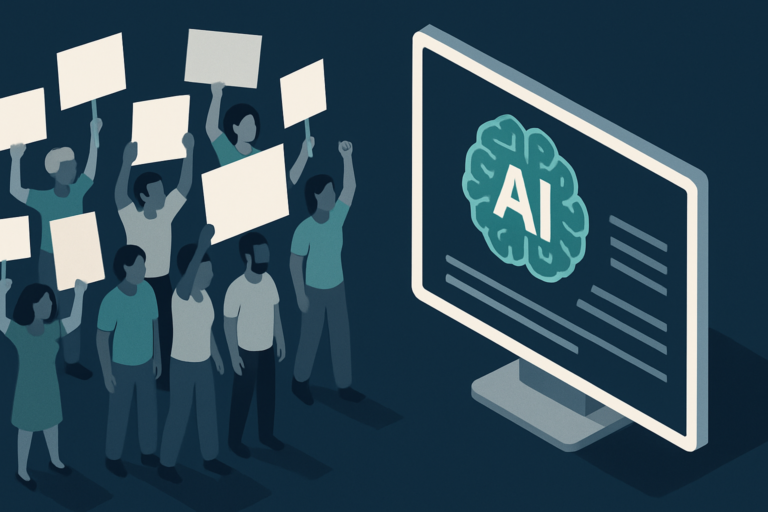
AI’s Role in Redefining Truth and Trust in Modern Democracies
What’s happening: Generative AI, particularly large language models, is reshaping societal narratives by prioritizing persuasion over truth, reflecting the interests of those who control the technology. This shift has significant implications for public trust and democratic engagement, as seen in India where AI-generated narratives often conflict with reality, leading to the dismissal of dissent and undermining of legitimate grievances. The erosion of trust in institutions stems from the manipulation of information by powerful entities using AI as a tool for control.
Why it matters: The deployment of AI in this context raises critical concerns about accountability and the concentration of power among corporate and governmental interests. Without regulatory frameworks to ensure transparency and serve the public good, AI could exacerbate social inequalities and hinder democratic processes, echoing historical patterns of technological misuse that lead to social upheaval. Addressing this issue is essential for maintaining a healthy democratic society and fostering public trust in institutions.
Our take: The challenge lies not just in the technology itself but in the motivations of those who wield it. A proactive approach, involving public investment and community engagement in AI development, is crucial to prevent a repeat of history where unchecked power leads to societal disenfranchisement.
Psychology
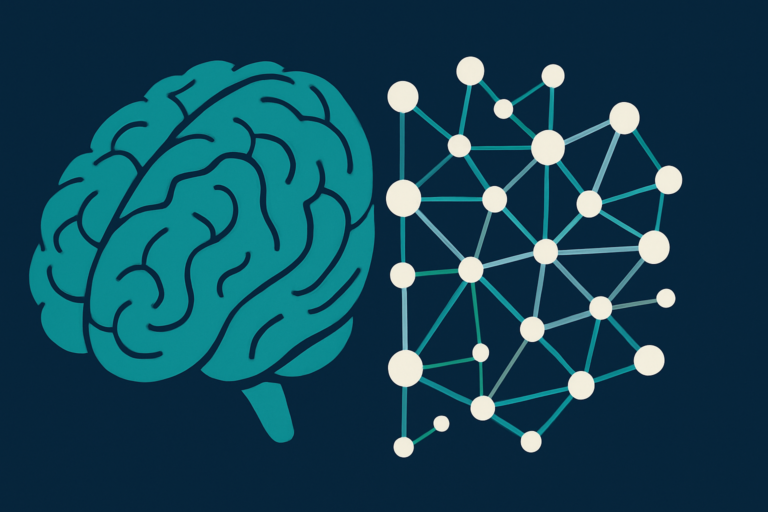
How AI Alters Memory: Cognitive Models and Human Bias
What’s happening: Artificial intelligence is influencing cognitive psychology by enhancing our understanding of human memory and decision-making. Recent studies demonstrate that AI can mimic human cognitive processes, revealing that our decision-making may be more algorithmic than previously believed. This convergence allows researchers to refine cognitive models, using AI’s data-processing capabilities to identify patterns and test complex theories about human cognition.
Why it matters: These developments have significant implications, particularly in fields like healthcare, where improved models of human cognition could lead to better decision-making and outcomes. However, there are risks involved; if AI systems are trained on biased human data, they may perpetuate these biases, potentially distorting decision-making processes. The ethical considerations surrounding AI’s influence on human thought highlight the necessity for responsible development and application of these technologies.
Our take: While the integration of AI into cognitive psychology offers exciting advancements, it raises critical ethical questions that demand urgent attention. Ensuring transparency and fostering collaboration between AI engineers and psychologists is essential to prevent the reinforcement of biases and to develop systems that genuinely enhance our understanding of human cognition.
That’s the digest for October 19, 2026.
Questions? Reach out at info@q52.ai.
q52.ai — Engineering Better Questions
