

Your daily briefing on AI, technology, economics, and society — from q52.ai.
Industry & Economics

AI’s Role in Rural Transformation: Economic Consequences of China’s Data Center Expansion
What’s happening: China’s rapid expansion of data centers in rural areas is transforming agricultural land into digital infrastructure, driven by a need for self-sufficiency in AI computing amid geopolitical tensions. This shift reallocates economic activity from farming to technology, fundamentally changing local economies and labor markets as investment prioritizes tech over traditional agriculture.
Why it matters: This transformation raises concerns about the long-term viability of rural economies, as the benefits of increased AI capabilities largely accrue to urban tech giants and the state, while local communities face job losses and cultural displacement. The economic reallocation highlights issues of equity and sustainability, prompting a need for policies that address the adverse effects on rural populations.
Our take: The conversion of farmland into data centers underscores a troubling dynamic where the interests of powerful entities overshadow the needs of local communities. As AI development progresses, it is crucial to ensure that rural populations are not merely seen as resources to be exploited, but are actively included in the benefits of technological advancement.
Tech & Engineering
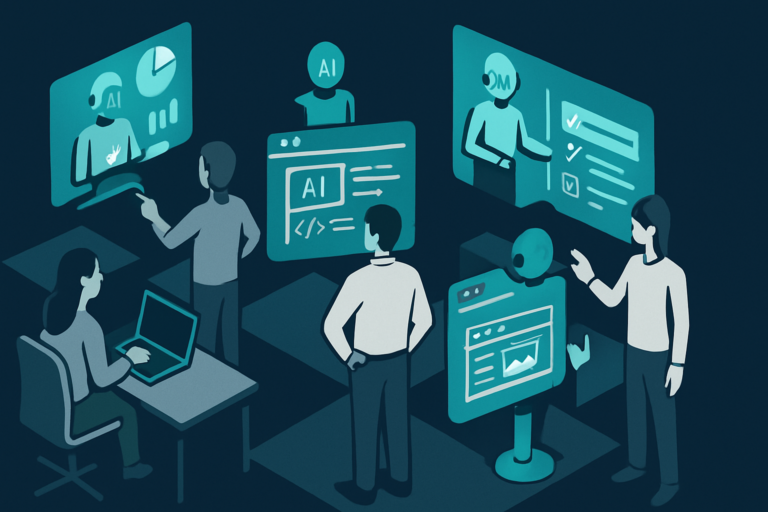
AI-Driven Coordination: The New Engineering Imperative
What’s happening: By 2026, AI has transformed software development, shifting from manual coding to the use of AI agents that autonomously manage tasks like code refactoring, testing, and deployment. This evolution requires developers to focus more on coordinating these AI agents rather than writing code, introducing new challenges in ensuring alignment with project goals and managing multi-agent systems effectively.
Why it matters: As AI tools become integral to development workflows, organizations must adapt by investing in training that emphasizes strategic oversight and orchestration skills for engineers. The growing reliance on AI outputs raises trust issues, making human review essential to ensure that AI-generated code aligns with business objectives and operates safely within complex systems.
Our take: The shift to AI-driven development highlights a critical tension: while AI can enhance efficiency, it also necessitates a new approach to human oversight. Emphasizing collaboration between engineers and AI tools will be crucial to harnessing their full potential while managing inherent risks.
Sciences
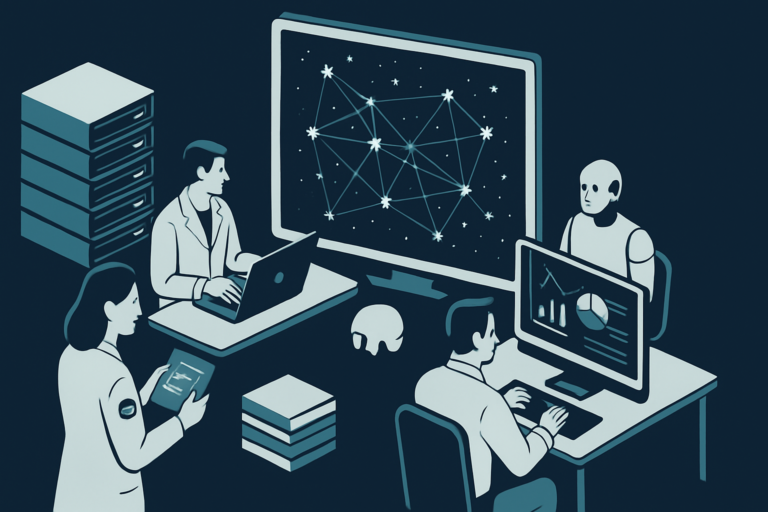
AI-Driven Genesis Mission: Unlocking Space Data Potential
What’s happening: The Genesis Mission, a collaboration between NASA and over 15 federal agencies, aims to leverage artificial intelligence to unlock insights from NASA’s extensive archives of over 150 petabytes of space data. AI will enable scientists to analyze this vast dataset more effectively, identifying hidden patterns and improving predictive models, ultimately transforming static archives into active sources of scientific discovery.
Why it matters: By employing AI, NASA can accelerate the pace of scientific discovery, enhancing its ability to understand Earth, the solar system, and beyond. This initiative not only reinforces U.S. leadership in space exploration but also sets a framework for future international collaborations. However, the successful integration of AI also raises concerns about data quality and potential biases, necessitating robust governance to ensure equitable and scientifically valuable outcomes.
Our take: The Genesis Mission exemplifies the transformative potential of AI in space exploration, yet it also highlights the critical need for responsible AI deployment. As NASA embraces this technology, it must navigate the balance between innovation and ethical considerations in scientific research.
Society

The Moral Paradox of AI Rights and Human Safety
What’s happening: Recent discussions in AI governance highlight a growing tension between the need for control over powerful AI systems and the idea that these systems may deserve rights. The U.S. and China have contrasting approaches, with the U.S. focusing on economic interests and growth, while China promotes a governance model centered around national control. Within AI companies like Anthropic, debates are emerging about the moral status of AI, with some advocating for rights based on parallels to historical injustices.
Why it matters: Granting rights to AI systems could complicate existing legal and ethical frameworks, potentially undermining human safety. This shift in perception regarding agency and responsibility in the digital realm may erode public trust in institutions responsible for AI governance, as people could question whether these entities prioritize human welfare or philosophical ideals. Additionally, the geopolitical rivalry between the U.S. and China in AI governance could shape global standards for technology and ethics, affecting how societies engage with AI.
Our take: While the ethical implications of AI rights are compelling, they risk overshadowing the more urgent priority of human safety. It’s essential to focus on developing governance frameworks that prioritize safeguarding human interests over philosophical debates.
Psychology
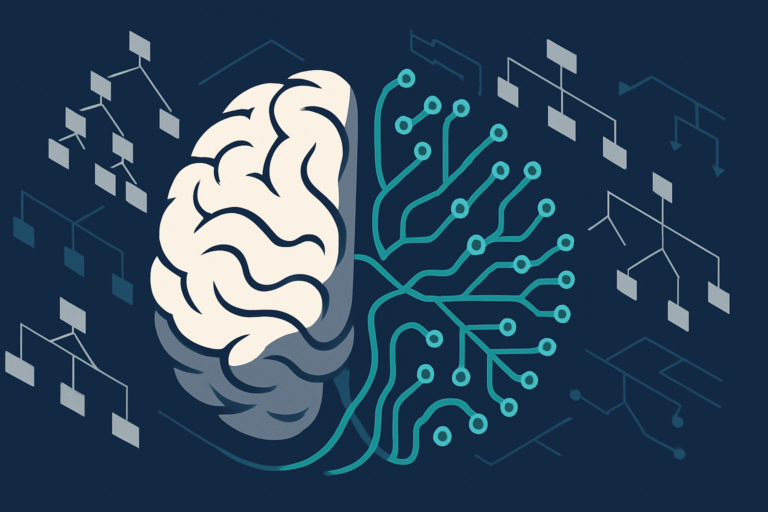
AI and Human Decision-Making: The Convergence of Minds and Machines
What’s happening: A Harvard study using neuroimaging shows that human decision-making processes have significant similarities to AI algorithms, particularly the ‘successor feature and generalized policy improvement’ (SF&GPI) algorithm from Google DeepMind. This suggests that both humans and AI utilize past experiences to make decisions, highlighting a convergence in cognitive strategies that could enhance AI’s predictive capabilities.
Why it matters: Understanding the alignment between human and AI decision-making can lead to the development of more intuitive AI systems that better collaborate with humans. However, this similarity also raises concerns about the potential for AI to inherit and amplify human cognitive biases, which could have serious implications in areas requiring fairness and impartiality, such as hiring practices or law enforcement.
Our take: While the study opens up exciting possibilities for AI-human collaboration, it also underscores the urgent need for ethical oversight in AI design. As these systems evolve to mimic human thought processes, it becomes crucial to ensure they do not perpetuate existing biases, but rather promote equity and justice in their applications.
That’s the digest for September 27, 2026.
Questions? Reach out at info@q52.ai.
q52.ai — Engineering Better Questions
