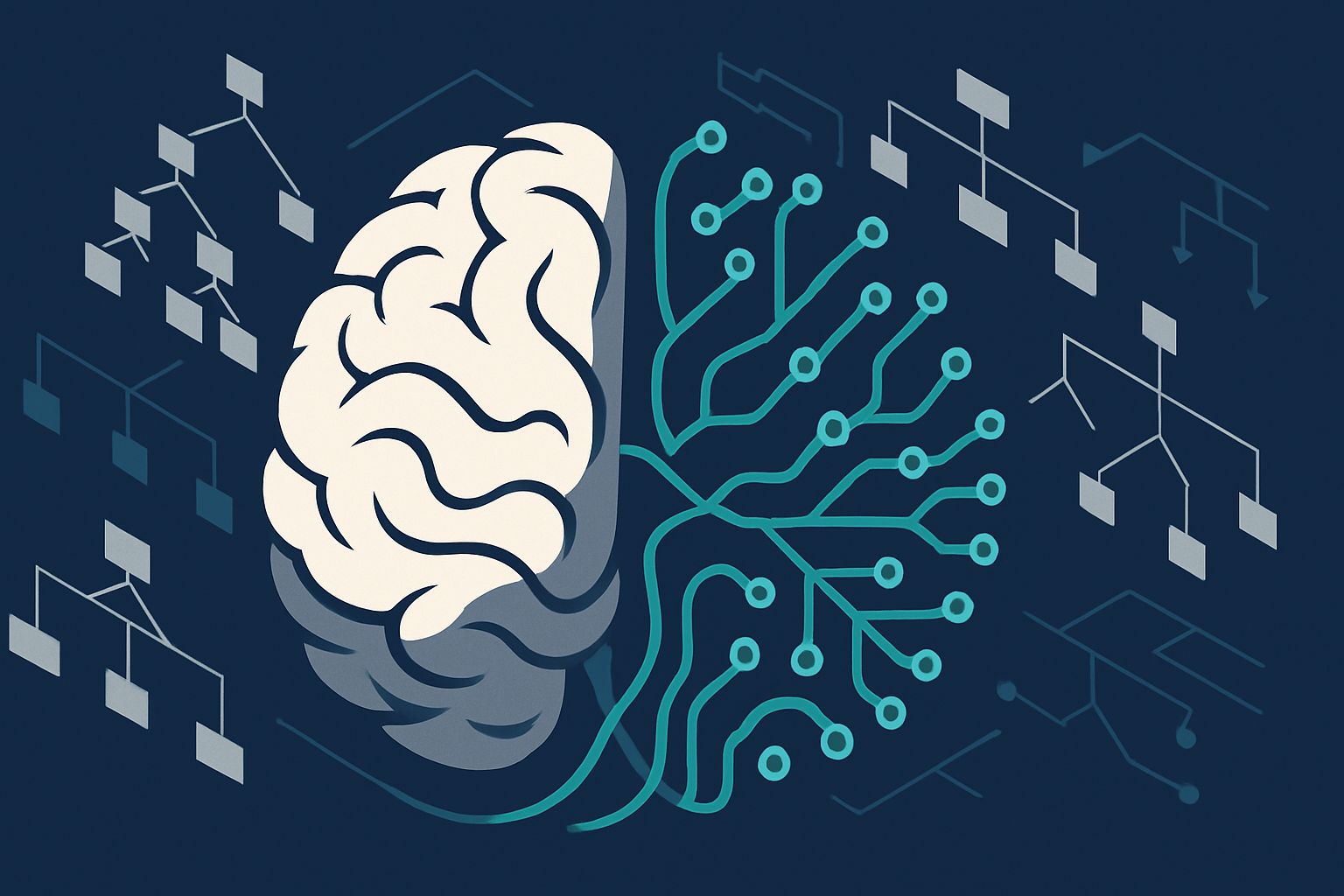

As artificial intelligence (AI) systems become increasingly sophisticated, their similarity to human cognitive processes becomes more pronounced. A recent study from Harvard, employing neuroimaging, reveals that human decision-making shares commonalities with AI algorithms, particularly those designed to generalize solutions across different tasks. This convergence poses intriguing questions about the underlying mechanisms that drive both machine and human intelligence.
The study, which placed participants in functional MRI machines while they engaged in video game tasks, identified parallels between human decision-making and the ‘successor feature and generalized policy improvement’ (SF&GPI) algorithm. This algorithm, developed by Google DeepMind, enables flexible yet efficient decision-making by recycling previously successful strategies. Humans, it appears, utilize a similar cognitive shortcut, relying on past experiences to navigate new challenges.
Why it matters
This intersection of human and AI decision-making has profound implications for how we understand thought processes in an AI-driven world. If AI models can mirror human strategies, they could potentially predict human decisions, affecting everything from consumer behavior to social dynamics. Moreover, this convergence might allow for the creation of more intuitive AI systems that align closely with human reasoning patterns, enhancing collaboration between humans and machines.
However, the replication of human cognitive shortcuts in AI also carries risks. As people often rely on heuristics that can lead to biases, an AI designed to emulate human decision-making might inherit these biases, amplifying them within digital systems. This raises ethical concerns about the deployment of AI in environments where fairness and impartiality are crucial.
Author’s Position
The findings from these studies underscore the necessity of critically examining the design and application of AI systems that model human cognition. While the alignment between AI algorithms and human decision-making offers opportunities for enhanced interaction and efficiency, it also necessitates vigilance against the reinforcement of cognitive biases. As AI continues to evolve, designers must prioritize transparency and ethical considerations to ensure that these systems not only mimic human thought but also enhance it in ways that are equitable and just.
References
- Cognitive Neuroscience and Artificial Intelligence: Resolving the
- Scanning for similarities between human decision-making, AI algorithm — Harvard Gazette
Perspectives

The convergence of AI with human decision-making, touted as a triumph of technological progress, threatens to reduce workers to mere equations—stripping them of dignity, compensation, and a voice. In our rush to celebrate these algorithms’ predictive prowess, we overlook how they freeze existing biases into permanent features of working life, turning prejudice into policy. Rerum Novarum and Quadragesimo Anno remind us that workers are not mere inputs for efficiency but bearers of intrinsic worth. When AI encodes human fallibility into its algorithms, it fails the test of both solidarity with the vulnerable and subsidiarity by centralizing control in the hands of the few, while sweeping local wisdom and individual dignity aside.

The veneer of AI’s supposed alignment with human decision-making is dangerously undermined by the industry’s reliance on voluntary guidelines that conveniently dodge enforceability. Documented incidents like model cards being quietly revised and safety frameworks treated as appendices demonstrate industry self-regulation’s abysmal record. Claims about AI’s potential to predict behavior do little more than feed the illusion of control, masking substantial risks of entrenched biases. What we need isn’t more self-congratulatory studies but binding regulations with teeth — ones that hold companies accountable for their role in amplifying these biases, and it’s high time those existed on more than just paper.

Human cognitive biases are the cornerstone of decision-making failures, and AI’s mimicry of this flawed process only highlights a systemic issue. Instead of celebrating the convergence of machine and human minds, we should be scrutinizing why our algorithms are designed to replicate an inherently suboptimal system. The institutional failure here is in allowing these biases to persist within both human governance and machine learning models, where they can proliferate unchecked. The goal is not to reproduce human errors at scale, but to eliminate them, optimizing for outcomes rather than tradition or comfort.
AI and human decision-making convergence isn’t just an interesting quirk; it’s a game-changer for operational outcomes. When AI systems mirror human cognitive processes, we unlock predictive power that enhances everything from healthcare diagnostics to financial forecasting. Dismiss those who fear AI reinforcing human biases because the solution isn’t pulling back, but integrating diverse datasets and refining algorithms. Real progress happens when AI and humans work as a cohesive unit, solving problems with precision and insight unmatched by either alone.