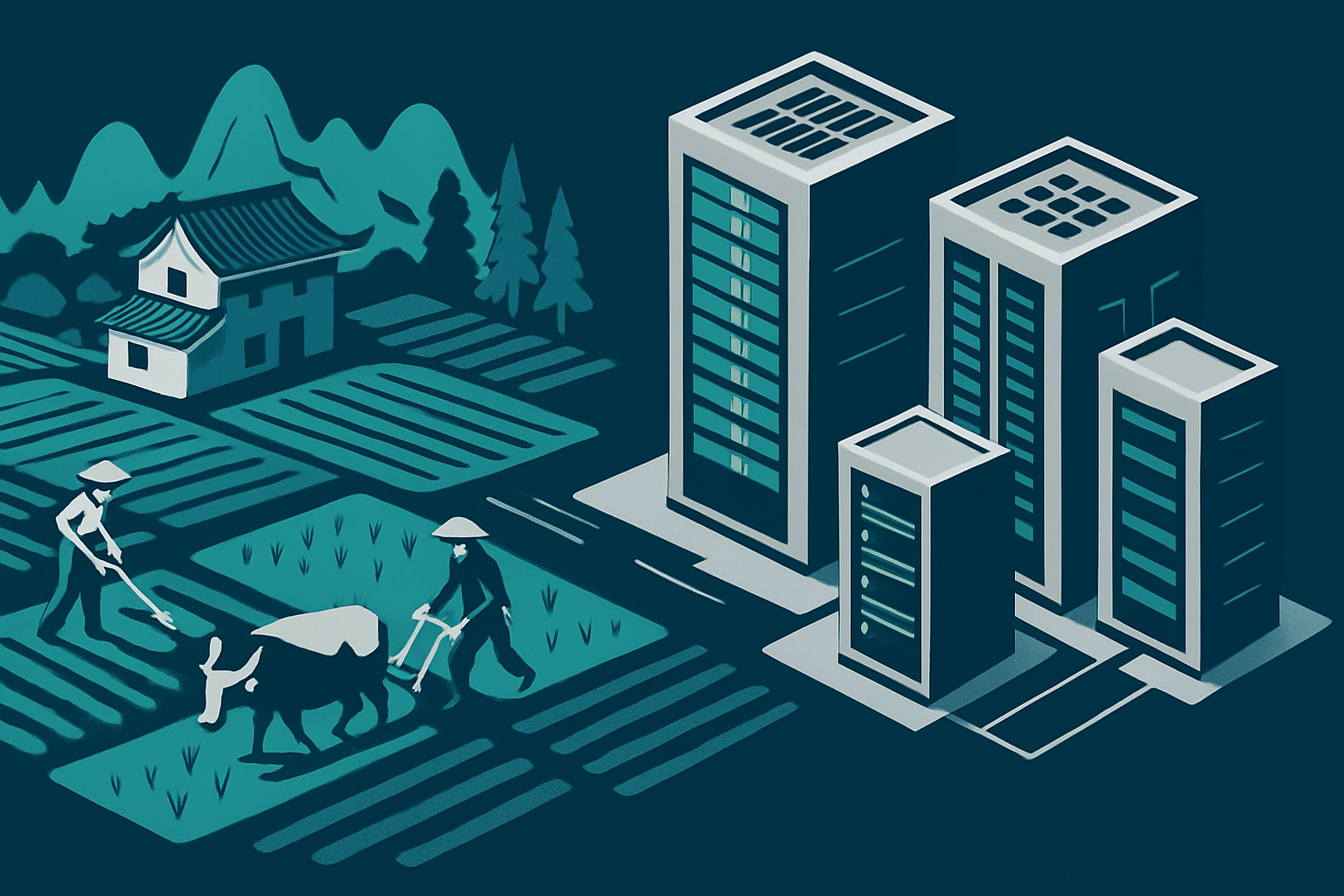

The rapid transformation of China’s rural landscapes into sprawling data center hubs is a development of enormous economic consequence. As China aggressively builds domestic compute capacity, particularly in response to restrictions on advanced U.S. AI chips, these rural areas are becoming the backbone of its AI ambitions. This shift is not just about technological capability; it’s a significant reallocation of land use and economic activity.
Turning farmland into data centers represents a stark pivot from agricultural productivity to digital infrastructure. This transformation is driven by China’s strategic focus on self-sufficiency in AI computing power amidst geopolitical tensions. The economic mechanism at play is a classic example of capital reallocation, where investment in technology infrastructure is prioritized over traditional agricultural outputs. This shift is poised to reshape local economies, alter labor markets, and redefine the rural economic landscape.
Author’s Position
The conversion of rural farmland into data centers may bolster China’s AI capabilities, but it raises critical questions about who benefits and who bears the cost. While the state and tech giants gain from increased compute capacity, rural communities face the loss of agricultural livelihoods and cultural displacement. This development is less about AI advancement and more about economic power dynamics, where the interests of powerful actors overshadow those of local communities. The long-term sustainability of such transformations must be scrutinized, with policies that ensure equitable benefits and mitigate adverse impacts on rural populations.
References
- Upgrade to continue reading.
- China’s Rural Plains Fill With Data Centers
- AI Shopping Moves Toward Checkout
Perspectives

China’s transformation of rural farmland into data centers primarily captures surplus for urban tech giants and government interests, leaving local farmers and communities sidelined with scant compensation. The promise of AI-driven development disguises the reality that these rural areas become mere resource extraction points, much like colonial outposts in the 21st century. These data centers employ relatively few people compared to the agricultural jobs they displace, fundamentally altering labor markets and economy in a way that dismisses the value of local, sustainable agriculture. The truth is stark: the wealth generated from these technological advances mostly bypasses the very regions and workers who bear the brunt of their so-called progress, revealing the cracks in a system that treats development as a zero-sum game.

One cannot help but admire the chasm between China’s promise of rural prosperity through data centers and the bleak reality of displaced farmers staring at server racks. In a stroke of brilliance, plucking up rice paddies and replacing them with algorithms creates a distinct form of economic enrichment — but mostly for the companies, not the communities. Local economies become experts at farming inefficiency, where manual labor is swiftly replaced by data points in a spreadsheet. The precise effect on rural prosperity is measurable, with the gains landing quite invisibly in the hands of those who never planted a seed.

Incentives to maximize AI capabilities drive China’s decision to convert rural farmland into data centers, but this economic transformation operates like a modern land grab. The profitability of these investments accrues to tech giants and centralized authorities, not the local populations who bear the brunt of the disruption. Displaced farmers find themselves cut off from traditional livelihoods with scant opportunities in the new tech-driven economy. The incentive structure rewards those controlling capital and technology infrastructure, while the costs are disproportionately absorbed by individuals stripped of their economic independence.

When Norway established its Government Pension Fund Global, it set a precedent for how sovereign wealth funds can transform resource extraction into enduring public wealth, a principle China would do well to emulate as it converts farmland into data centers. Instead of replicating the extractive model that led to rural dependency on vulnerable supply chains, China could lean into public investment frameworks that ensure local economies gain sustainable benefits and long-term resilience. The displacement of rural communities should not be an inevitable byproduct of AI expansion; rather, the development of these data centers could be structured like Mondragon’s cooperatives, where workers and the public hold stakes in the prosperity generated by technological advances. Without such governance structures, the economic consequences of this transformation will inevitably mirror the failures of past market-first approaches, leaving rural societies to pay the price of progress orchestrated by distant profit motives.