
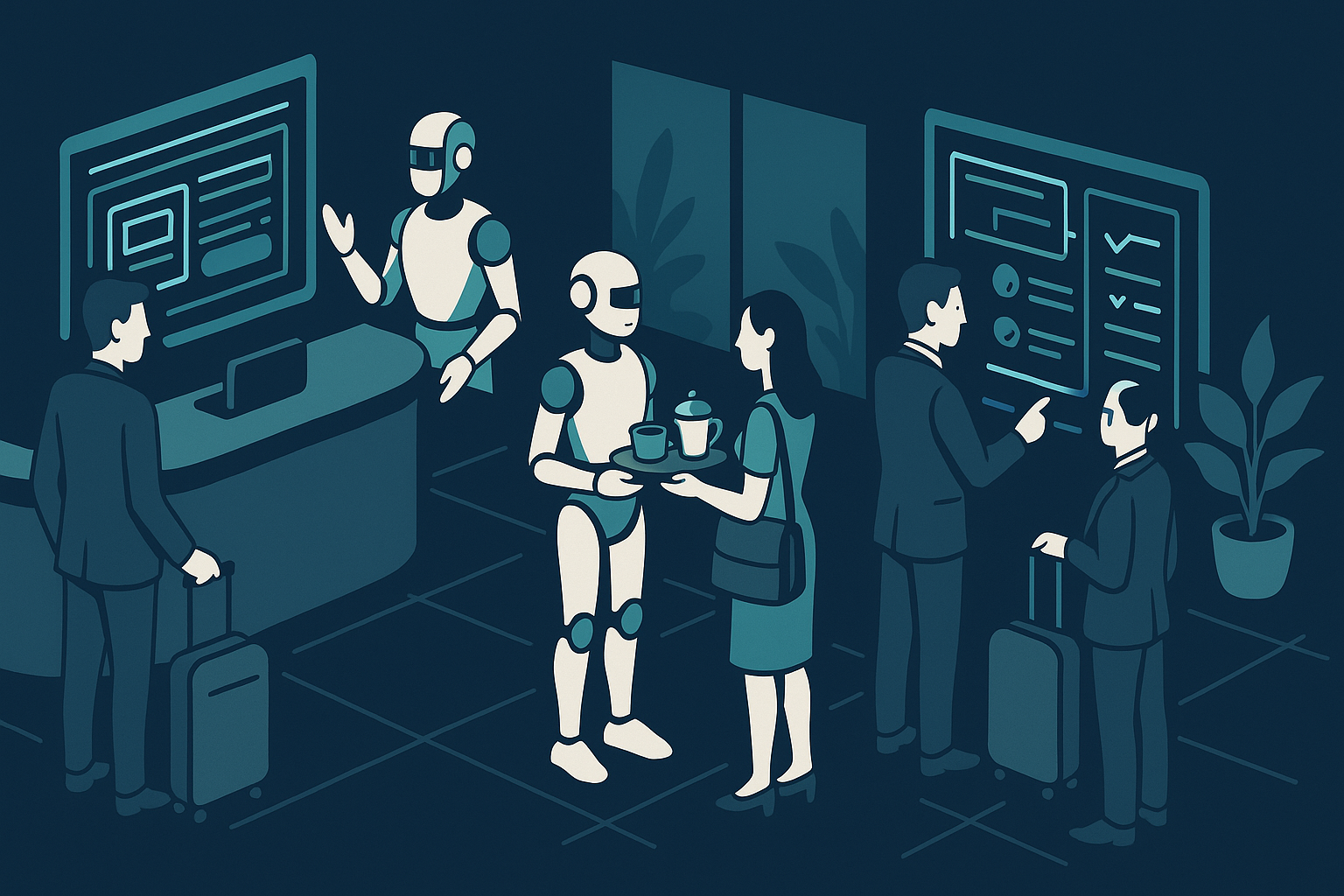

The travel and hospitality industry is undergoing a significant transformation, driven by recent advancements in AI and robotics. The joint venture between DirectBooking Technology and DeepYou marks the beginning of a new era where AI-powered platforms aim to address longstanding inefficiencies in the industry. This venture promises to create a natively Agent-to-Agent integrated platform that directly connects supply and demand, potentially reshaping the traditional OTA model.
Why It Matters
The engineering implications of this development are profound. By leveraging AI agents and large models for intelligent matching, the platform seeks to minimize transaction costs and enhance operational efficiency. The architecture relies on decentralized AI agent technology to streamline the fragmented travel and hospitality supply chain. This approach not only reduces overhead but also optimizes the user experience by integrating disparate services into a seamless ecosystem.
From a security perspective, the shift towards decentralized AI introduces new considerations. The platform’s reliance on autonomous AI agents to handle sensitive data necessitates robust security protocols to prevent data breaches and ensure privacy. Furthermore, the integration of AI-driven systems into existing infrastructure challenges traditional security models, requiring innovative solutions that can adapt to dynamic threat landscapes.
Author’s Position
Practitioners in the hospitality and technology sectors should recognize the potential of AI-driven platforms to revolutionize service delivery. However, this transformation also demands a reevaluation of security models and data governance practices. Engineers must prioritize the development of secure, scalable AI architectures that can handle the complexities of decentralized systems.
As AI continues to evolve, it is crucial for industry stakeholders to collaborate on establishing standards and best practices that address both operational efficiency and security. By doing so, they can ensure that AI-driven innovations not only enhance business outcomes but also protect user data and maintain trust in digital ecosystems.
References
Perspectives

The actual cognitive science of perception and memory tells us that intuitive human interaction is hardly about being fed pre-digested choices by an algorithm, yet AI-driven hospitality platforms seem hell-bent on transforming travel into a Choose Your Own Adventure book with only two endings. Engineers obsessed with clever algorithms seem to have forgotten that unpredictable human experiences are what make journeys memorable, not just the illusion of choice. The thrill of travel is replaced by AI guessing what flavor of pillow you might prefer based on your social media likes and the credit card charges of your last vacation. But hey, if you really want a world where anticipation and surprise are sacrificed at the altar of efficient predictability, then by all means, let’s keep ignoring what we know about human curiosity and delight.

The AI-driven revolution in hospitality is poised to benefit shareholders and upper management, while displacing the same workers who make the industry tick—without giving them a seat at the table. Engineers are busy constructing scalable AI architectures and securing data, yet they curiously forget to design a future where workers capture any of the gains. Let’s not kid ourselves with promises of “seamless” experiences and “optimized” customer interactions; it’s just code for more powerful tech monopolies and diminished worker leverage. If this grand collaboration between DirectBooking Technology and DeepYou doesn’t democratically distribute the spoils, it won’t be long before they’re just another chapter in the book of tech-driven inequality.

AI-driven hospitality platforms are just new middlemen extracting value from both guests and service providers while pretending to ‘connect’ them. Beneath the sleek technology veneer, these platforms reinforce class divides, channeling profits away from local businesses to the pockets of faceless investors who funded their creation. This isn’t engineering the next leap; it’s taking from the many to serve the few, wrapped in the holy shroud of efficiency. Let’s be honest—DirectBooking and DeepYou are in the business of redesigning fairness so that it’s always on the side of those who can afford to fund their fancy AI narratives.

AI-driven platforms in hospitality will choke on their own ambition if they ignore real-world latencies and unpredictable user interactions. Anyone purchasing the hype without factoring in network congestion or unexpected demand spikes is signing up for a fiasco reminiscent of the infamous ticketing site crashes of yore. Marketing brochures won’t mention this, but those rosy ‘AI will fix everything’ scenarios crumble fast when your system drops connections just as your customers hit the ‘confirm booking’ button. Engineers should focus less on AI buzzwords and more on designing fault-tolerant systems that withstand the ugly realities of production, like data bottlenecks and the caprices of Internet traffic.