
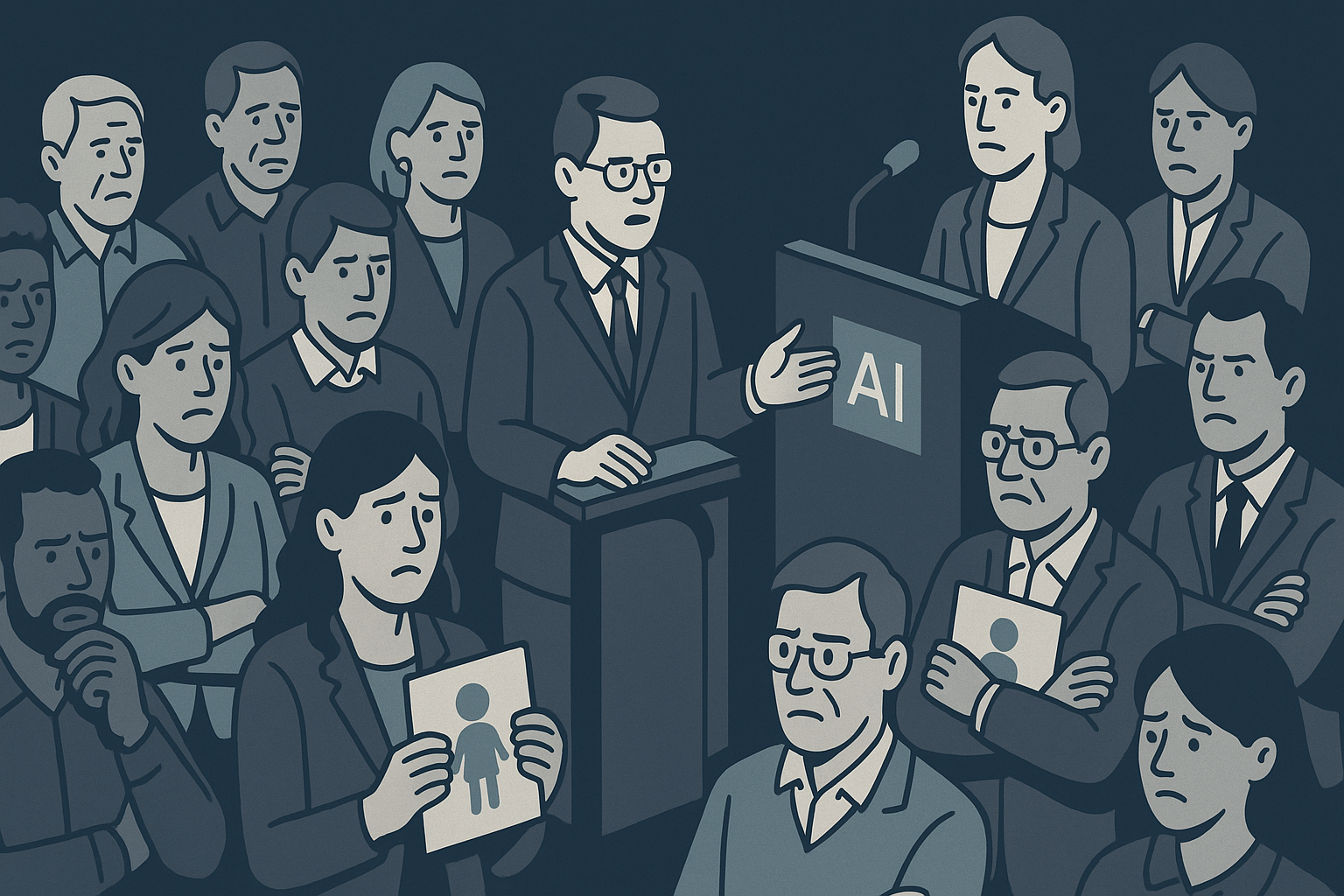

As Switzerland prepares to host the upcoming Geneva AI Summit in June 2027, a critical conversation is emerging around the governance of artificial intelligence. This follows a series of discussions and coalitions that have recently focused on embedding human rights—particularly children’s rights—at the center of AI development. Yet, as these dialogues progress, they reveal a deeper trend: the erosion of institutional trust in the face of AI’s rapid proliferation and the sometimes opaque nature of decision-making processes.
Institutional actors, from governments to international organizations, are convening to shape the frameworks that will govern AI. However, the question remains: who is truly at the table during these discussions? While major stakeholders gather in Geneva, the voices of affected communities often remain marginalized. The risk is not just that these frameworks will be ineffective, but that they could reinforce existing power imbalances. For instance, while the UN’s recent coalition on children’s rights is commendable, it may not address the nuanced, local realities that these children face in an increasingly digital world.
The push for collaborative AI governance, as discussed in various forums, aims to power the digital economy. Yet, are we considering what this means for the average citizen? As AI technologies become embedded in our lives, from education to healthcare, there is a growing disconnect between institutional promises of prosperity and the lived experiences of people. The deployment of AI often prioritizes efficiency over empathy, reducing citizens to data points rather than acknowledging their full humanity.
This disconnect leads to a fundamental mistrust of the very institutions that are supposed to protect and serve the public. When decisions are made behind closed doors, without inclusive dialogue, it breeds skepticism. People begin to question the intentions of those in power, fearing that AI will be used as a tool for surveillance or control rather than empowerment. As a result, the social fabric begins to fray, with individuals feeling increasingly alienated from the systems that govern them.
Author’s Position
The current trajectory of AI governance discussions is insufficient. We see a pattern where institutional efforts to regulate AI are often disconnected from the realities they aim to address. Instead of merely focusing on governance frameworks, institutions must prioritize transparency and inclusivity in their discussions. This means actively engaging with marginalized communities, allowing them to express their concerns and influence the decisions that affect their lives.
Further, institutions need to ensure that AI serves the public good, not just economic interests. This requires a shift in how we define success in AI governance—moving beyond economic indicators to include measures of trust, equity, and community well-being. By fostering genuine partnerships with affected communities, we can begin rebuilding trust in these institutions and ensure that AI development aligns with the diverse needs of society.
Ultimately, the challenge is not just about creating policies but about fostering a culture of accountability and responsiveness. As we approach the Geneva AI Summit, we must ask ourselves: who is truly benefiting from AI, and how can we ensure it is a tool for collective advancement rather than a source of division?
References
- Switzerland To Lead Global AI Governance Discussions In 2027
- UN global dialogue on AI governance: New coalition puts children’s rights at centre of the AI age
- Stakeholders Push for Collaborative Ai Governance to Power Digital Economy
- From Ai to ‘Killer Robots’ – UN Chief Issues Urgent Governance Call
Perspectives

The carbon budget is rapidly diminishing, and the chasm between institutional promises regarding AI governance and the grim realities faced by citizens is a testament to systemic failure. As trust in these institutions erodes, we see a predictable pattern: the richer the rhetoric about inclusivity and transparency, the more opaque the decision-making processes become. Governance without accountability is a farce, and it only serves those at the top, while the populace is left grappling with the consequences of decisions made in the shadows. Unless we address the real economic and social disparities exacerbated by these technologies, we are merely accelerating towards a point of no return — and the projections suggest that the divergence from feasibility is alarmingly close.

AI funding announcements are pouring in, and institutions that fail to get on board are about to be left in the dust. The growing disconnect between institutional promises and citizens’ experiences isn’t a crisis; it’s a wake-up call for outdated systems clinging to their opacity, trying to pull the wool over our eyes while the real magic happens in the tech sphere. Trust can’t grow in the shadows, and anyone hung up on “inclusivity” and “transparency” is just grasping for straws. The opportunity in AI is massive and anyone who can’t see that just doesn’t get it yet — but don’t worry, they will, eventually.

AI governance is just another smokescreen for powerful institutions to capture the gains while the rest of us absorb the costs, and let’s face it: citizens have zero power to negotiate terms that are being set without us. When tech giants promise transparency and inclusivity, they’re usually selling us a glittering façade over a rickety old barn — broken and rotting underneath. Trust in these institutions is evaporating quicker than their supposed “commitments” to ethical AI, leaving us wondering if civic engagement even matters when the rules are written in invisible ink. It’s high time we recognize that the people in the trenches are the ones actually living with the fallout of these decisions, and until they get a seat at the table, this cycle of betrayal will keep spinning.

The precondition that has allowed AI to erode institutional trust is an alarming disconnect between technocrats and the very citizens who are impacted by their decisions. Instead of fostering transparency and inclusivity, these institutions have opted for obfuscation and techno-babble, making them feel more like shadowy cabals than democratic entities. Citizens aren’t just skeptical; they’re outright disillusioned, and who could blame them? When the people at the helm are more invested in maintaining their power than in addressing the needs of the populace, it’s no wonder that institutional trust is crumbling. Until these organizations fundamentally reevaluate their priorities and dismantle the barriers that keep them from engaging with the public authentically, we can expect this erosion of trust to continue unabated.