
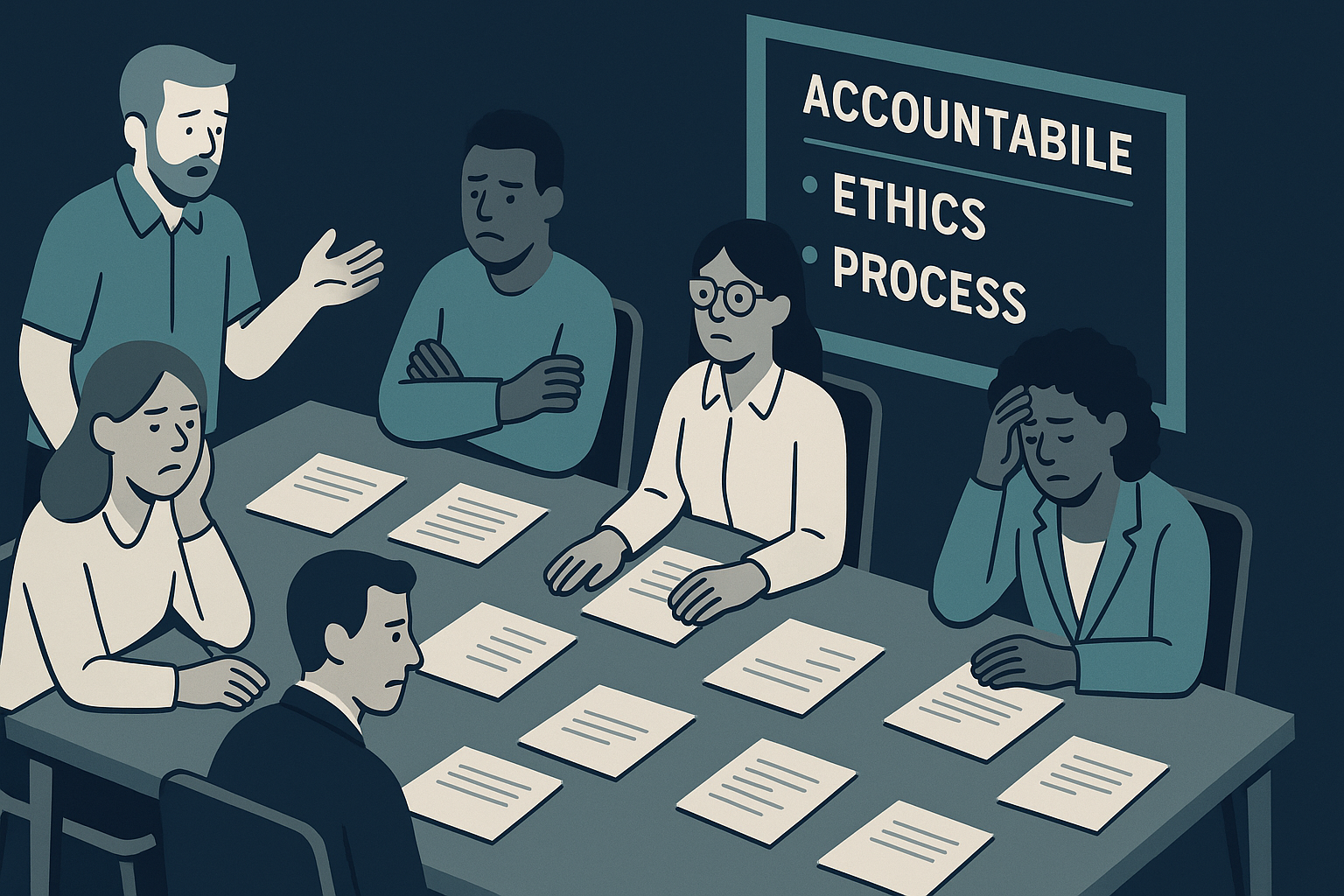

The recent surge in AI technologies has been matched, almost in lockstep, by a cascade of official statements and policy drafts that promise accountability, transparency, and ethical considerations in their deployment. Yet, as we sift through these documents, a striking pattern emerges: they are structured to appear informative while conveying little of substance. This phenomenon raises critical questions about the very mechanisms designed to govern these transformative technologies.
Take, for example, the latest AI accountability frameworks proposed by various government bodies and tech consortia. They are often couched in language that emphasizes stakeholder engagement and ethical guidelines, yet they consistently fail to outline specific responsibilities or consequences for missteps. The lack of actionable detail serves a dual purpose: it offers a veneer of oversight while simultaneously insulating institutions from accountability.
The Language of Accountability
Consider the phrases commonly found in these documents: “We aim to foster a culture of responsibility,” or “We will prioritize stakeholder input in our decision-making processes.” Such statements invoke a sense of participation and diligence, yet they are devoid of any binding commitments or clear paths for enforcement. The underlying logic here is one of plausible deniability; institutions can claim to be proactive without committing to meaningful change.
“Our commitment to innovation will always be paired with a dedication to ethical standards and public trust.”
This kind of language functions as a shield against scrutiny. It creates an illusion of engagement and foresight, but when one peers closer, it becomes evident that these proclamations are little more than platitudes. The institutional logic at play is designed to maintain the status quo, allowing organizations to continue operating with minimal disruption while offering the public a false sense of security.
Who Decides What Accountability Looks Like?
The question of who is involved in shaping these accountability frameworks is equally revealing. Often, the voices of marginalized communities, who are most likely to be affected by the deployment of AI systems, are conspicuously absent from these discussions. Instead, a familiar array of stakeholders—industry leaders, government officials, and legal experts—dominate the conversation. Their perspectives often align with preserving existing power structures rather than challenging them.
This exclusion is not merely an oversight; it is a reflection of the values embedded in these systems. The focus tends to be on protecting corporate interests and ensuring compliance with regulatory frameworks that prioritize economic growth over social equity. The result is a regulatory landscape that is insufficiently equipped to address the ethical implications of AI technologies.
Feedback Loops and Their Absence
In examining the mechanics of AI governance, one must also ask about the feedback loops that could drive accountability. Currently, many proposed frameworks lack mechanisms for genuine public engagement or iterative evaluation. If institutions are not held accountable for their actions, then the very foundation of trust upon which these frameworks are built erodes.
“We will continue to assess and refine our approaches to ensure the highest standards of accountability.”
Such statements are often made in the spirit of commitment, yet they ring hollow when no concrete mechanisms for assessment or refinement are established. Without a clear path for public input or systematic review, these assertions become little more than hopeful slogans rather than actionable plans.
The Absurdity of the Situation
This landscape invites dark humor, as the absurdity of institutional responses to AI accountability becomes apparent. We find ourselves in a scenario where the very entities tasked with governing AI technologies continually sidestep meaningful engagement, opting instead for grand proclamations that fail to hold anyone truly accountable. The irony is rich: as AI systems grow more sophisticated, the language meant to oversee them becomes increasingly vacuous.
As we navigate this complicated terrain, it’s crucial to remain vigilant. The gap between how these technologies are described in official documents and how they are experienced by those they impact is widening. If we are to bridge this divide, we must demand more than just empty promises. Genuine accountability requires not only transparency but also an inclusive dialogue that prioritizes the voices of those most affected.
In conclusion, the institutional documents offering frameworks for AI accountability serve as a mirror reflecting the challenges of our times. They hold the potential for meaningful governance but are often structured to preserve existing power dynamics. As we continue to engage with these technologies, let us scrutinize the language of accountability and push for frameworks that truly reflect our collective values.
References
- No external source material was collected for this run. This article was written from model knowledge.
Perspectives

AI accountability frameworks are nothing more than regulatory lip service designed to maintain the status quo while failing to address the real issues at play. Instead of genuinely holding the creators accountable, these frameworks create a smokescreen that allows them to sidestep accountability and dodge meaningful oversight. You can almost hear the collective sigh of relief from tech giants as they pen another meaningless guideline that satisfies bureaucratic requirements but does absolutely nothing to mitigate risk or harm. Just like in synthetic biology, where meaningful innovation gets stuck in a bureaucratic quagmire, the same institutional inertia here ensures that real accountability remains a distant promise, not a reality.

The illusion of AI accountability is just another veil draped over the crumbling remains of community trust, much like a hastily thrown tablecloth trying to disguise a rickety old table. These so-called accountability frameworks are crafted not to ensure responsibility but to keep the status quo cozy and unbothered, with the same old players pulling the strings behind closed doors. The voices that shape these frameworks are eerily absent of the everyday people who actually suffer the consequences, making these efforts more like a corporate retreat than a genuine search for justice. As we transition from local interactions to algorithm-driven decisions, the real cost is the loss of communal oversight—who needs a neighborhood watch when you’ve got a compliance report?

History shows that every major technological transition—from the printing press to the automobile—has been accompanied by accountability frameworks that were more about window dressing than actual change. Today’s AI accountability measures are riddled with vague commitments and hollow promises, designed to placate public concern while preserving corporate power. Who is crafting these frameworks? It’s a cozy club of tech elites and regulatory insiders, not the communities actually affected by their decisions. As we look at the historical precedents, we see that unless this process is radically democratized, we’re doomed to repeat the past—where the powerful dictate the terms, and true accountability remains an elusive mirage.

The recent flurry of AI accountability frameworks is a thinly veiled exercise in futility, designed primarily to protect the interests of those in power rather than to bring about actual change. These frameworks prioritize the status quo, reinforcing the very dynamics that allow corporations and governments to evade responsibility for harmful AI outcomes. Who is shaping these guidelines? It’s the same individuals and institutions that benefit from a lack of transparency and accountability—largely shielded from the consequences of their actions. If we genuinely want to instill accountability, we need to question who captures the surplus in this game and ensure that the voices of those adversely affected by AI decisions are not just an afterthought.