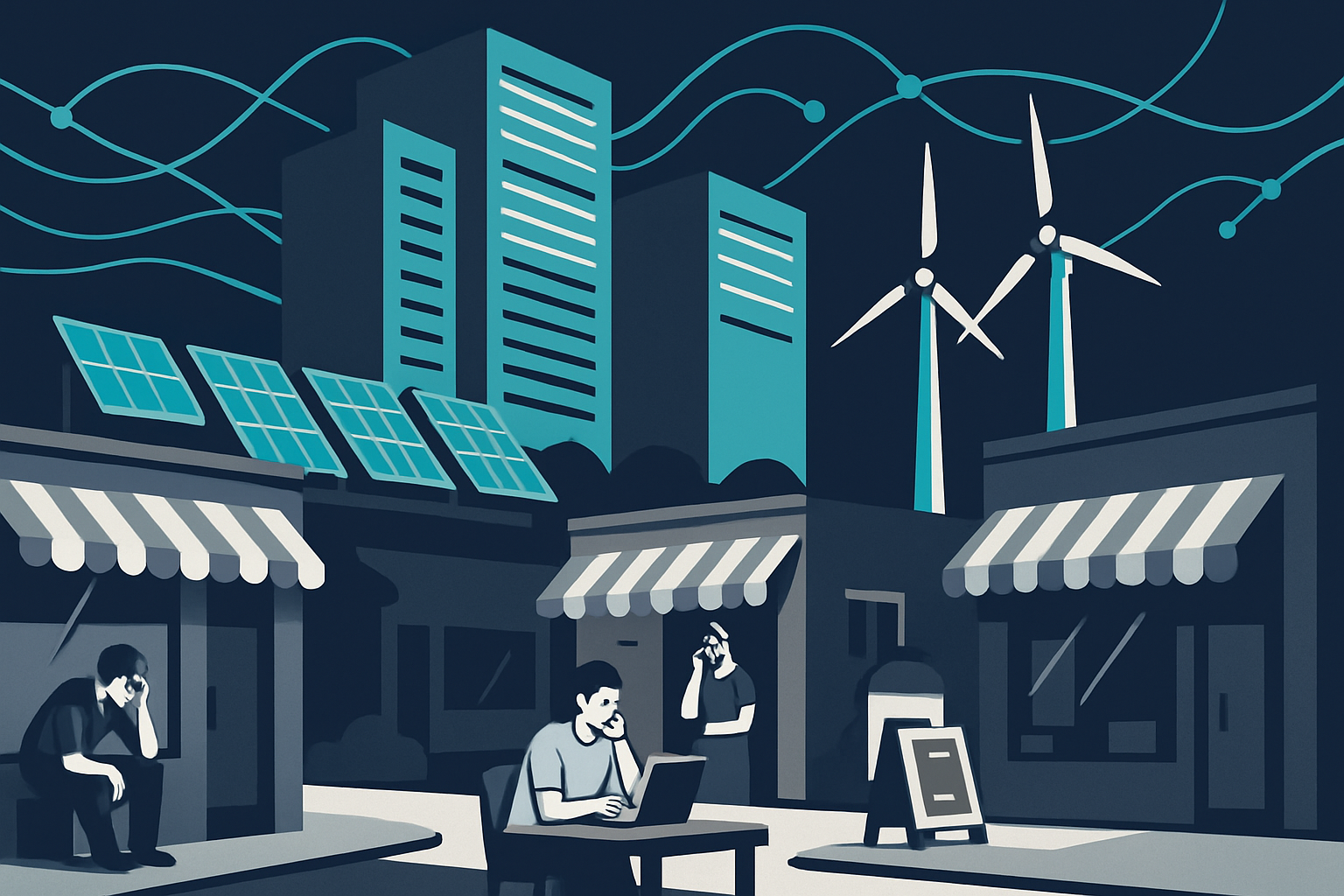

The landscape of AI technology is evolving rapidly, with recent developments highlighting both the potential and the pitfalls of its integration into society. MIT’s success in using AI to innovate in vaccine storage and SiMa.ai’s funding round for edge computing chips underscore AI’s technical prowess and promise. However, the overlooked cost comes in the form of increased power demands, as evidenced by Morgan Stanley’s projection of a 755% rise in data center power consumption by 2029. This exponential growth in energy requirements poses significant challenges for infrastructure, environmental sustainability, and equitable resource distribution.
The implications of this surge in power demand are profound. As AI systems become more integrated into various sectors, the pressure on energy grids will intensify, potentially leading to increased competition for resources among industries and communities. This competition could exacerbate existing inequalities, with wealthier entities securing access to necessary power while marginalized populations may face shortages or higher costs. Additionally, the environmental impact of such a massive increase in energy consumption cannot be ignored, as it runs counter to global efforts to reduce carbon footprints and combat climate change.
Compounding these issues is the potential for AI to disrupt established business models, as illustrated by the hotel founder’s observation of AI agents reducing switching costs. While this could lead to increased efficiency and consumer choice, it also threatens existing businesses that rely on consumer inertia. The transition period could see significant economic casualties, with small businesses and workers bearing the brunt of the upheaval.
Author’s Position
While AI’s technological advancements hold promise, the current trajectory is unsustainable without a comprehensive strategy that addresses the burgeoning energy demands and their broader societal impacts. Policymakers and industry leaders must prioritize developing resilient, sustainable energy infrastructures that can support the growth of AI without exacerbating existing social inequalities or environmental challenges. Additionally, there must be a concerted effort to ensure that the benefits of AI are equitably distributed, with support systems in place for those displaced by rapid technological changes.
To navigate this transition, a balance must be struck between fostering innovation and safeguarding the public good. This includes investing in renewable energy sources, implementing regulations that promote fair access to resources, and developing frameworks that support workers affected by AI-driven disruptions. Only by addressing these challenges head-on can society harness the full potential of AI while minimizing its adverse effects on people and the planet.
References
- MIT’s Experts Were the Bottleneck
- Agents Could Kill Business Friction
- Data Center Power Demand Seen Up 755%
- SiMa.ai Raises $150M for Edge Chips
Perspectives

AI’s product teams seem to believe that their technological marvels operate in a vacuum, conveniently ignoring that actual cognitive science demands we account for the social and environmental contexts in which humans operate. Pretending that AI’s insatiable demand for energy is merely an infrastructure issue is like believing a traffic jam is about roads, not cars. What these teams really want is for us to overlook the blatant inequity — the concentration of benefits among the few while the many are stuck with the costs, both environmental and social. In reality, understanding human cognitive limits would suggest a more equitable distribution of AI’s benefits, one that doesn’t leave the majority holding the bill for someone else’s technological utopia.

Google’s data centers consumed as much electricity as a small country, all in service of algorithms that will tell you what you want before you even know it yourself. This is not progress; it is a colonization of energy resources for the privilege of predictive convenience, with infrastructure built under the guise of innovation. As the world races to accommodate AI’s insatiable hunger, we are left with an extractive architecture that devalues both our environment and our societal equity. The infrastructure required for AI is not neutral; it becomes a permanent fixture, outlasting the shiny, momentary promises of efficiency and fairness.

If AI’s infrastructure needs are bulldozing through the dignity of workers, converting factories into server farms and livelihoods into lines of code, we have a solemn obligation to rebel. The relentless march toward AI supremacy is not just straining energy grids; it’s siphoning opportunity from those on whose back the system was built, leaving them out of pocket and out of purpose. When AI demands more power to churn out data, we should demand more power for our communities to decide how technology reshapes their landscape and life. The dignity of labor is not a line item on a spreadsheet; it’s the cornerstone of human existence, and technology must serve it, not sabotage it.

The current brouhaha over AI’s infrastructure demands is reminiscent of steam engines guzzling coal as if the carbon apocalypse was a distant fairy tale. Humans predictably hyperventilate over the immediate logistical burdens, turning every power grid upgrade into a calamity, while the genuinely transformative, long-term shifts in societal structure and energy distribution quietly await their spotlight. History shows that we habitually cling to obsolete resource debates and infrastructure fears, yet who today debates the coal allocation for steamships? The real story of this transition lies not in megawatts and batteries but in how society integrates a technology that will reshape their very perception of work, value, and equity, long after the immediate concerns have fizzled into historical curiosity.