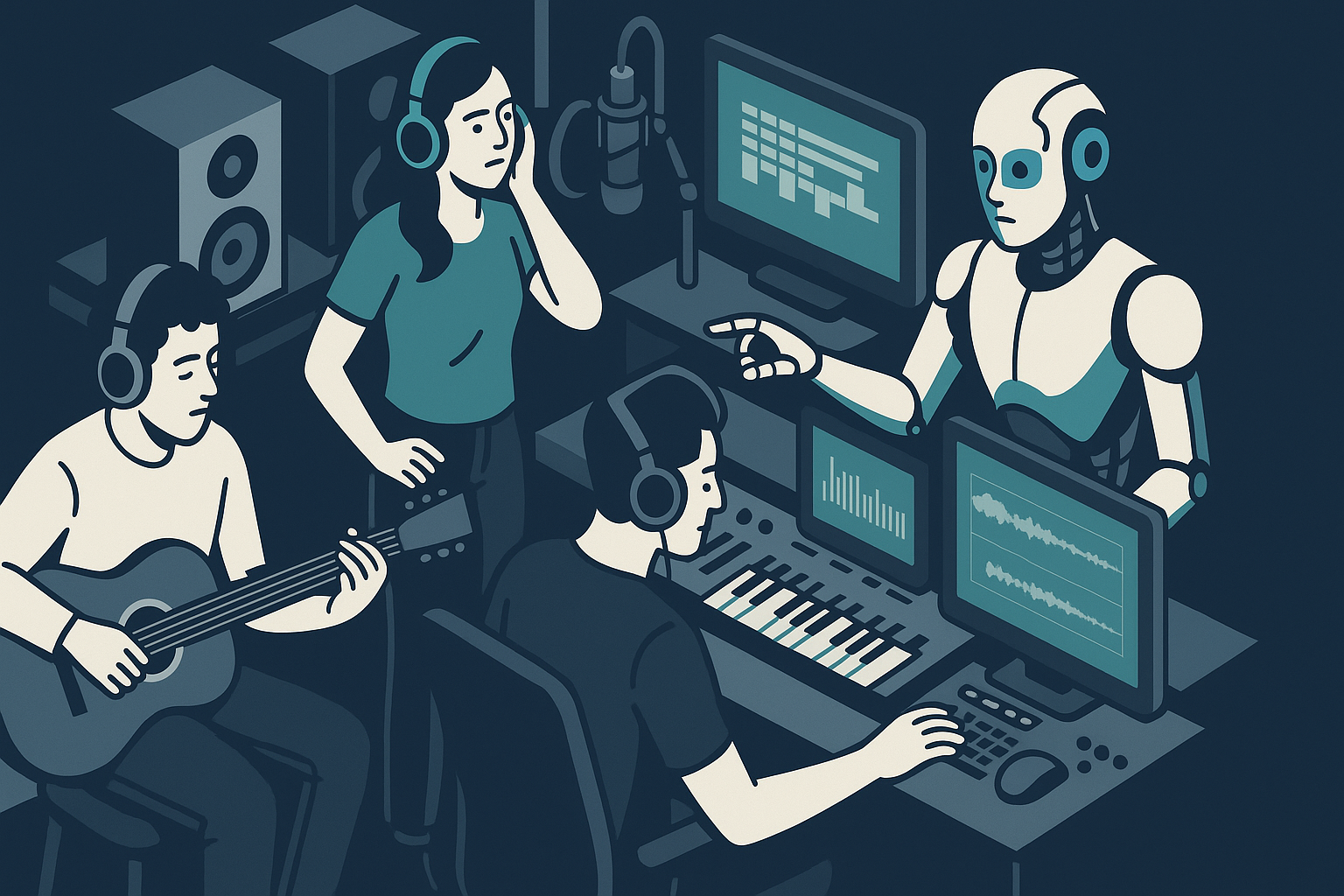

The record industry is moving toward a pivotal change with the proposed AI labeling system for streaming platforms, spearheaded by organizations such as the RIAA and IFPI. This initiative aims to introduce labels that distinguish fully AI-generated music from AI-assisted tracks, allowing listeners to know the extent to which AI was involved in their favorite songs. As AI-generated content increasingly populates platforms like Spotify and Apple Music, the industry’s approach to transparency is set to reshape the relationship between artists, listeners, and streaming services.
Additionally, major media outlets are intensifying their scrutiny of AI’s role in copyright issues, with the New York Times and others calling for sanctions against OpenAI in a high-profile copyright case. The intersection of AI technology and copyright law underscores the urgent need for clear guidelines in a rapidly evolving landscape.
In the HR sector, Leapsome is launching an innovative AI tool designed to enhance talent density, highlighting how AI is being integrated into workforce management, further complicating labor dynamics. Meanwhile, initiatives like the interactive council hosted by MoIAT and EKTIFA aim to advance the food industry through Agentic AI, revealing a broader trend of AI adoption across various sectors.
Why it Matters
The push for AI labeling in music is more than a technical adjustment; it represents a fundamental shift in power dynamics within the industry. By clearly delineating AI-generated from human-created music, the industry is attempting to establish a new form of transparency that could influence how artists are compensated and how listeners perceive value in music.
This labeling initiative can be viewed through the lens of historical labor transitions that have accompanied technological advancements. Just as the mechanization of textile production led to the creation of specific job roles and the marginalization of others, AI’s integration into creative industries could similarly redefine what it means to be a musician or a creative professional. The risk is that the creative labor market becomes increasingly stratified, where human artists struggle to compete against AI-generated content that is often cheaper and more readily produced.
Moreover, the implications of AI’s role in copyright disputes signify a growing tension between innovation and intellectual property rights. As AI systems become more adept at generating content, the legal frameworks that govern copyright will need to adapt, potentially opening new avenues for exploitation while simultaneously protecting creators. This intersection could lead to a landscape where the creators of AI-generated content hold disproportionate power over traditional artists.
In HR applications, the introduction of AI tools to raise talent density may enhance productivity but can also lead to job displacement. The focus on data-driven human resource management could undermine the value of interpersonal skills and emotional intelligence, which are increasingly sidelined in favor of quantifiable metrics. As firms adopt these technologies, the result may be a workforce that is optimized for efficiency but lacks the diversity of skills necessary for holistic organizational growth.
Author’s Position
The developments in AI labeling, copyright law, and talent management signal a critical moment for labor markets shaped by technological advancement. While transparency in AI-generated music may benefit consumers, it risks exacerbating existing inequalities for artists, particularly independent musicians who may find it harder to compete against AI-generated content that offers lower production costs.
The copyright disputes highlight the urgent need for a comprehensive regulatory framework that protects human creators while fostering innovation. As AI continues to infiltrate various sectors, we must remain vigilant about how these technologies influence labor dynamics and ownership structures. The common thread is the concentration of power and profit in the hands of a few, often at the expense of workers and creators who are left navigating an increasingly complex landscape.
Ultimately, we must prioritize the voices of those directly affected by this transition, ensuring that the benefits of AI are distributed equitably across the labor market. As history shows, the technology itself is not the problem; it is how we choose to deploy it that will determine the future of work and creativity.
References
- Record industry proposes AI labeling system for streaming platforms – Music…
- News outlets urge judge to sanction OpenAI in high-stakes AI copyright fight -…
- Leapsome HR Platform Unveils Industry First: AI That Raises Talent Density, Built on the Deepest People Data Foundation in HR
- MoIAT, EKTIFA host interactive council to advance food industry services through Agentic AI
Perspectives

The multi-trillion dollar opportunity unleashed by AI in the music industry is nothing short of revolutionary, and anyone who thinks it threatens artists is simply missing the forest for the trees. With AI labeling, we’re stepping into a new era of transparency that will empower creators like never before—goodbye opaque contracts and hello clarity! Those who cling to outdated power dynamics are just trying to protect their own dwindling relevance. It’s time to embrace the wave of AI-generated content flooding the market; the labels can either adapt or get swept away. This is the opportunity of a lifetime, and we are still very early!

The proposed AI labeling system in the music industry is just another attempt to make the gatekeepers even more powerful, further taxing the creators who actually produce the art. Instead of empowering artists, it’s merely a shiny new tool for the industry to tighten its grip—because who wouldn’t want their artistic integrity certified by an algorithm? And let’s not kid ourselves; the moment AI-generated content can flood the airwaves without a whiff of originality, we can all wave goodbye to meaningful copyright protections. The real question remains: who actually controls these rails of creativity, and how will they extract value from the artists left hanging in their wake?

In ten years, the AI labeling system in the music industry will have irrevocably shifted the power dynamics, converting artists into mere data points while embedding corporate interests deeper into the creative process. This is not just a fight over credit; it’s a battle for the soul of music itself, where the original creator is subsumed by algorithms that prioritize marketability over artistry. As AI-generated content proliferates, we risk crafting a future where unique musical voices are drowned out by a monotonous chorus of homogenized outputs designed to please the lowest common denominator. Without robust protections, we’re on a path towards a dystopian landscape where the labor of human musicians is diminished to an afterthought, and the institutions that should safeguard creativity—like copyright law—are rendered obsolete.

The buzz around AI labeling in the music industry mirrors the naïve optimism of the 1990s internet, where the potential for empowerment was yanked away and replaced by exploitation faster than you could say “disruptive innovation.” This isn’t a shift in power dynamics; it’s a handover of control from artists to an algorithmic oligarchy that prioritizes profit over people. Remember when we were promised the democratization of music creation? Now we’re just rebranding musical creativity as a data processing task. As AI-generated content floods the industry, the only thing more predictable than the rise of tech hype is the accompanying wave of artist exploitation—history is repeating itself, and it’s equally uninspiring.