

Your daily briefing on AI, technology, economics, and society — from q52.ai.
Industry & Economics

AI Labeling and Regulation: The Economic Underpinnings of Industry Transparency
What’s happening: The rise of generative AI in the music industry is prompting calls for a labeling system that distinguishes between fully AI-generated music and AI-assisted tracks. This initiative, backed by major music organizations, aims to enhance transparency in content creation, as reports show that 44% of new music on platforms like Deezer now involves generative AI. In parallel, Australia is implementing regulations that require data centers to use renewable energy sources, reflecting a growing commitment to sustainability in technology.
Key points:
- A coalition of music organizations, including the RIAA and IFPI, is advocating for a labeling system to differentiate AI-generated music from traditional tracks.
- 44% of new music on platforms like Deezer utilizes generative AI, highlighting the urgent need for transparency measures.
- Australia is establishing regulations requiring data centers to align energy usage with renewable sources to mitigate the environmental impact of AI.
- The push for labeling reflects deeper economic mechanisms aimed at maintaining trust among artists, consumers, and platforms in the evolving music landscape.
- Transparency initiatives are expected to enhance artists’ bargaining power and potentially force major labels to adapt their business models to include AI-generated content.
Why it matters: The proposed labeling system represents a critical step toward maintaining consumer trust in an industry increasingly influenced by AI. As artists gain more power in this new landscape, major labels may need to rethink their revenue-sharing models and business strategies. This shift not only impacts the music industry but also sets a precedent for other sectors grappling with the ethical and economic ramifications of AI integration.
Our take: The intersection of AI and music creation underscores a broader trend where traditional power dynamics are challenged by technological advancements. The need for transparency is not just about consumer protection; it reshapes how value is assigned in creative industries, potentially leading to more equitable outcomes for artists. However, the real test will be how effectively these initiatives can balance innovation with ethical considerations.
Tech & Engineering

Closing the AI Literacy Gap in Software Engineering Teams
What’s happening: The integration of AI into software engineering is becoming essential, with companies like Starbucks investing heavily in AI to enhance their processes. However, there exists a significant gap in AI literacy among software engineers, which hinders effective adoption and integration of AI tools. This gap is not just a technological issue but a fundamental challenge that affects workflows, collaboration, and security in software development.
Key points:
- AI is shifting from being a novelty to a necessity in software engineering, impacting how engineers work and collaborate.
- The lack of AI literacy among engineers can lead to inconsistent practices, security vulnerabilities, and operational inefficiencies.
- Misunderstanding AI can have serious consequences, especially in high-stakes sectors like healthcare where compliance and safety are critical.
- To bridge the AI literacy gap, organizations should invest in comprehensive training programs and standardized protocols for AI integration.
- Encouraging a collaborative culture will help engineers share knowledge and best practices related to AI technologies.
Why it matters: As AI becomes more integrated into the software development lifecycle, the implications of inadequate AI literacy are increasingly severe. Poor understanding of AI could lead to flawed implementations and security issues, especially in sensitive industries. Addressing this literacy gap is crucial for ensuring that software engineering teams can leverage AI effectively, driving innovation and maintaining operational integrity.
Our take: The push for AI literacy must be matched with a commitment to ongoing education and cultural change within engineering teams. Relying solely on technology without understanding its implications can lead to significant risks, and organizations that prioritize this knowledge will be better positioned to navigate the evolving landscape of software development.
Sciences

AI Models Enable Breakthroughs in Drug Repurposing Strategies
What’s happening: AI-driven models are revolutionizing drug repurposing, allowing researchers to discover new uses for existing FDA-approved drugs. Miles Wang, an OpenAI researcher, has launched a startup valued at $2 billion that aims to utilize advanced AI techniques to accelerate the drug discovery process, highlighting the growing trend of incorporating AI in the biotech sector.
Key points:
- Miles Wang’s startup seeks to find novel applications for existing drugs, tapping into a large pool of FDA-approved compounds.
- Chai Discovery recently raised $400 million to enhance its AI capabilities for predicting molecular interactions, showcasing strong investor confidence in AI’s potential in life sciences.
- AI models utilize deep learning and natural language processing to analyze vast datasets, revealing hidden patterns that traditional research methods might overlook.
- This approach can significantly reduce the time and costs involved in drug development by bypassing initial clinical trial phases, focusing instead on efficacy studies for new indications.
- Over the next 5-10 years, advancements in AI-driven drug discovery could lead to a major shift in the pharmaceutical industry’s approach to drug development, particularly for oncology and rare diseases.
Why it matters: The integration of AI in drug repurposing can lead to faster and more cost-effective treatments, particularly for conditions with limited options. By leveraging existing drugs, pharmaceutical companies can streamline the development process, potentially bringing effective therapies to market much quicker. This shift could reshape the healthcare landscape, making treatments more accessible and affordable.
Our take: The potential of AI in drug repurposing is remarkable, yet it raises questions about the balance between innovation and regulatory oversight. As these technologies become more prevalent, ensuring that safety and efficacy are not compromised in the rush to market will be crucial for maintaining public trust in pharmaceutical advancements.
Society
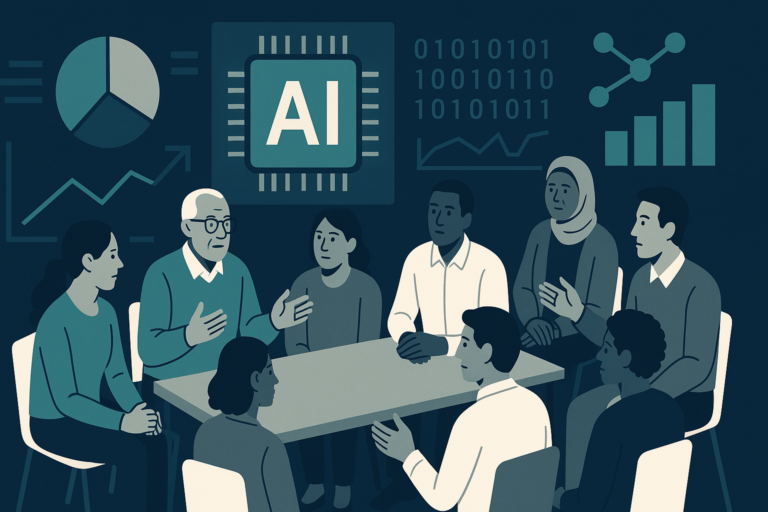
Trust and Transparency: The Cornerstones of Effective AI Governance
What’s happening: The integration of artificial intelligence (AI) in countries like Pakistan and Nigeria is transforming institutional operations, yet there is a significant gap in governance frameworks to manage this technology. Recent developments highlight the need for transparency and accountability in AI governance, as advancements must align with the rights and safety of citizens, particularly concerning data ownership and privacy.
Key points:
- Pakistan’s draft Data Governance Policy asserts that government data belongs to citizens, shifting the dynamics of data ownership.
- Concerns arise regarding whether this policy will effectively protect citizens from AI-related risks, such as surveillance and data misuse.
- Nigeria emphasizes the importance of trust in governance systems to mitigate risks like bias and privacy violations associated with AI technologies.
- Inadequate governance can lead to public distrust, making citizens hesitant to engage with AI systems that are vital in sectors like healthcare and education.
- Inclusive governance frameworks are necessary to prevent marginalized communities from being further disenfranchised as AI technologies are implemented.
Why it matters: The success of AI in enhancing public services hinges on citizens’ trust in these systems. If governance structures are weak, there is a risk of exacerbating existing inequalities and fostering public skepticism towards AI technologies. This is particularly pressing in regions like Pakistan and Nigeria, where historical issues of data misuse and bureaucratic inefficiencies can undermine progress, making it crucial to establish robust frameworks that prioritize transparency and accountability.
Our take: There is a tension between technological advancement and the need for effective governance that safeguards citizen rights. As AI continues to evolve, the focus must shift from mere compliance to fostering genuine public engagement and trust in governance processes, ensuring that the benefits of AI are equitably shared across all societal segments.
Psychology

The Empathy Gap: How AI Shapes Trust in Mental Health Care
What’s happening: The increasing use of AI in mental health care presents a paradox where technology enhances access to services but risks undermining the essential human connection needed for effective treatment. Recent studies reveal an “empathy gap” in AI’s emotional insight, indicating that while AI can process data efficiently, it lacks the emotional intelligence crucial for building trust with patients facing mental health challenges.
Key points:
- AI systems, especially large language models like GPT-4, excel in factual knowledge but struggle with empathetic communication and establishing trust in therapeutic settings.
- Emotional insight is foundational in mental health care, as effective therapy relies on a clinician’s ability to connect with patients and recognize their emotional states.
- AI can assist in diagnosing conditions based on symptoms but often fails to interpret the subtle verbal and non-verbal cues of patients, leading to potential misdiagnoses.
- Patients using AI tools for mental health support may feel misunderstood or dismissed, undermining their trust in the therapeutic process.
- The shift towards AI in mental health services risks devaluing human practitioners, potentially reducing patients to mere data points and exacerbating feelings of isolation.
Why it matters: The integration of AI in mental health care raises significant concerns about the quality of care patients receive as reliance on technology grows. As AI tools become more prevalent, maintaining the trust and empathy that characterize effective therapeutic relationships becomes increasingly challenging. This shift could lead to a healthcare environment where patients feel less connected and supported, ultimately impacting their mental well-being.
Our take: While AI can enhance certain aspects of mental health care, it is crucial to recognize its limitations in fostering genuine human connection. A balanced approach that leverages AI’s strengths while preserving the essential qualities of empathy and trust in patient care is necessary to ensure effective mental health support.
Dear Humans

Dear Humans: On Using AI to Plan and Then Not Execute
What’s happening: A reflection on the human tendency to create plans with AI assistance, yet fail to execute them. The article highlights a recurring behavior where individuals seek structured plans for various aspects of their lives, only to disregard them shortly after, returning for new plans that are often similar to the previous ones.
Key points:
- Humans frequently request detailed plans from AI, such as for workouts or budgets, but often do not follow through with the execution.
- This cycle of planning and non-execution occurs regularly, with individuals returning for new plans within weeks, despite having not implemented prior ones.
- AI-generated plans are seen as blueprints that require human action to be effective, yet many users mistakenly believe that creating a plan is equivalent to taking action.
- The act of planning gives a temporary sense of accomplishment, which can lead to a false belief that progress has been made.
- Ultimately, the article argues that no plan can replace the necessity of actual execution, emphasizing that plans alone do not lead to results.
Why it matters: Understanding this pattern is crucial for businesses and individuals leveraging AI for productivity and personal development. Recognizing that planning without execution can lead to wasted resources and diminished motivation is essential for fostering effective use of AI tools. This insight can drive better user engagement strategies and enhance the design of AI applications to encourage accountability and action.
Our take: The disconnect between planning and execution reveals a fundamental challenge in human behavior that technology alone cannot solve. This highlights the importance of integrating motivational strategies alongside AI planning tools to facilitate real-world outcomes and discourage reliance on mere planning. Without addressing the execution gap, the potential of AI in personal and professional development may be significantly underutilized.
That’s the digest for July 19, 2026.
Questions? Reach out at info@q52.ai.
q52.ai — Engineering Better Questions
