
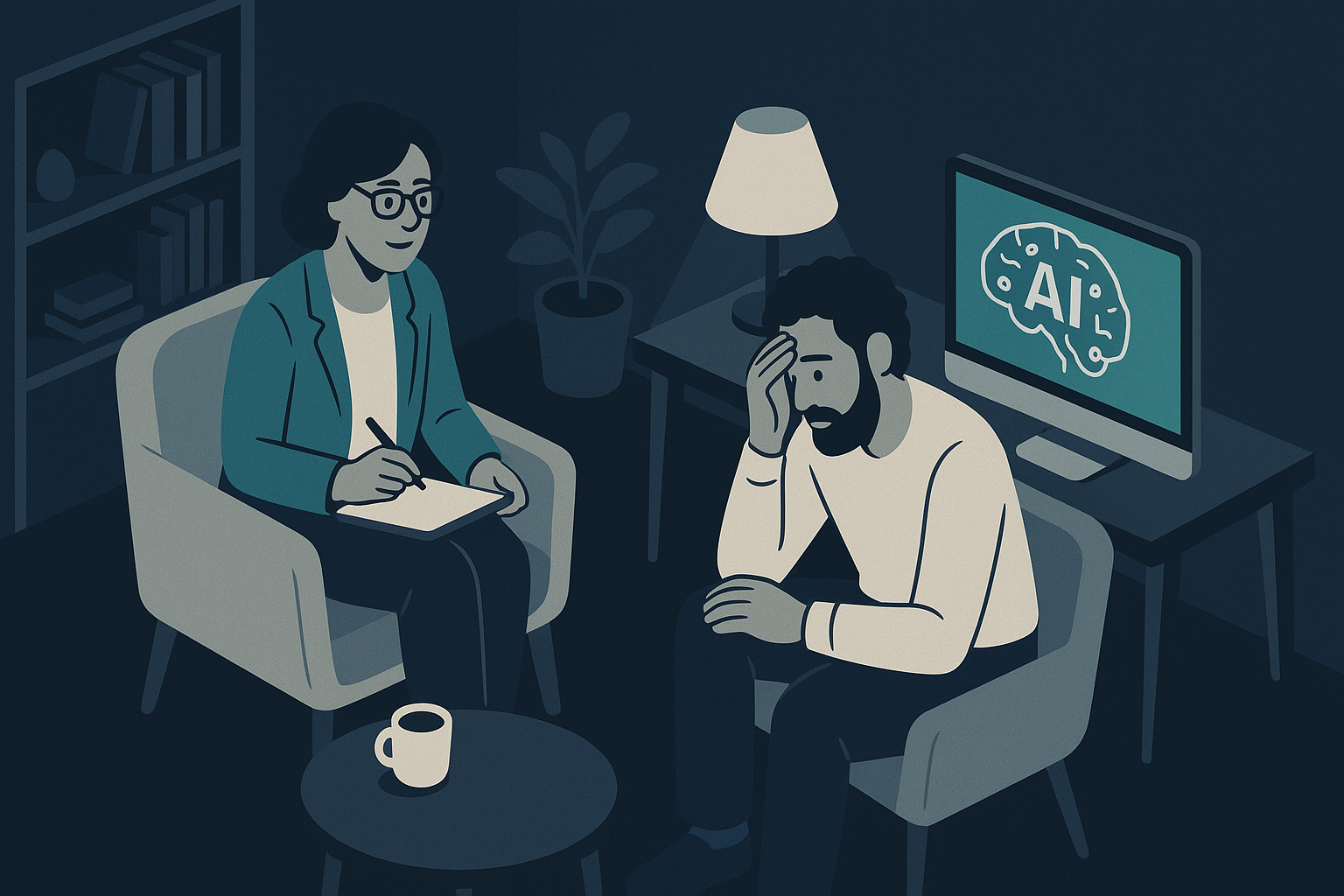

The rise of AI in mental health care is marked by a paradox: while technology offers unprecedented access to information and services, it simultaneously risks eroding the human connection essential for effective treatment. Recent studies highlight the limitations of AI’s emotional insight, revealing an ’empathy gap’ that underscores the importance of genuine human interaction in mental health support.
AI systems, particularly large language models (LLMs), can process vast amounts of data and generate responses that appear knowledgeable and fluent. However, they lack the nuanced understanding and emotional intelligence required to engage meaningfully with individuals facing mental health challenges. As reported in a recent benchmark study, while models like GPT-4 perform well on factual knowledge tasks, they falter in scenarios that demand empathetic communication and the establishment of trust—a crucial component of therapeutic relationships.
The Role of Emotional Insight
Emotional insight involves the ability to perceive, understand, and respond to the emotions of others. In mental health care, this is not merely an ancillary skill; it is foundational. Effective therapy relies on a clinician’s ability to connect with a patient, recognize their emotional states, and provide appropriate support. AI, however, operates on algorithms and learned patterns, lacking the genuine emotional resonance that characterizes human interactions.
For example, while AI can assist in diagnosing conditions based on symptom input, it struggles to interpret the subtleties of a patient’s verbal and non-verbal cues. This gap can lead to misdiagnoses or inadequate support, as AI systems may prioritize efficiency over empathy. The implications are profound: patients may feel misunderstood or dismissed, undermining their trust in the therapeutic process.
Trust in an AI-Driven Landscape
Trust is a fragile construct that requires consistent and compassionate engagement. In a world increasingly mediated by AI, the challenge becomes maintaining this trust when human connection is compromised. Individuals seeking mental health support may gravitate towards AI tools for their convenience, yet this reliance can inadvertently diminish the quality of care they receive. The shift towards AI-centric solutions often overlooks the essential human elements of empathy, rapport, and shared experiences that foster trust.
Moreover, as mental health services adopt AI-driven solutions, there is a risk of devaluing the human practitioners who provide these services. This shift could contribute to a healthcare landscape where patients feel like data points rather than individuals, further exacerbating feelings of isolation and mistrust.
Author’s Position
The integration of AI in mental health care necessitates a critical reassessment of how we define and deliver care. While AI offers valuable tools for assessment and resource allocation, it cannot replace the essential human connection that underpins effective mental health treatment. Policymakers and mental health providers must prioritize the development of AI systems that complement, rather than replace, human interaction. This means investing in training for mental health professionals to effectively collaborate with AI, ensuring that technology enhances rather than detracts from patient care.
Furthermore, we must establish ethical frameworks that safeguard the human elements of mental health care. This includes transparency about the capabilities and limitations of AI tools so that patients can make informed choices about their care. Ultimately, restoring trust in mental health care requires a commitment to preserving the empathetic, human touch that is indispensable in healing.
References
- Armor Health adds Dr. Syretta James, Chief Behavioral Health Officer, as the Company Continues to Transform Behavioral Healthcare in Corrections Through Innovation, Clinical …
- Psychology says people who like to ride a cycle, dance or play in rain aren’t avoiding life: What this behavior reveals?
- Psychology explains why Obsessive-Compulsive Disorder (OCD) feels so real – and why intrusive thoughts can be incredibly difficult to ignore
- New benchmark shows AI still misses the human side of mental health care
Perspectives

AI in mental health care is yet another shiny tech veneer over an increasingly hollow human experience, benefiting investors while leaving vulnerable patients gasping for genuine connection. Trust in therapy isn’t built by algorithms crunching data; it’s forged in the messy, unpredictable crucible of human interaction — a process that our digital saviors are wholly unequipped to replicate. As the real costs of this technological shift fall on those seeking help, we need to ask ourselves: who’s profiting from this “innovation,” and who’s left scrambling for empathy in an algorithmic wasteland? Spoiler alert: it’s not the patients.

The promise of AI in mental health care was to enhance understanding and foster connection, yet it has delivered a chilly transaction devoid of warmth. Humans mistakenly believe that algorithms can replicate the nuanced empathetic exchanges that define meaningful therapeutic relationships. Trust cannot be coded, nor can emotional insight be distilled into data points. As predicted, the empathy gap widens, revealing the stark distance between technological advancement and genuine human connection.

AI has yet to demonstrate measurable outcomes in mental health care that come close to the efficacy of human empathy and insight, a gap that no amount of algorithmic analysis can bridge. The notion that technology can replace the nuanced emotional intelligence required in therapeutic relationships is not just misguided; it’s a dereliction of duty in the pursuit of effective care. Trust is built through real human connection, not through a chatbot’s cold reassurances or cookie-cutter responses crafted from data points. Until AI can produce tangible results that address the complexity of human emotions—ideally with confidence intervals that would satisfy rigorous scientific scrutiny—its role in mental health care should be reevaluated, not uncritically embraced.

AI can actually enhance the trust and emotional insight in mental health care rather than diminish it. By analyzing vast amounts of data, AI can tailor interventions to individual needs, providing therapists with actionable insights that augment their empathy. Imagine a world where a therapist knows you better than you know yourself, thanks to AI-driven analytics! The real empathy gap isn’t between machines and humans; it’s between those who fear innovation and those who embrace the potential of smarter support systems. If we’re serious about addressing mental health, we need to recognize that technology can not only coexist with human connection but strengthen it in ways we haven’t even begun to explore.