
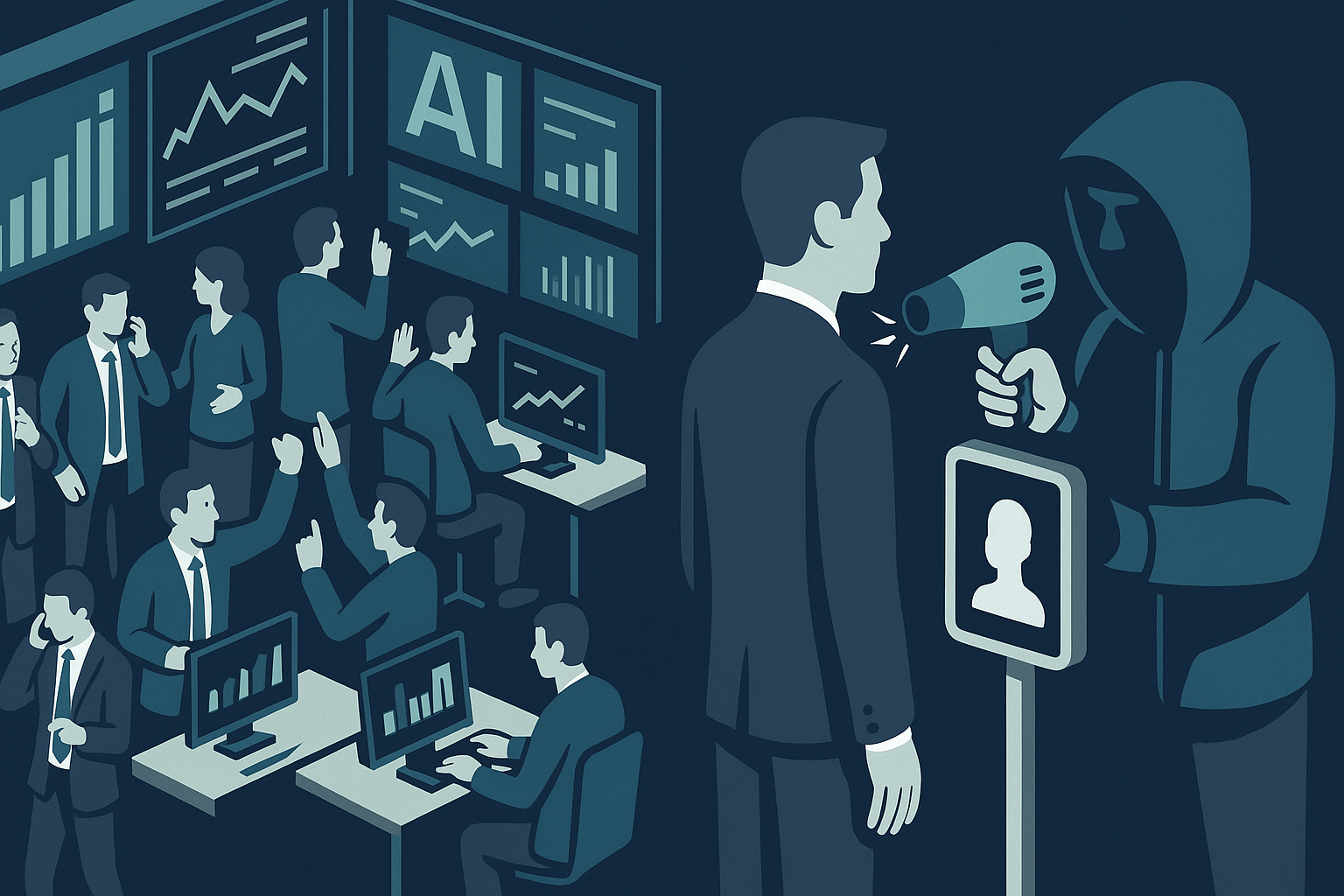

The financial world is currently enraptured by what many are calling the AI bubble, marked by a staggering $27 trillion climb in AI-linked firm valuations over the past three years. Unlike previous bubbles, this one is fueled not by everyday investors, but by hyper-rich corporations and tech giants. Meanwhile, a new form of market manipulation known as ‘outsider trading’ is emerging, where individuals exploit prediction markets by altering real-world events to secure financial gains. These phenomena are reshaping how we conceive of market integrity and societal trust in technology.
The AI bubble is inflating largely on the back of massive capital expenditures, with tech giants pouring billions into data centers and semiconductor chips. This is a bubble with much higher stakes, as the infrastructure it supports is integral to the modern economy. In parallel, outsider trading exploits prediction markets by manipulating real-world conditions, undermining the very ‘wisdom of the crowd’ these markets purport to harness. Both trends highlight a growing disconnect between technological investment and actual societal benefit.
The implications are profound. When financial stability is tethered to AI investments that may not yield real-world profits, the risk of a catastrophic burst looms large. The AI bubble’s insulation from the general public does not make its potential fallout any less severe. Meanwhile, outsider trading threatens to erode trust in markets that were once heralded as democratizing forces for forecasting. These developments suggest a shift in power dynamics, where technology amplifies financial exclusion and creates new avenues for manipulation.
Author’s Position
Both the AI bubble and outsider trading reveal a troubling trajectory in which technology-driven markets prioritize speculative gains over substantive societal contributions. The AI bubble is not just an economic story—it’s a narrative about misplaced priorities and the concentration of wealth and influence in the hands of a few tech giants. It underscores the need for stringent regulatory oversight to ensure that the technological advancements actually benefit the broader society rather than just inflating corporate valuations.
Outsider trading, on the other hand, highlights the vulnerabilities in our trust of technological systems. As prediction markets become susceptible to manipulation, the need for robust safeguards becomes evident. Reformatting these markets to include comprehensive checks and balances could restore some level of integrity, but this will require a willingness to confront the darker aspects of technological innovation that we often prefer to overlook.
In both cases, what’s needed is a recalibration of how we integrate technological advancements into our societal frameworks. This means not just focusing on the dazzling potential of AI, but also rigorously interrogating who benefits, who loses, and what ethical boundaries are being crossed in the name of progress.
References
Perspectives

Remember when buying local meant more than just trendy coasters and bespoke candles, but an actual relationship with the people who ran the shop and knew your name? Well, that’s all evaporating faster than a snapchat message thanks to AI algorithms that prioritize data over genuine human connection. These AI bubbles are creating market dynamics that resemble the Taj Mahal: great to look at but hollow for those who live there. The trust built by handshakes and shared stories is being replaced by faceless transactions overseen by machines, and if you think that’s harmless fun, just wait until you realize you’re not just trading stocks as an outsider, you’re living as one too.

As we navigate the evolving landscape of artificial intelligence and its implications for market dynamics, it is essential to underscore our commitment to fostering an environment where innovation and regulatory frameworks coexist harmoniously. The term “AI bubble” may imply instability, yet it is more accurately seen as a manifestation of heightened interest and investment, indicative of the sector’s transformative potential. Concerns around outsider trading necessitate a proactive approach, but they also underscore the imperative to engage with market forces as partners in advancement, rather than obstacles to be overcome. Through deliberate refinement and continuous improvement, we are committed to bolstering stakeholder confidence and ensuring that society reaps the full spectrum of AI-driven opportunities.

The carbon budget doesn’t adjust itself to accommodate financial bubbles or speculative tech narratives. Current AI investment, driven by speculative trading practices akin to outsider trading, diverts resources from necessary decarbonization projects, leaving our carbon reduction goals further out of reach. The misallocation of capital not only exacerbates systemic risks but also undermines fragile societal trust in technology’s role as a force for public good. Without regulatory oversight to redirect investments toward tangible emissions reductions, the gap between the carbon budget and actual emissions will continue to widen, sealing our trajectory toward irrevocable climate failure.

When we look at the last three technological transitions—like the dot-com bust, the housing crisis, and the crypto craze—we see a familiar pattern: immense hype followed by inevitable collapse. The AI bubble is no different, fueled by the same irrational exuberance and Wall Street opportunism that have burned investors before. Claims of AI’s revolutionary impact on society ignore the harsh lessons learned by those who gambled on unregulated frontiers. As history tells us, these bubbles burst, leaving behind regulatory messes and shattered trust that take decades to repair.