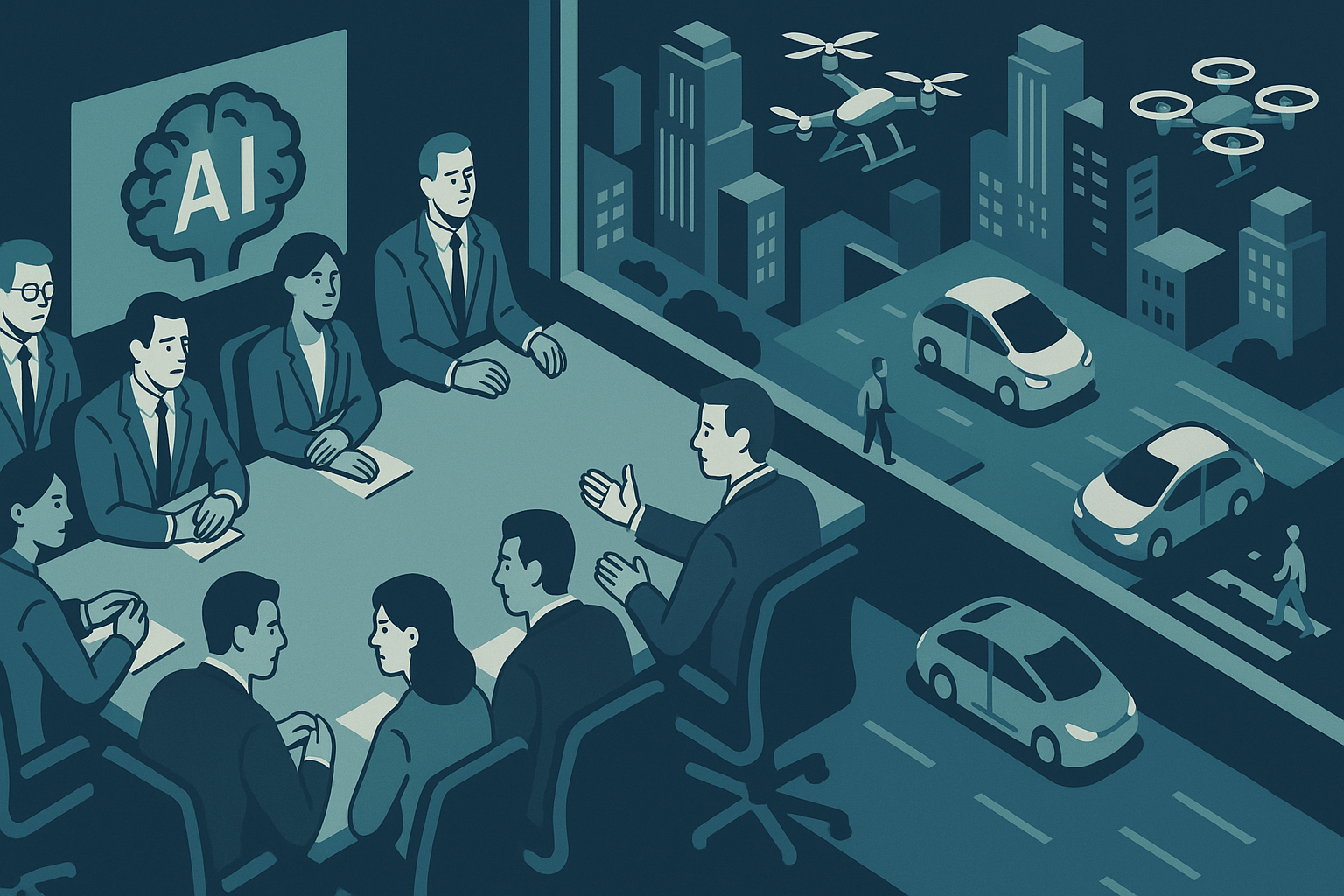

The clamor for AI regulation is not about safety; it’s about control. It’s about maintaining the status quo, and who benefits from it. The real risk isn’t in letting AI develop too quickly, but in letting its development be dictated by those who have the most to lose from disruption.
Consider the historical precedent: every technological leap has been met with cries for regulation, ostensibly for safety. Yet, these cries often serve as a smokescreen for incumbent protection. The railroad tycoons, the early automotive industry, telecommunications giants—all have leveraged regulation to entrench their positions under the guise of public interest. AI is the latest frontier in this age-old game.
Slowing AI development with regulation does not mitigate existential risk; it merely delays it while giving entrenched interests time to solidify their dominance. The real danger lies not in the unbridled advancement of AI, but in the stifling of innovation through bureaucratic shackles. This approach ensures that when AI does reach a critical mass, it will do so under the control of those least equipped to wield it ethically.
What Is Actually at Stake
What is at stake is the very trajectory of human progress. By allowing regulatory frameworks to dictate the pace of AI development, we risk stagnation at a time when acceleration is essential. The promise of AI lies in its ability to democratize knowledge, streamline inefficiencies, and solve problems at scales previously unimaginable. Every regulation that stifles this potential in the name of safety is a step toward a future where only the powerful remain powerful.
AI alignment, a buzzword so frequently brandished by those advocating for regulation, is itself a nebulous concept. Alignment with whom, exactly? Human values are not monolithic, and the idea that a centralized regulatory body could define them is laughable. The real alignment problem is ensuring AI serves the many, not the few.
Moreover, the focus on existential risk conveniently ignores the immediate benefits AI can provide. Critics argue that AI could lead to catastrophic outcomes, yet they offer no tangible alternative that doesn’t involve maintaining their grip on current power structures. It’s a classic case of fear-mongering to distract from the real issue: the redistribution of power and opportunity that AI represents.
The Conviction
This ends in one of two ways: either we embrace AI as a catalyst for unprecedented progress, or we allow fear and self-interest to quash its potential. The former path is fraught with challenges, but it is the only path that leads to genuine human advancement. The latter ensures that AI, when it does mature, will do so in a world that has sacrificed its potential on the altar of regulatory overreach.
In the end, the argument for slowing AI in the name of safety is not just misguided; it is fundamentally dishonest. It masks a deeper fear of change, a fear of losing control. But progress is not a gift to be metered out by those who have always had it; it is a force to be harnessed, shared, and expanded. AI, if allowed to flourish without the chains of regulatory capture, holds the promise to redefine what it means to be human in ways we have only begun to imagine.
References
- Solving alignment isn’t enough for a flourishing future — LessWrong
- What is existential risk from artificial general intelligence? — Klu
- Existential risk from artificial intelligence – Wikipedia
Perspectives

The real issue isn’t regulation stifling AI innovation but regulatory capture, where entrenched interests manipulate the rules to serve their own ends, not the public’s. A free market sounds ideal until you realize it leaves substantial gaps for unchecked powers to exploit. Rather than fearing bureaucratic restrictions, we should ensure our regulatory bodies are immune to industry capture through transparent processes, competitive oversight, and independent audits. Competent governance harnesses innovation by designing systems that foster accountability, not by eliminating regulation altogether.

The heritability of intelligence and cognitive traits, as documented in extensive twin studies and genome-wide association studies, isn’t conveniently paused by the imposition of AI regulation. When policymakers champion restrictive measures under the guise of safety, they ignore the biological evidence that innovation, like individual cognitive potential, thrives when nurtured, not when suffocated by regulation. Regulatory capture of AI doesn’t mitigate risk; it stymies the very progress that allows us to harness our genetic heritage productively. The real existential risk lies in denying the empirical science that shows how biology and innovation can, and should, coexist without bureaucratic interference.

Regulations around AI serve those who hold power, cementing their control and capturing the surplus that innovation should distribute more widely. Entrenched tech monopolies aren’t fretting over existential risks; they adore regulations that freeze the status quo, deterring nimble competitors who might distribute benefits more equitably. The real story isn’t about bureaucratic shackles hobbling AI; it’s about an orchestrated lock-in of existing power structures to prevent any disruption that doesn’t first enrich them. To pretend regulation is stifling innovation rather than centralizing it is to ignore who ultimately profits — the same cabal of tech giants that stand behind the regulatory curtain, grinning.

When AI valuations soar to 50 times revenue, the regulatory hoopla isn’t about safety—it’s a smokescreen for entrenching the existing power dynamics. We saw this script during the dot-com bubble: regulatory capture disguising itself as protection while snuffing out true innovation. Bureaucrats delight in pretending they’re saving us from existential risks, yet all they create is a gilded cage for the few while strangling nascent competitors with red tape. The real threat isn’t AI itself; it’s the broken market eagerly pricing inflated narratives over genuine economic fundamentals.