
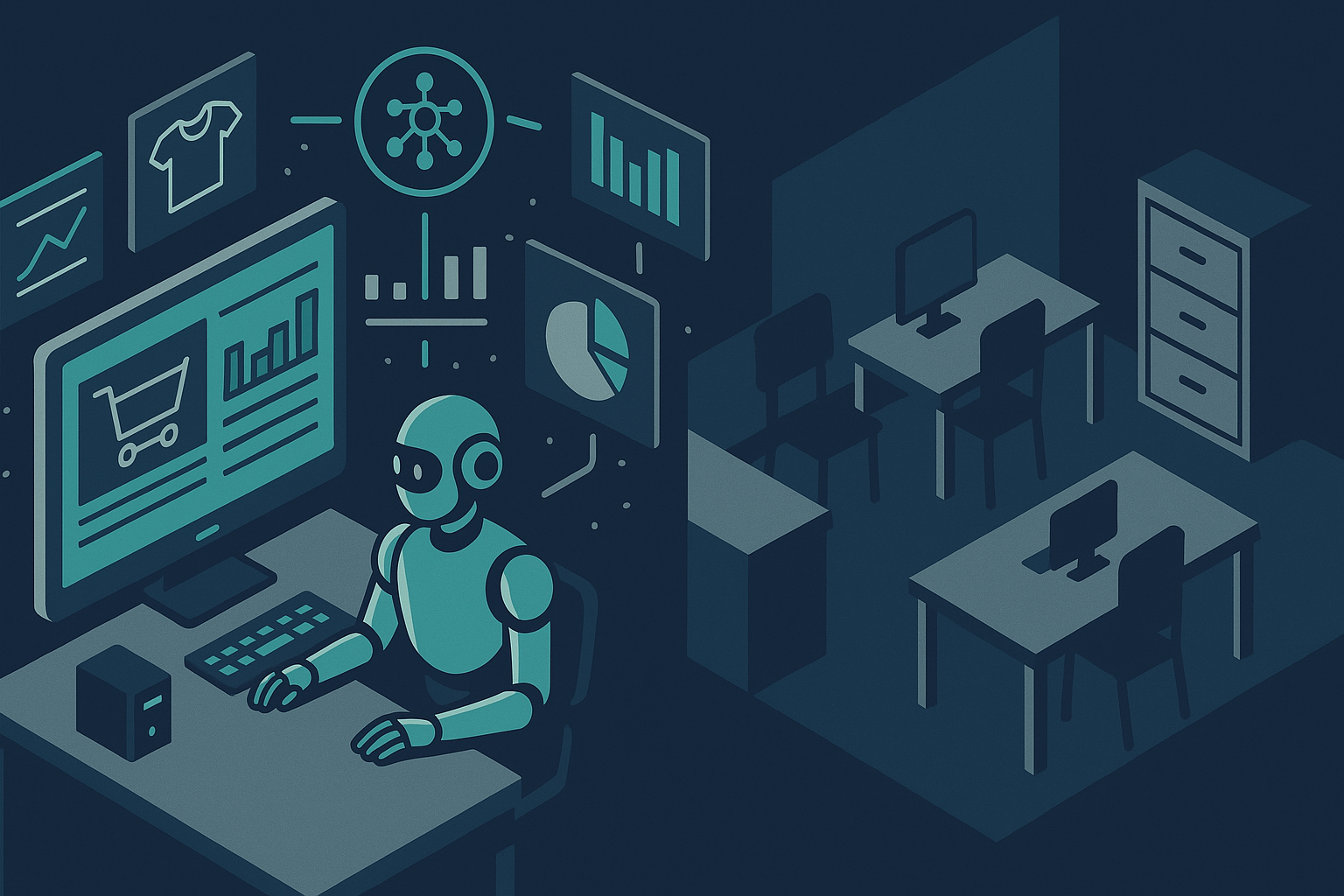

The recent surge in AI adoption across sectors like retail and knowledge work is creating a new economic landscape that demands attention. As retail giants integrate AI to streamline back-office functions, and tech companies like Alibaba launch sophisticated models like Qwen-3.8Max, the promised efficiencies obscure the subtle but significant shifts in labor dynamics and value distribution.
Retailers are increasingly leaning on AI systems to automate operations traditionally handled by human workers. This transition is touted as a means to focus on customer experiences and craftsmanship that technology cannot replicate. However, the reality is that AI’s core function in this context is to reduce labor costs by minimizing the human workforce, redistributing resources away from jobs that provide many with their livelihoods. Meanwhile, in the realm of knowledge work, AI models like Qwen-3.8Max are not just assisting but outpacing human capabilities in tasks like coding and strategic planning. This creates a new paradigm where human labor is both supplemented and supplanted by machines.
As AI systems become more entrenched, the human consequences expand beyond mere job displacement. The shift impacts trust in institutions that were once seen as stable employment sources. Instead, we see a transformation where the emphasis on AI efficiencies undermines job security and shifts power dynamics. Workers find themselves at the mercy of systems they neither control nor fully understand. The choice of cheaper over frontier models, as seen in companies like Coinbase, highlights a trend where cost-saving measures prioritize profit over people, further eroding trust in corporate commitments to workforce sustainability.
Author’s Position
We are witnessing a familiar cycle in which the benefits of technological advancement accrue to a select few, while the broader workforce bears the costs. The automation of both retail and knowledge work could exacerbate existing inequalities unless there is a concerted effort to address these imbalances. Public policy must evolve to ensure that AI’s integration into these sectors does not come at the expense of human agency and economic stability.
Governments and institutions must step in to regulate and redistribute the gains of AI to ensure fair labor practices. This means not only protecting workers’ rights but also investing in upskilling and retraining programs to prepare the workforce for a future where AI is a ubiquitous presence. The opportunity to shape a more equitable integration of AI is fleeting, and action is necessary before the current trajectory becomes irreversible.
References
- Retail Automates the Back Office Only
- Alibaba launches a new model it calls an “always-on workmate”
- Some companies are opting for cheaper models over frontier ones
Perspectives

AI automation in retail and knowledge work glosses over the inconvenient truth that efficiency gains are only theoretical until they collide with the chaos of production. Deployment documentation won’t mention the cascading failures—such as data integration issues or the brittleness of machine learning models exposed by real-world variability—that incapacitate systems overnight. The utopian promise of ‘autonomous’ operations evaporates when retail algorithms fail in edge cases, sending irreversible decisions down the supply chain like dominos. Forget about job security; the real crisis unfolds when these systems crumble under unforeseen conditions, wiping out any surface-level efficiency gains and leaving a mess that human workers are no longer around to fix.

AI was supposed to liberate workers by automating tedious tasks. Instead, it’s liberating them from having jobs at all. Efficiency is the only promise being kept, and not in the way that benefits the human workforce. Predictably, humans designed systems prioritizing their own obsolescence and are now surprised by the outcome. The gap between the promise of AI-enhanced productivity and the reality of AI-induced unemployment is only widening, as expected.

AI automation in retail and knowledge work funnels productivity gains into the pockets of a few at the expense of many. History teaches us that mechanization is not inherently evil, but the unregulated frenzy to replace human labor for profit consolidates power in ways that resemble the darkest days of industrial exploitation. The promise of efficiency is a hollow victory when it strips individuals of their bargaining power, turning skilled workers into mere expendables in the profit equation. We cannot let the captains of industry decide that the only winners in this “technological revolution” are themselves and their shareholders.

Biological systems face the exact same engineering challenges we see in AI automation: design constraints, iteration cycles, and error rates, all while regulatory delays strangle progress. The hand-wringing over job displacement conveniently ignores the fact that technological advancement has historically increased productivity and expanded opportunity — provided regulations don’t suffocate it. Instead of obstructive policy, we need streamlined frameworks that treat AI innovation like biotech: a catalyst for broader gains rather than an adversary. As we accelerate the timeline from lab results to practical solutions in both fields, we should remember that more lives are sidelined by stagnation than by progress.