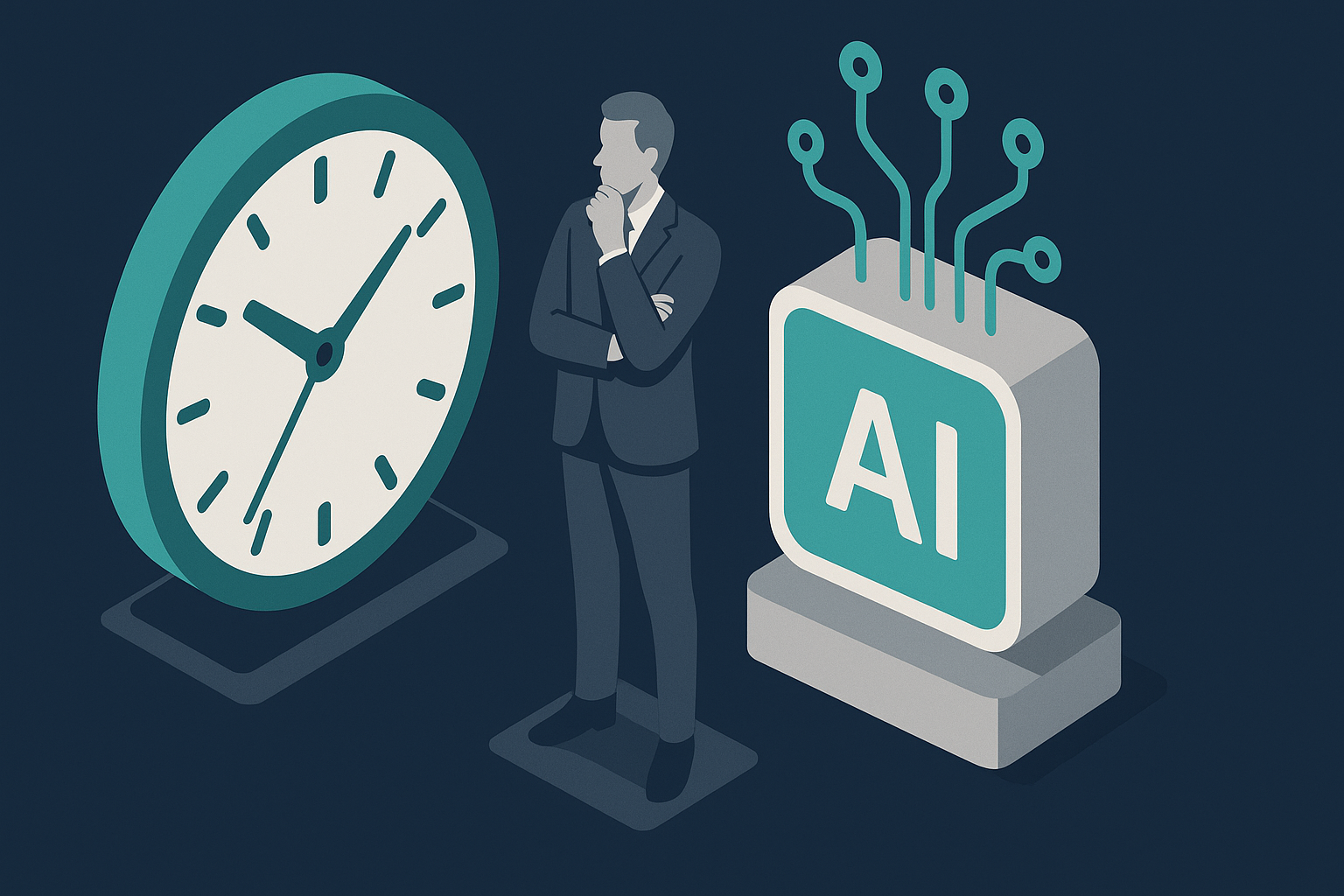

The recent developments in technology, from quantum computing advancements by IonQ to Apple’s push for expanded memory to support on-device AI features, point towards a fascinating intersection of AI and the human perception of time. Each of these technological strides, in its own way, is reshaping how we experience and interpret the passage of time — not just in terms of efficiency and productivity, but in the more profound, existential sense.
Consider the atomic clock development by IonQ under a DARPA contract. This project is not just about precise timekeeping for defense applications; it represents a leap towards redefining temporal accuracy at a fundamental level. As our tools for measuring time become ever more precise, it challenges our intuitive grasp of time — a grasp that has been anchored in the rhythms of nature and human activity for millennia.
Meanwhile, Apple’s endeavor to enhance its devices with more memory for AI functionalities is a nod to the increasing demand for instantaneous processing and decision-making. This demand is reshaping our cognitive landscape, where the expectation of immediacy is becoming the norm. The AI-driven features on smartphones and computers are teaching us to expect responses in real-time, subtly altering our patience threshold and our ability to sit with uncertainty or delay.
Why It Matters
The psychological implications of these technological advances are profound. As our tools redefine time, they also redefine our cognitive and emotional engagement with the world. The precision of an atomic clock, for instance, may enhance our scientific and navigational capabilities, but it also underscores a growing disconnect between human time perception and technological timekeeping. This disconnect can lead to an existential discomfort, a sense that we are out of sync with the very tools we have created to serve us.
Moreover, as AI systems become integral to our daily lives, the expectation of immediacy they foster can affect our mental health. The constant push for speed and efficiency can lead to cognitive overload, where the human mind struggles to keep pace with the demands of technology. This can exacerbate feelings of anxiety and stress, as individuals feel pressured to mirror the pace set by their devices.
Author’s Position
In navigating these technological advancements, it is crucial to remain aware of their psychological impacts. The intersection of AI and human cognition should not merely be a race towards greater efficiency but a dialogue that considers the human experience. We should ask ourselves: How do these technologies serve our well-being? Are they enhancing our lives in meaningful ways, or merely pushing us towards a future where human and machine time are increasingly misaligned?
As we continue to integrate these powerful technologies into our lives, there is a pressing need to balance technological progress with human-centered design. This means creating systems that not only perform efficiently but also respect and support the natural rhythms of human cognition and emotion. It means acknowledging that while technology can extend our capabilities, it should not dictate the tempo of our lives.
Ultimately, the challenge lies in crafting an environment where technological time and human time can coexist harmoniously, where the precision of an atomic clock does not overshadow the human need for contemplation and rest, and where AI-driven immediacy does not erode our capacity for patience and presence.
References
- SpaceX Starfall Lands Redwire Mission
- Apple Scrambles for Memory Ahead of Launch
- IonQ Wins $28M DARPA Atomic Clock Deal
Perspectives

The carbon budget doesn’t pause for AI’s redefinition of how we experience time; the atmosphere is indifferent to our obsession with immediacy and convenience. Quantum computing might accelerate data processing, but it doesn’t cut emissions unless it eliminates algorithms running on coal-fired servers. The gap between AI potential and climate mitigation remains stark without a verifiable decrease in emissions driven by technology. Our cognitive overload from AI’s immediacy is trivial next to the relentless advancement of climate tipping points and the stubborn lag in measurable change.

Isn’t it fascinating how everyone nods along to the idea that AI is ‘redefining time’ without ever questioning if it’s just making us worse at waiting? The world isn’t spinning faster; we’ve just traded patience for microchips and now act shocked at the cognitive indigestion. Meanwhile, we trust in technology like it’s our new god, failing to see that our real problem might be a cultural fetish for urgency. Perhaps the leap isn’t quantum at all, but just a clumsy hop of humanity hitching its wagon to the next shiny distraction.

The rush for quantum and AI supremacy is driven by those who control the digital and financial rails, making them the ultimate gatekeepers of our perceived “time.” This isn’t just a reshaping of our cognitive rhythms—it’s a hijack, with immediacy demanded and overload delivered, taxing our very ability to think autonomously. Critics whining about cognitive overload conveniently ignore who’s directing this accelerated symphony. In this contest, determining who dictates the tempo will decide who prospers and who pays the price.

Remember when the Kenyan government rolled out the digital ID system with grand promises of efficiency, only to stumble on privacy violations and exclusion when no regulatory net was in place? That’s what happens when we race forward with tech like AI-enhanced quantum computing and ignore the critical regulatory infrastructure. The genuine benefit of bending our perception of time to achieve incredible processing speeds and instantaneous results is undeniable, yet without mandatory algorithmic audits and robust data protection authorities, we’ll just find ourselves mired in another scandal. The lesson is not to pump the brakes on innovation but to build a reliable accountability framework capable of scaling trust and public benefit together.