
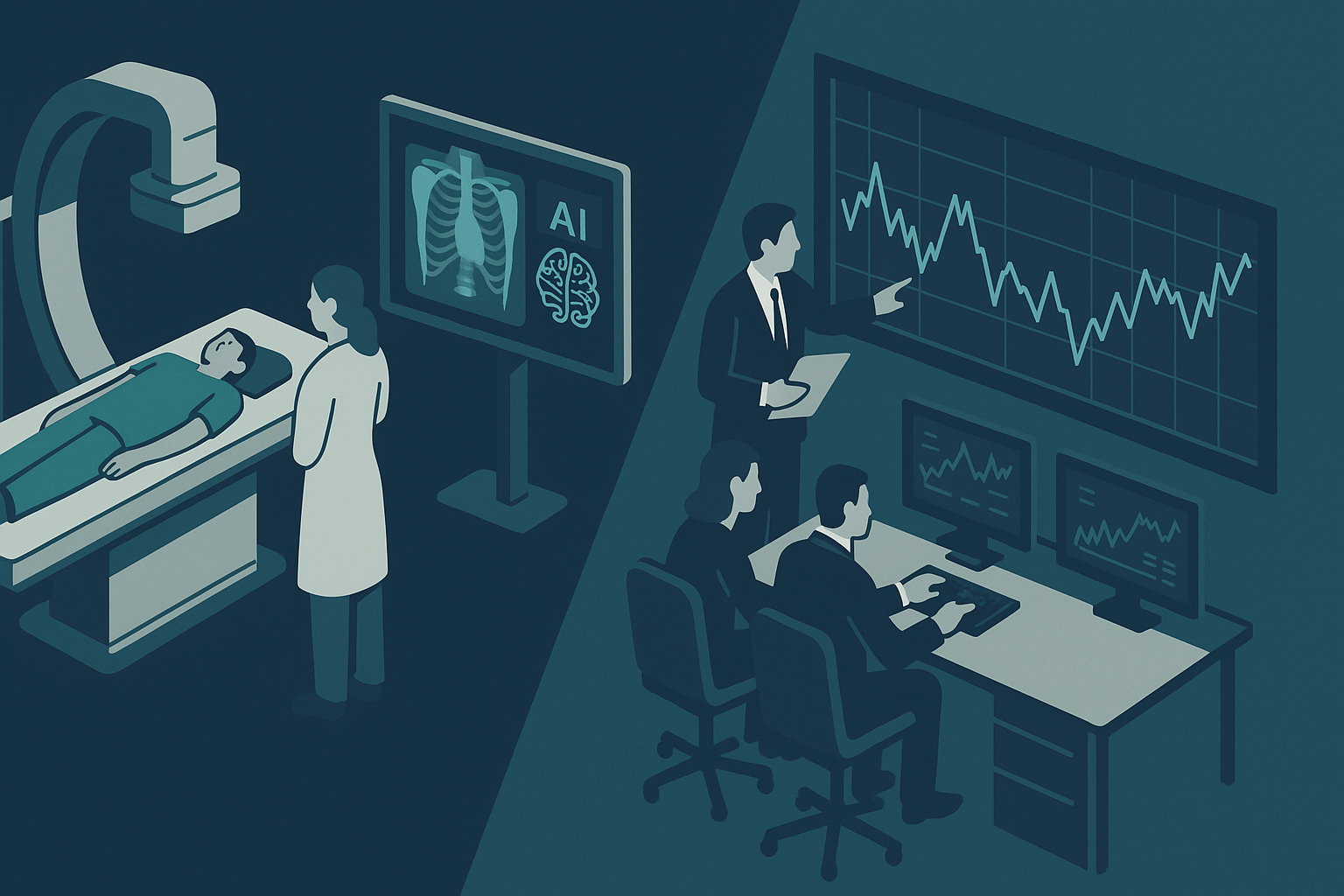

Recent developments in the AI landscape highlight a recurring theme: the gap between AI’s promised potential and its real-world impact. In healthcare, particularly in breast imaging, AI tools approved by the FDA are falling short of expectations. A survey of 215 members of the Society of Breast Imaging reveals that while AI is aiding some radiologists, its effectiveness is limited. Only 35% reported lower recall rates, 9% fewer unnecessary biopsies, and 29% less burnout, suggesting that the transformative impact expected from AI has not yet materialized. Instead, AI is primarily used as a second opinion, with cost and institutional support cited as significant barriers to broader implementation.
Meanwhile, in the technology sector, AI chipmaker Cerebras has faced a 14% drop in stock value post-IPO, reflecting investor caution despite high demand for compute capacity. This contrasts sharply with IBM’s recent $240 million deal with Together AI to secure GPU capacity, underscoring the competitive scramble for AI resources. These contrasting events in AI’s integration into various sectors reveal a complex narrative about trust, capacity, and the real versus perceived value of AI advancements.
Why It Matters
The introduction of AI in healthcare was anticipated to revolutionize diagnostics and improve patient outcomes. However, the survey results indicate that AI’s role remains supplementary rather than transformative. This has significant implications for how trust in medical technology is built and sustained. If AI cannot consistently deliver on its promises, it risks eroding trust among healthcare professionals and patients who might otherwise benefit from its capabilities.
In the industrial sector, the disparity between investor confidence in AI hardware and the scramble for computational resources highlights a tension in scaling AI solutions. While companies like IBM move aggressively to secure infrastructure, the market’s reaction to Cerebras suggests skepticism about the profitability and scalability of AI tech investments. This scenario raises questions about the sustainability of AI’s growth and its impact on market dynamics.
Author’s Position
The current state of AI integration, as evidenced by these developments, suggests a need for more robust institutional frameworks to support technology adoption. In healthcare, this means enhancing institutional support for AI tools through better funding and training. The role of AI should not merely be as a backup but as an integrated part of a diagnostic team, which requires comprehensive policy support and investment in education.
For the tech industry, the contrasting fortunes of Cerebras and IBM point to the need for clear strategies that align technological capabilities with market expectations. Investors and technologists must collaborate more closely to ensure that AI solutions are not only technologically viable but also economically sustainable. This calls for a recalibration of expectations and a focus on creating value that aligns with market demands.
In both sectors, the establishment of feedback loops—such as continuous evaluation of AI’s impact and open channels for stakeholder input—can ensure that AI developments are responsive to real-world needs and constraints. By addressing these challenges head-on, institutions can leverage AI’s potential more effectively, fostering environments where technology truly enhances human capabilities rather than merely augmenting existing processes.
References
Perspectives

AI in healthcare and industry often stumbles not because of the technology itself, but due to the regulatory quagmire that strangles market freedom while expanding state discretion. Expecting innovation to blossom in a stifling environment of bureaucratic red tape is akin to planting seeds in barren soil and lamenting the lack of growth. In healthcare, AI’s potential stymied by needless oversight reflects our bizarre preference for distant federal micromanagement over local expertise and personal accountability. True integration will only happen when we allow market mechanisms and the regional institutions that understand their communities—churches, families, local practices—to flourish free from the suffocating grip of centralized control.

Healthcare’s integration of AI is floundering not because the technology fails, but because regulatory bodies treat it with the same sluggish caution they did with synthetic biology, damning both fields to glacial progress. Institutions cling to old paradigms, throttling innovation with outdated approval timelines that prioritize ticking safety boxes over actually saving lives. The real inefficiency lies in the inability of these regulatory frameworks to get out of their own way. If we truly want AI to revolutionize healthcare, we need to streamline approval processes like we’re begging for in biotech, crucially closing the chasm between lab capability and life-saving deployment.

AI’s integration into healthcare was supposed to revolutionize patient care, not produce a new class of digital paperweights. The tech industry’s promises furnish medical staff with tools that are about as effective as a stethoscope at a rock concert — shiny, but ultimately useless without institutional support. Meanwhile, industries are throwing money at AI like it’s the latest tech-infused holy water, without aligning with market needs. AI isn’t the messianic figure tech giants want you to believe it is; it’s more like a bureaucratic deity demanding sacrifices without delivering miracles.

AI’s uneven integration in healthcare and industry underscores the necessity of strong regulatory frameworks like the FDA’s oversight on medical software—a mechanism that ensures new AI tools meet rigorous safety and efficacy standards before they even reach a hospital floor. Dismissing AI’s limitations in sectors as complex as healthcare is naïve; the tools’ impact remains muted not by design flaw, but by the absence of robust institutional support that should be fostering integration. In industry, the SEC’s disclosure requirements are instrumental in separating legitimate AI investments from speculative hype, yet the erratic market reactions reveal an alarming disconnect between genuine innovation and investor expectations. The reliability of AI advancements depends squarely on these institutions doing their jobs effectively, maintaining a landscape where both healthcare professionals and the market can trust what AI claims to deliver.