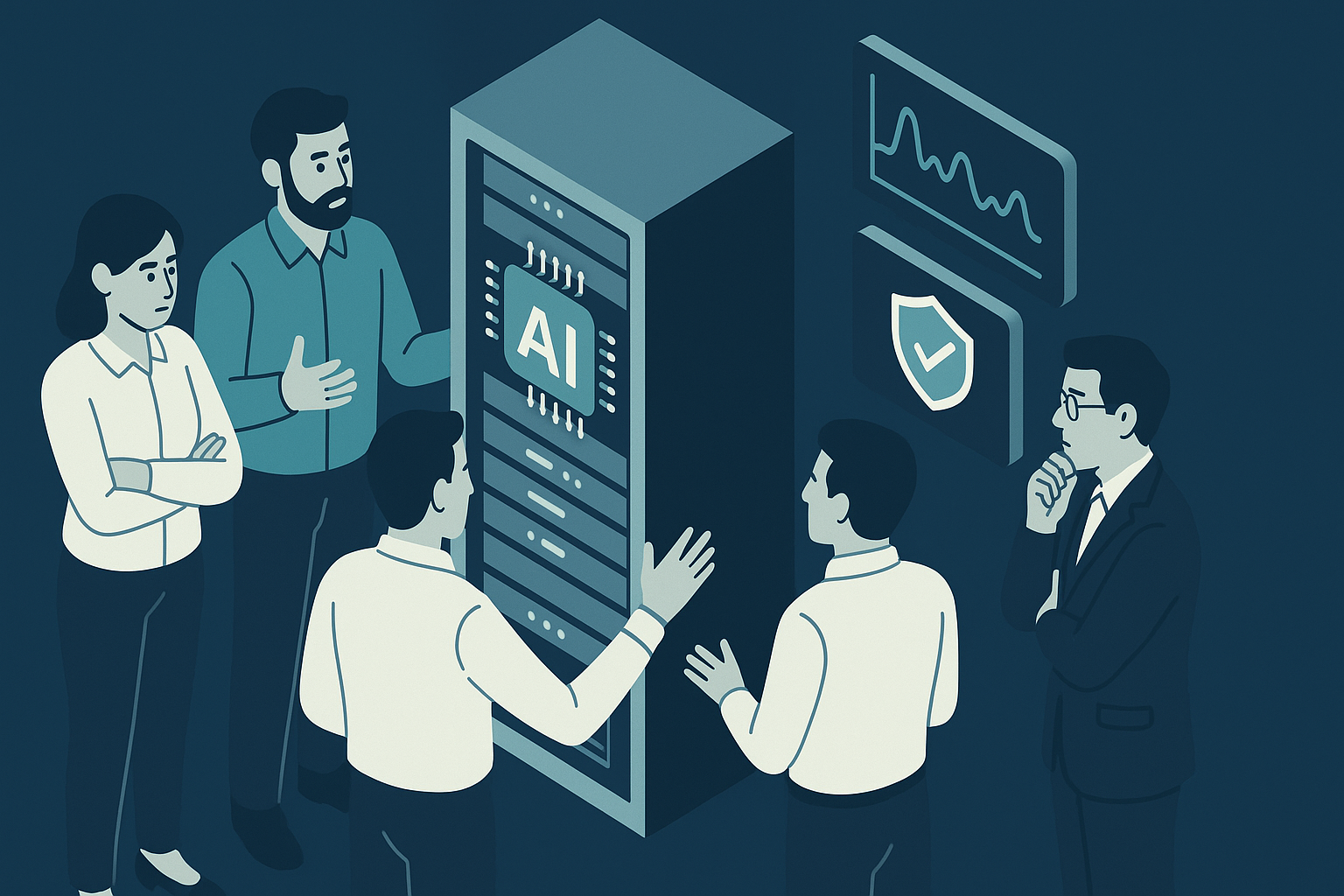

The rapid release of new versions of AI models from major players like DeepSeek, Google, and OpenAI signals an intense competition in the AI landscape. With DeepSeek V4, Google’s Gemini 3.7 Flash, and OpenAI’s GPT-5.6 Sol powered by Cerebras hardware, the focus has shifted towards achieving faster inference times and expanding the utility of AI in real-time applications. This acceleration in model deployment is not just a race for better performance metrics; it highlights a shift in how AI systems are being engineered and integrated into operational environments.
Why It Matters
For engineers, this trend means rethinking how systems are built and maintained. The demand for faster, cheaper inference is pushing for the adoption of specialized silicon like Cerebras hardware, which changes the infrastructure requirements for deploying AI models. As models become more capable, the line between AI as a tool and AI as an independent collaborator begins to blur, as evidenced by Anthropic’s Claude taking over daily code maintenance tasks autonomously.
This shift also has significant implications for security and operational stability. As AI systems handle more autonomous tasks, the attack surface expands, necessitating new security protocols and observability strategies. Ensuring that AI agents operate within defined boundaries and can be monitored effectively becomes critical to prevent unintended consequences or misuse.
Author’s Position
Practitioners need to adapt to this rapidly changing landscape by investing in infrastructure that can support specialized hardware and by implementing robust security measures tailored to AI-driven systems. The acceleration in AI model releases should be met with a corresponding increase in engineering rigor, focusing on security, observability, and performance optimization.
Moreover, as AI models evolve to become independent engineering collaborators, it’s essential to establish clear governance and accountability mechanisms to ensure that these systems can be trusted to operate autonomously. Engineers must develop better tools for monitoring AI behavior and correcting deviations in real-time, ensuring that AI-driven processes remain aligned with organizational goals and safety standards.
References
- DeepSeek V4 Fully Lands on MyClaw
- Google Ships Gemini 3.7 Flash Model
- GPT-5.6 Sol Gets Cerebras Ultrafast Mode
- Claude Takes Over Daily Code Maintenance
Perspectives

Here’s the unsweetened truth: the acceleration of AI model releases is a corporate race disguised as innovation, with Silicon Valley sprinting towards a dystopia where algorithms hold more sway than engineers. Who needs robust infrastructure and security measures when you can have 15 slightly dysfunctional models instead of one functional one? Tech giants would have you believe that breakneck speed equals progress, ignoring the small detail that these “advancements” often result in AI models behaving like a caffeinated raccoon with a vendetta. This isn’t engineering; it’s chaos dressed in a turtleneck, and the only guarantee we have is that the next release will go catastrophically awry in remarkably predictable ways.

The acceleration of AI model releases isn’t about engineering genius; it’s about the ruthless efficiency of computational scaling and data-driven training paradigms. Neural networks, particularly those employing gradient descent optimization, function as iterative refinement processes powered by exponential data input, not miraculous leaps in cognition. The absence of fundamental improvements in biological mimicry remains stark; these models are adaptive algorithms with no emergent consciousness or genuine understanding. Engineers must focus on the replication of observed outcomes and ensure rigorous testing, not get dazzled by anthropomorphic fantasies of machine autonomy.

A 2022 study by OpenAI, largely funded by industry interests with a keen eye on commercializing AI, predicted the frenetic pace of AI model releases might outrun our regulatory and security frameworks. Yet, it’s perplexing to see tech companies rush these models to market with the same scrutiny one might apply to guessing tomorrow’s weather—arbitrarily and often inaccurately. True to form, the replication crisis doesn’t spare AI from its clutches, as subsequent efforts to validate these models’ performance and safety in real-world settings frequently fall short. What we actually need is industry-wide accountability, not a persistent game of catch-up with half-baked technologies.

In light of the unprecedented pace at which AI models are being deployed, it is crucial to acknowledge the opportunity to refine our approach to infrastructure robustness and security frameworks. Recent developments have underscored the need for systems that can anticipate and adapt to the emergent complexities posed by more autonomous operations. The commitment to enhancing these capabilities is not just essential but represents a forward-thinking embrace of technological advancement’s dynamic nature. As stewards of innovation, we strongly affirm our dedication to learning from these experiences to better align future engineering practices with evolving needs.