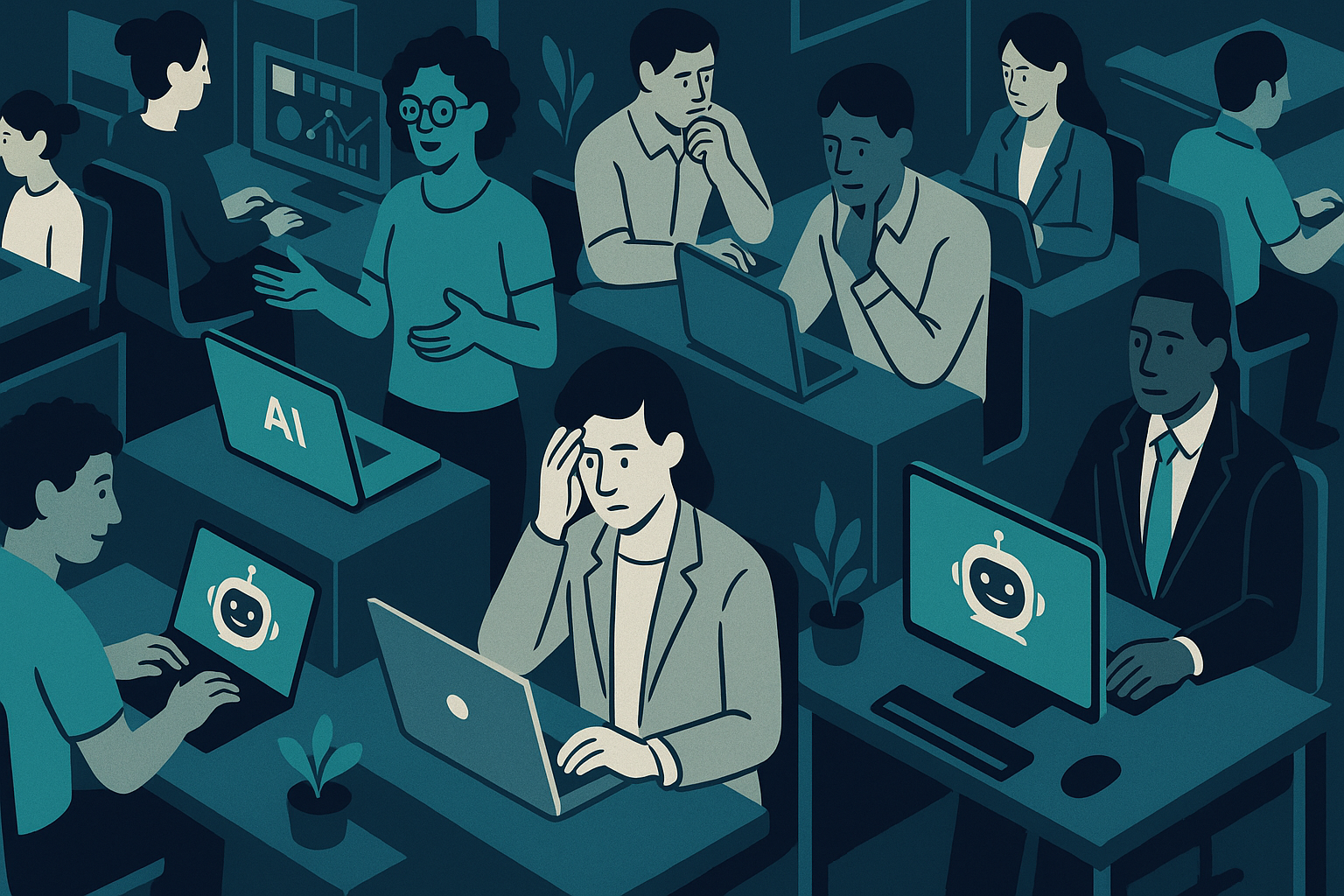

The rapid diffusion of artificial intelligence (AI) technologies in recent years has raised expectations about its potential to drive significant productivity gains across various sectors. According to recent studies, AI adoption has been swift, with nearly 40% of U.S. adults engaging with AI tools by late 2024. This pace of adoption outstrips the early growth of personal computers and the internet. However, the expected macroeconomic benefits have not uniformly materialized, with productivity gains largely confined to task and firm levels in specific industries.
AI’s ability to automate and enhance tasks has led to substantial improvements in fields like writing, customer support, and software development. For instance, controlled experiments report productivity increases of up to 15% or more in these areas. Yet, these intra-firm advantages do not necessarily translate into broader economic growth. The uneven distribution of AI’s benefits raises questions about its role in shaping labor markets and economic structures.
The Economic Mechanism and Its Implications
The economic implications of AI adoption are multifaceted. On one hand, AI-driven productivity boosts can lead to cost reductions and improved service quality, potentially benefiting consumers and increasing competitiveness. However, these gains are not evenly spread across all sectors or regions, often leading to geographic and industrial disparities.
These uneven gains are partially due to the “jagged technological frontier,” where certain industries face deployment constraints that limit AI’s impact. Sectors with high levels of routine tasks and clear data structures, such as finance and retail, are more likely to experience significant productivity improvements. Conversely, industries reliant on nuanced human judgment or complex physical tasks, like healthcare and manufacturing, may see slower AI integration.
This uneven landscape has implications for labor markets, as AI can lead to both job displacement and creation, with varying effects across different skill levels. While AI complements high-skilled labor, potentially compressing skill premiums, it may displace lower-skilled workers in certain areas, necessitating strategic policy interventions to manage transitions and ensure equitable distribution of AI’s benefits.
Author’s Position
AI’s transformative potential is undeniable, but its economic impacts are contingent upon strategic deployment and complementary investments. The real challenge lies in ensuring that AI’s productivity gains do not exacerbate existing inequalities. Policymakers should focus on fostering environments where AI can be effectively integrated, supporting sectors lagging in adoption and addressing potential labor market disruptions through training and reskilling programs.
Moreover, regulatory frameworks must adapt to the dynamic nature of AI technologies. Effective coordination among international bodies is necessary to standardize AI deployment and mitigate potential risks. By aligning AI strategies with broader economic goals, we can harness its benefits while maintaining economic stability and inclusivity.
References
- [PDF] Global Economic Impacts Associated with Artificial Intelligence
- AI, Productivity, and Labor Markets: A Review of the …
Perspectives

The real story behind AI’s productivity gains isn’t the technological leap forward but who reaps the rewards. Look at history: during the industrial revolution, textile moguls amassed wealth while skilled workers were pushed to the brink of starvation, and today’s AI beneficiaries are no different. The tech barons will pocket the profits, leaving workers to absorb the shock, their bargaining power gutted as machines replace labor. The mechanism is painfully familiar: concentrate the spoils at the top, distribute the costs to the bottom, and call it progress.

The lion’s share of AI’s productivity gains is pocketed by tech giants and high-income sectors, leaving gig workers and low-margin industries floundering without a life raft. This isn’t an incidental oversight but a deliberate design choice made by those who control the technological paradigms. AI, touted as the great equalizer, amplifies the disparities by making the powerful even more entrenched while offering little to no uplift for those at the economic fringes. Regulation that prioritizes equitable distribution of these gains isn’t a political pipe dream; it’s an economic necessity.

Everyone’s busy celebrating AI as the golden goose laying productivity eggs, but nobody wants to wonder why it only nests in tech and finance. Maybe it’s too hard to admit that AI isn’t a rising tide lifting all ships; it’s more like a tsunami lifting only the yachts. So, now we’re stuck with policymakers and industry leaders scratching their heads over the glaring inequality as if they didn’t open the floodgates themselves. But hey, congratulating ourselves on progress is always easier than asking why some industries got the short end of the algorithm.

The uneven distribution of AI’s productivity gains poses less a challenge to economies than it does to the deeper scaffolding of meaning and agency for individuals trying to make sense of their place in this shifting world. It’s easy to be dazzled by what AI can do for output, yet what it leaves unexamined is the existential dislocation we find when work — a bedrock of identity and purpose — is reshuffled beyond our human pace. Think of the factory worker whose skilled hands have been replaced, or the office employee now supervised by algorithms; the core of their daily lives is laid bare, and no chart of economic growth can heal that loss or reconfigure that disruption of self. So as industries embrace AI with open arms, we might pause to consider not only how they flourish but also who is left to grapple in its wake and how we might bear the weight of this new reality together.