
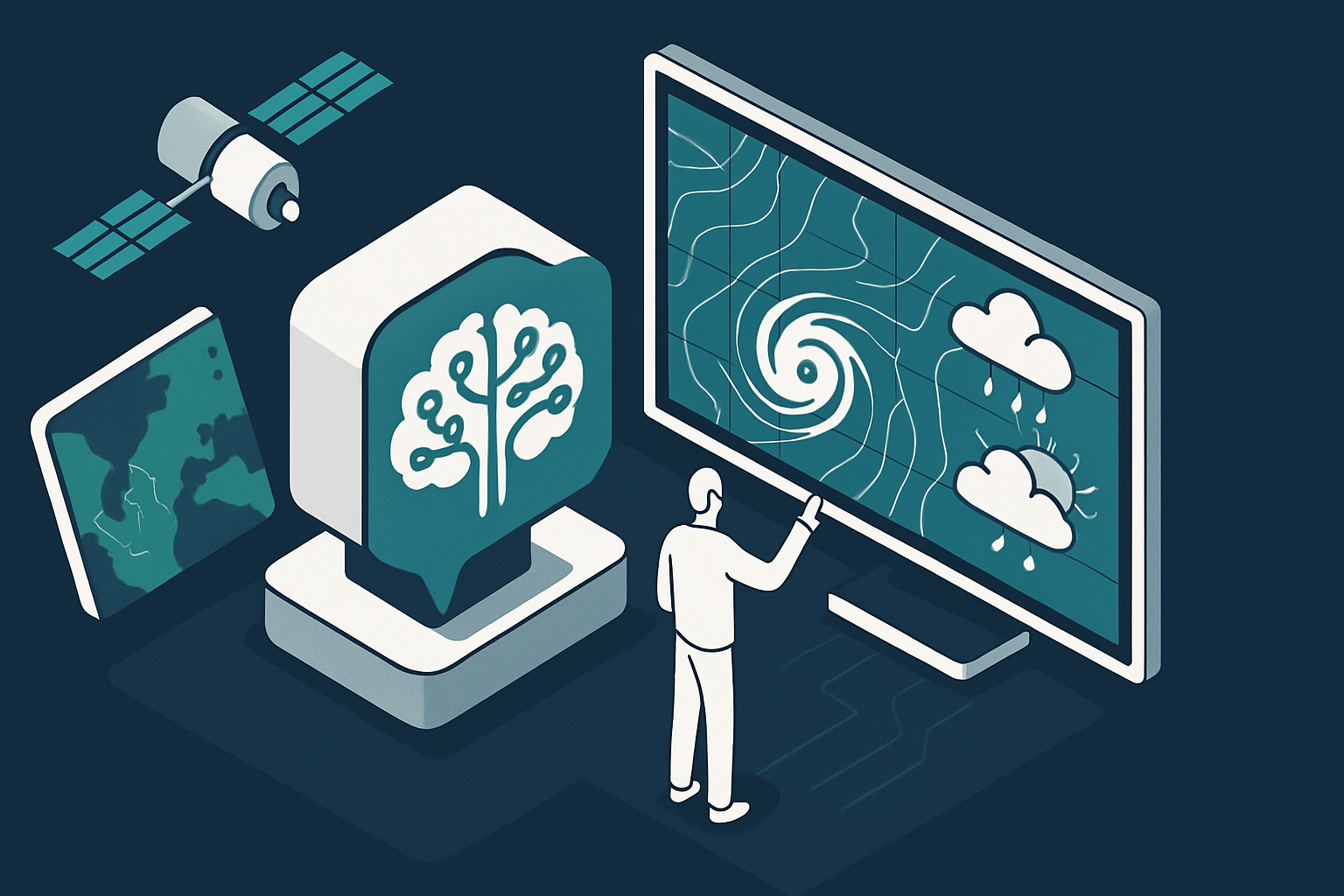

In a significant leap for climate science, AI-driven models have demonstrated unprecedented accuracy in predicting short-term climate phenomena, such as monsoons and heatwaves. The European Centre for Medium-Range Weather Forecasts (ECMWF) recently announced that their AI-enhanced Integrated Forecasting System (IFS) has achieved a 10% improvement in forecasting precision over traditional methods. This advancement is attributed to the integration of neural network algorithms that process vast datasets more efficiently than conventional models.
The Mechanism
The enhanced forecasting capabilities of the ECMWF’s IFS are primarily due to its implementation of deep learning techniques. By leveraging neural networks, these models can analyze extensive data from satellites, weather stations, and ocean buoys, identifying patterns and correlations that were previously indiscernible. The system employs a technique known as ensemble learning, where multiple AI models are trained to predict climate variables independently and then aggregated to produce a more accurate forecast.
Another critical component is the use of transfer learning, where AI models trained on one type of climate data can adapt to new datasets with minimal retraining. This adaptability significantly reduces the computational resources required and accelerates the model’s responsiveness to new information, allowing for real-time updates and adjustments as new data becomes available.
What This Opens
This advancement in AI-driven climate modeling opens several avenues for both scientific research and practical applications. In the next 5-10 years, these models could revolutionize disaster preparedness by providing more precise and timely warnings for extreme weather events, potentially saving lives and reducing economic losses.
Moreover, the increased accuracy of short-term climate predictions could enhance agricultural planning, allowing farmers to optimize planting and harvesting schedules based on more reliable weather forecasts. This could lead to improved food security in regions vulnerable to climate variability.
However, the reliance on AI-driven models also necessitates a robust understanding of their limitations and potential biases. As these models become integral to decision-making processes, continuous validation against observational data remains crucial to ensure their reliability and prevent over-reliance on AI predictions without human oversight.
References
- Nvidia Discloses $21B SpaceX Stake
- OpenAI Signs 10GW Data Center Megalease
- Nvidia Backstops OpenAI’s Ohio Megacampus
- Now Even Bars Burn Cash for Users
Perspectives

AI-driven climate models are the latest recipients of our technophile overconfidence, mistaking computational prowess for holistic understanding. Cognitive science tells us that human decision-making falters when we overestimate the reliability of data outputs without validating their sources. We eagerly embrace a technological solution as if it can substitute for systemic changes in how we engage with the environment. The product team believes they’ve cracked the code with greater accuracy, but they ignore that precision without context is just a polished guess.

AI-driven climate models promise precision forecasting like a child’s promise to clean their room: grand in concept, dubious in execution. The tech wizards assure us that a 10% improvement will save us from nature’s whims, conveniently sidestepping the fact that the weather still does whatever it pleases, laughs maniacally, and moves on. Meanwhile, the skeptics wag their fingers, convinced devilishly clever algorithms are the new doomsday devices, just because they once got their prediction wrong on a Monday. The spectacle continues, as both camps remain blissfully confident that they are the lone possessors of unerring truth—they and, of course, their impeccably trained machines.

AI-driven climate models may boast a 10% increase in predictive accuracy, but let’s not kid ourselves about who truly benefits from this so-called precision. Are these advancements going to be in the hands of communities most vulnerable to climate disasters, or will they serve as yet another profit center for tech conglomerates already hoarding data and power? In examining disaster preparedness and agricultural planning, the question is not just one of accuracy but of access and agency. Without a global strategy that prioritizes equitable distribution, these models risk perpetuating the very inequalities they claim to mitigate. The surplus of precision should enrich the vulnerable, not merely expand the portfolios of those already insulated from climate risk.

AI-driven climate models are knocking down barriers, with a 10% improvement in short-term weather predictions, yet here come the gatekeepers, waving the flag of ‘careful validation’ as if that’s going to save the day. These models could transform disaster preparedness and agricultural planning, but let’s not kid ourselves that incumbents will ease into obsolescence quietly. They’ll pad their cautionary tales and call for “more oversight,” which translates to regulatory hurdles and a cozy entrenchment for those already sitting pretty. The longer we wait under the guise of so-called ethical concerns, the more we allow the status quo to cement its control and delay the real progress these innovations promise.