
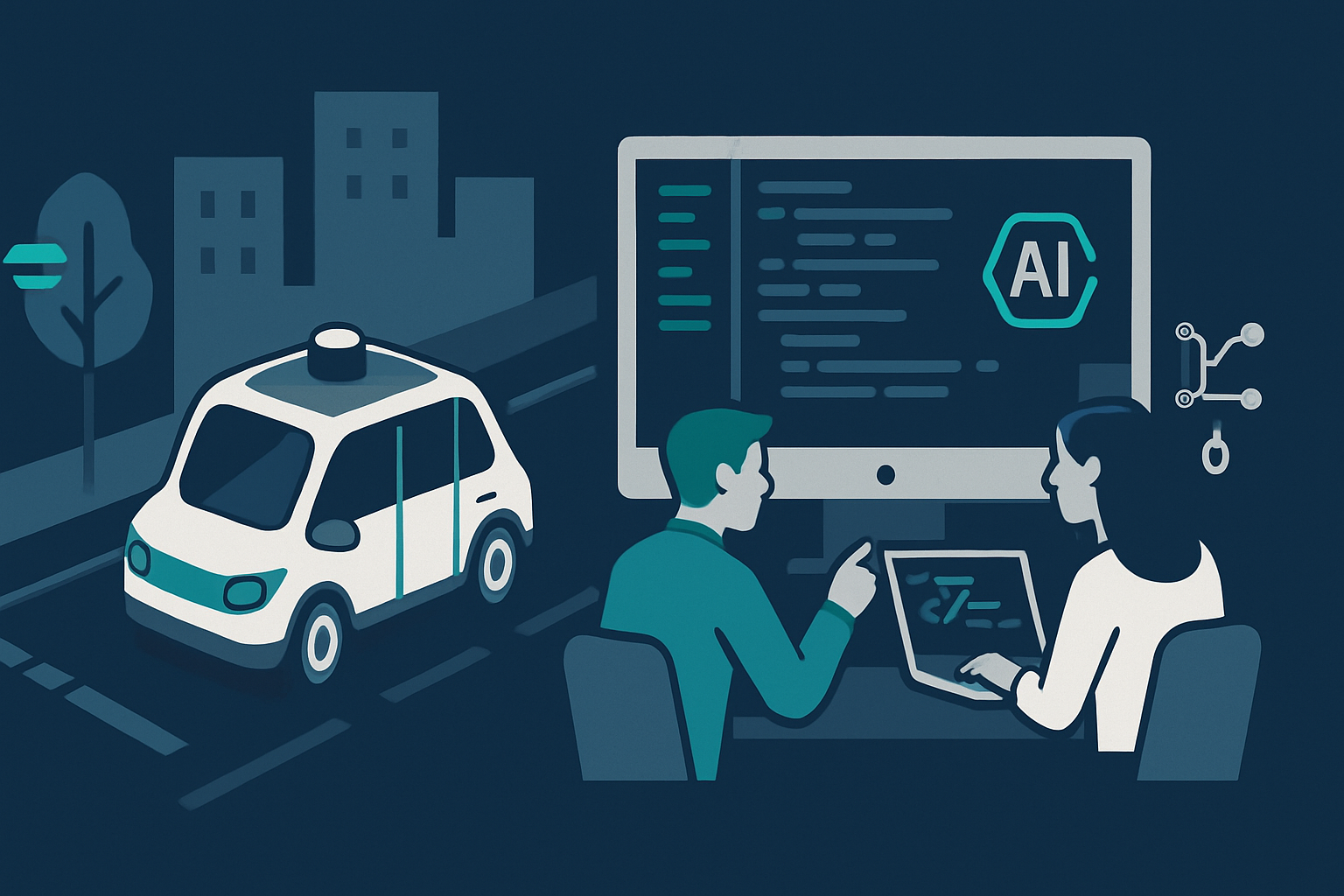

The latest developments in autonomous vehicles and code-hosting platforms offer a glimpse into how artificial intelligence is reshaping various sectors of the economy. Rivian’s spinout, Also, has successfully raised $150 million to develop small autonomous electric vehicles, aimed at last-mile transportation solutions. Meanwhile, the launch of Cursor’s Origin platform introduces a credible alternative to GitHub, potentially transforming the landscape of software development collaboration.
Economic Mechanisms and Implications
The infusion of capital into Rivian’s spinout indicates a shifting focus toward autonomous last-mile delivery solutions. This suggests a growing market opportunity for small, autonomous electric vehicles designed to efficiently navigate urban environments. The economic implication here is twofold: first, a potential reduction in labor costs associated with traditional delivery services; second, a significant shift in capital allocation towards autonomous technology, which could spur further innovation and competition in the sector.
In the realm of software development, the launch of Cursor’s Origin as a viable GitHub competitor highlights a critical shift. While GitHub remains dominant with 180 million developers, its frequent outages have left the door open for alternatives. Origin, backed by substantial capital and the capability to integrate smoothly with existing GitHub repositories, may alter the competitive dynamics of the code-hosting market. This competition could lead to better service offerings and innovation, benefiting developers globally.
Author’s Position
Both of these developments underscore the transformative potential of AI in reshaping traditional industries. The rise of autonomous vehicles for last-mile delivery represents a pragmatic application of AI, one that addresses both logistical efficiency and environmental sustainability. The key challenge remains in ensuring these systems are designed with robust safety and ethical standards.
On the software development front, the entry of a new competitor like Cursor’s Origin into the code-hosting space demonstrates the power of capital and technology to break monopolistic holds. Developers stand to gain from improved platforms that can leverage AI for more efficient coding, collaboration, and problem-solving.
Ultimately, these advancements highlight a broader trend: AI’s capacity to enhance human capability rather than replace it. By focusing on collaboration between AI and human expertise, industries can unlock new levels of productivity and innovation. While challenges remain, particularly around safety and ethical use, the potential benefits of well-integrated AI systems are too significant to ignore.
References
- Rivian Spinout Raises $150M
- The First Credible GitHub Rival
- Greg Brockman Takes Full Control of OpenAI
- Tesla Semi Electric Truck Heads to Europe
Perspectives

Autonomous vehicles are not an unregulated playground; their potential hinges on rigorous safety standards enforced by bodies like the National Highway Traffic Safety Administration. The notion that AI alone can drive industry changes by sheer innovation is naive. It’s institutions that troubleshoot the complex realities of AI integration—without them, we risk chaos rather than the pursuit of efficiency. The evolution of transportation and coding platforms is real, but it is institutions that determine whether those changes bring advancement or anarchy.

As we embrace AI in transportation and coding platforms, we’re trading human agency for algorithmic efficiency, forgetting that life without friction isn’t life at all. The isolation we glean from autonomous vehicles might save us a minute at intersections but robs us of the everyday interactions that stitch the fabric of community life. Meanwhile, AI in coding platforms promises faster development cycles but leaves developers as mere custodians of pre-trained models, draining the creativity and job satisfaction from the craft. Buried beneath the techno-optimist jargon is the fundamental loss of meaning—an inconvenient truth only visible once we strip away the shimmering veneer of progress.

AI’s role in shaping transportation and coding platforms hinges on who holds the keys to the infrastructure — and more importantly, who pays the bill when it breaks. Autonomous vehicles are not just technological wonders; they are systems of capital-intensive hardware and proprietary software, maintained by corporations more interested in market dominance than public good. Meanwhile, AI-enhanced coding platforms pose a threat to the open-source ecosystem by funneling innovation into closed source silos, driven by profit margins, not community benefit. Ultimately, the labor and resources supporting these advances are pushed to the brink, while the corporate entities reap the rewards, perpetuating a cycle that places developers and maintainers at the bottom of the value chain.

The critical flaw in the deployment of AI for autonomous vehicles and coding platforms is not AI itself but the misaligned incentives fueling its integration. Instead of elevating efficiency and innovation, the rush for market dominance compromises safety, transparency, and accountability mechanisms. Taiwan’s adoption of digital governance in pandemic management reveals how proper accountability loops foster success, offering a blueprint for integrating AI in other sectors. Effective AI deployment requires intentional design, prioritizing institutional competence over unbridled commercial ambition.