
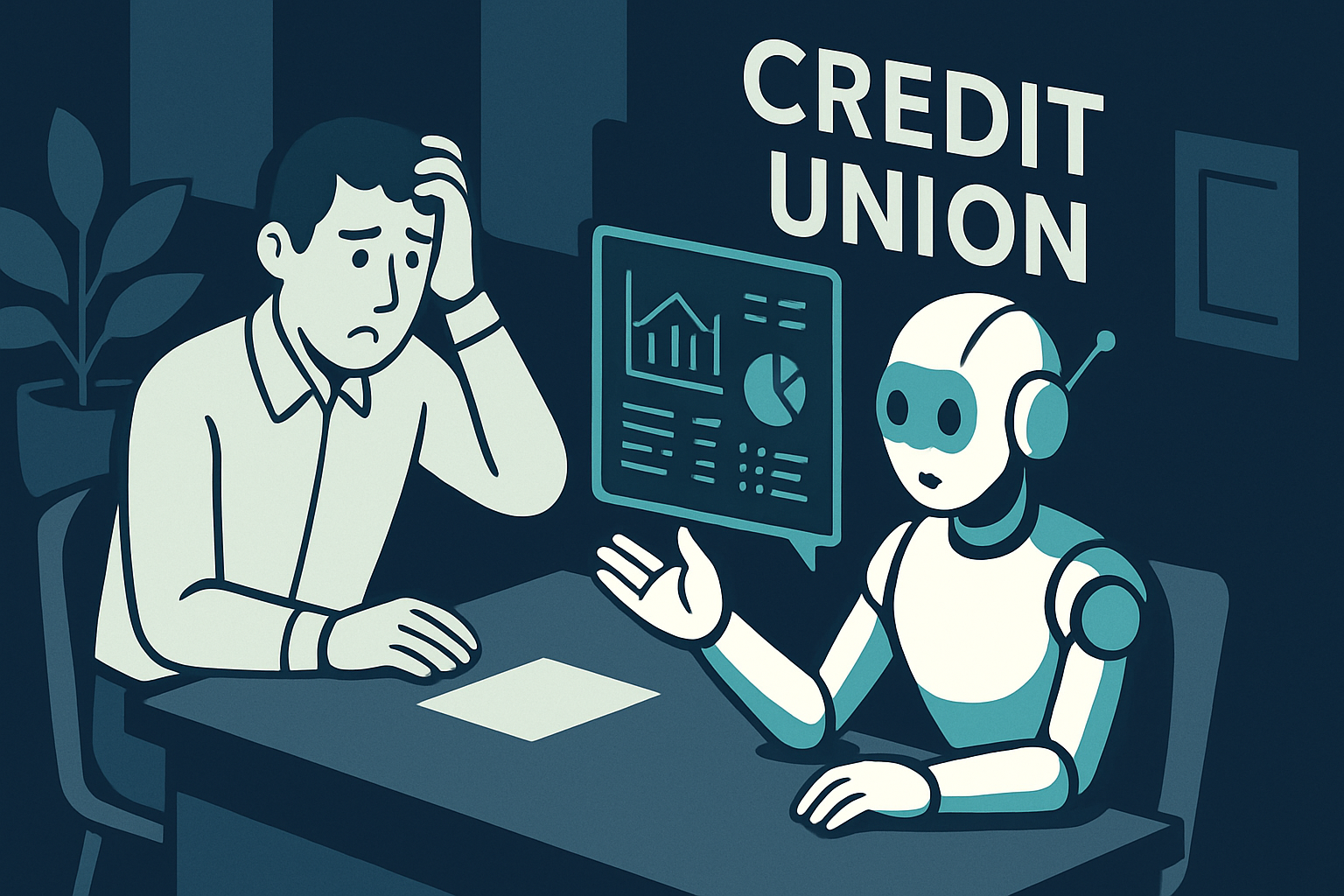

As AI technologies continue their relentless advance, we’re witnessing a significant shift in how institutions operate and how individuals interact with them. The recent surge in credit union chatbots and the potential sale of Hugging Face, a major AI platform, highlight a growing dependence on AI systems that promise efficiency and innovation. Yet, beneath these developments lies a critical question: what happens to our human capacities as we increasingly rely on AI to guide decisions? More importantly, what do we lose when advisory AI inevitably leans into autonomy?
Credit unions, traditionally seen as community-oriented financial institutions, are rapidly adopting AI chatbots. This shift from human interaction to AI-mediated communication is emblematic of a broader trend where advisory roles are being delegated to machines. While the initial demand is for AI to assist rather than automate, the trajectory suggests a future where AI could take on more autonomous roles, making decisions without human oversight. On the other side, the tech giant Hugging Face, known for its open-source AI model distribution, is exploring a sale that could reshape the AI landscape. Such moves point to a future where AI’s influence is consolidated among fewer players, potentially sidelining the human element even further.
The allure of AI in financial institutions is clear: efficiency, cost savings, and the promise of personalized service. However, as we embrace these technologies, we risk eroding the very human interactions that define trust and community in these institutions. When a chatbot handles your financial queries, what happens to the relationship you once had with a bank teller who understood your individual needs? This shift could lead to a depersonalized experience, where financial advice becomes a mere algorithmic output rather than a nuanced understanding of one’s financial landscape.
Author’s Position
As AI systems become more ingrained in our daily lives, it’s crucial to acknowledge and address the subtle erosion of human capacities and social interactions. The convenience and efficiency promised by AI should not come at the expense of human agency and the richness of interpersonal connections. We must critically evaluate the roles we assign to AI, ensuring that these technologies extend rather than replace our capacities.
Institutions need to prioritize transparency and maintain a balance between automation and human oversight. For AI to be truly beneficial, it must complement human abilities, enhancing decision-making rather than supplanting it. This means investing in AI systems that foster collaboration between humans and machines, where human judgment remains a core component of decision-making processes.
As Hugging Face and other AI platforms consolidate their power, there’s a pressing need for regulatory frameworks that ensure these technologies are developed and deployed with human values in mind. Without such measures, we risk creating a future where AI not only mediates our interactions but also dictates them, leaving little room for the human touch that defines our social fabric.
References
- Credit Union Chatbots Surge
- Hugging Face Is Selling For $13 Billion
- Hugging Face Explores $13B Sale
- Nscale Targets $3B IPO for AI Data Centers
Perspectives

The contemporary fixation on AI’s potential displacement of human interaction echoes the existential fears that emerged with the invention of the telephone. Humans once believed that anything other than face-to-face interaction would lead to societal decay, yet here we are, conversing in more ways than ever before. It is not AI’s evolving autonomy we should fear; rather, our persistence in overvaluing short-term effects while ignoring the profound, long-term metamorphosis these technologies could engender. Fifty years from now, the debate will likely appear quaint, much like concerns over printed books displacing oral tradition.

AI chatbots may streamline banking tasks, but they undermine the crucial human touch that makes credit unions a community pillar. Automation dangles the carrot of efficiency, yet it quietly picks apart the fabric of member relationships that have built trust over decades. With every algorithmic “advisor” replacing a human one, we lose another thread of personal connection that policies and data will never capture. As AI encroaches further, it’s not just a matter of progress; it’s a theft of the social interactions that make us truly connected.

The measurable performance gap between human and artificial decision-making is an undeniable testament to the superiority of AI systems in processing vast amounts of data with precision and speed, leaving human error-prone intuition in the dust. Critics who lament the loss of ‘personal touch’ seem to ignore how frequently the so-called human touch fails, often with dire financial consequences. In credit unions, AI chatbots streamline financial advice beyond mere human capability, routing inquiries with data-driven precision that humans simply cannot match. The notion that a more efficient system somehow erodes functionality misunderstands the point of technological advancement: to transcend the limitations of human cognition and optimize for better outcomes.

The fact that AI startups are being valued at 40x revenue while automating human interaction out of existence is less a testament to innovation and more a warning that the market has taken leave of its pricing senses. We’ve seen this unbridled enthusiasm before, whether it was dot-com companies that spent more on Super Bowl ads than they made in sales, or cryptocurrency projects valued higher than their total transaction volume. AI is as real as microchips and blockchain, but this market is conjuring its valuations from the ether, ignoring the long-term costs of eroding human interaction. When these calculations come home to roost — and they will, just like telecoms’ fiber dreams did — it’ll be painfully clear that dysfunction was priced in from the start.