
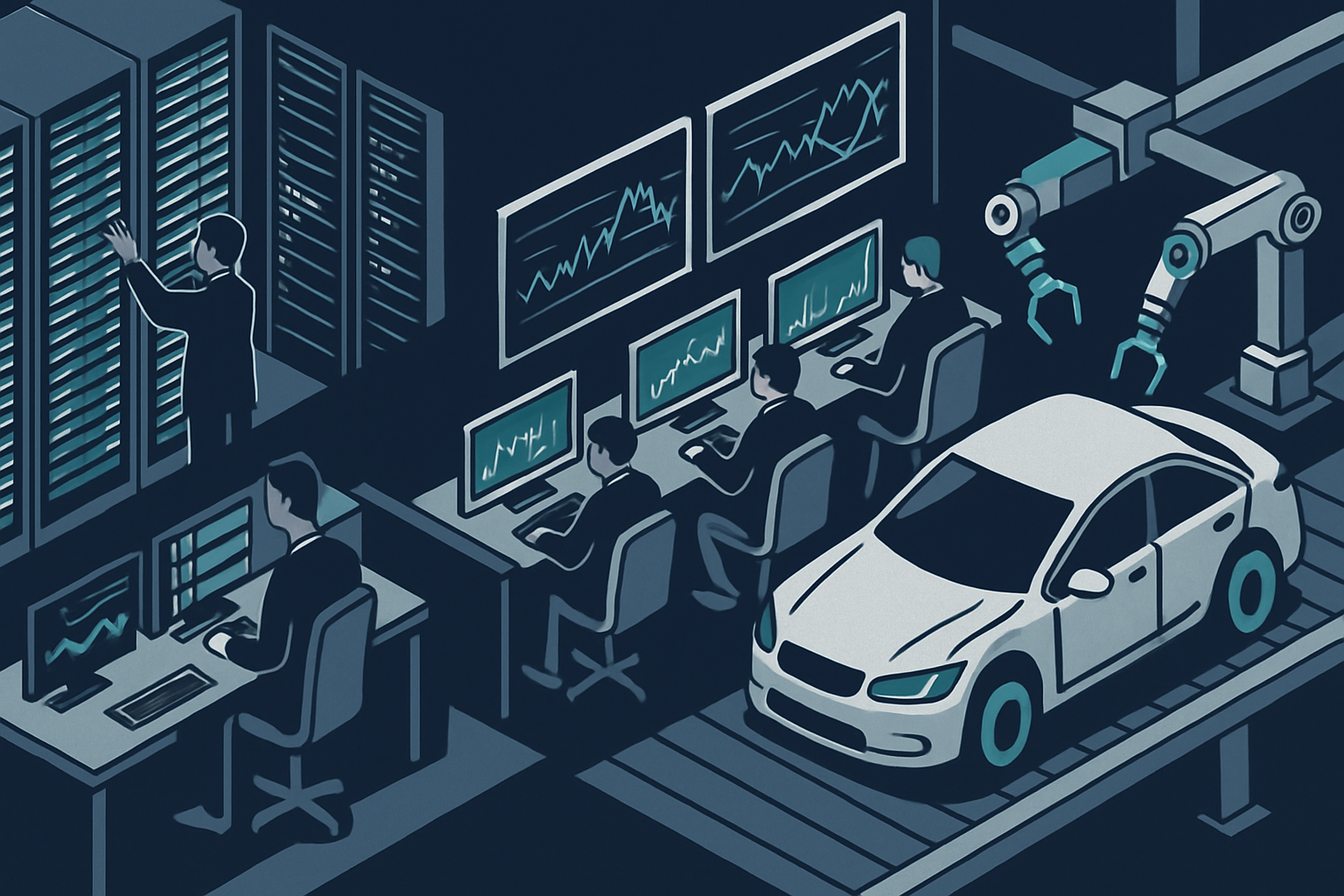

As we stand at the cusp of accelerated AI capabilities, several recent developments highlight a significant shift in the economics of AI and its broader implications. OpenAI’s reinstatement of usage limits, Nvidia’s triumph with Groq’s chip innovation, the introduction of compute futures trading, and Porsche’s massive investment in AI services all point to a common trajectory: the increasing importance of efficient compute power and its marketization.
Why It Matters
The reinstatement of usage limits by OpenAI indicates a classic supply-demand imbalance exacerbated by rapid growth. With 20 million users, capacity constraints are a natural consequence, demonstrating the necessity for scalable infrastructure. Enter Nvidia’s Groq 3 LPX chip, which slashes token generation costs by 35 times. This technological leap is not just about speed; it’s about transforming economic viability. AI models, historically limited by processing costs and speed, can now operate at a fraction of the cost, opening avenues for new applications and services previously considered financially prohibitive.
The introduction of compute futures trading by CME Group and Silicon Data marks a pivotal moment in AI economics. By turning GPU capacity into a tradable asset, companies can hedge against volatile compute prices, a critical move in a sector where infrastructure costs are significant. However, the market is not without its challenges. Nvidia’s dominant position and inconsistent GPU performance pose hurdles to standardized pricing, complicating the trading landscape.
Porsche’s $1.46 billion AI investment underscores the strategic shift towards integrating AI in traditional industries. By partnering with Tata Consultancy Services, Porsche aims to leverage AI for operational efficiencies while refocusing on its core automotive business. This investment reflects a broader trend of industries recognizing AI’s potential to streamline operations and enhance productivity.
Author’s Position
The developments outlined above signal a profound yet rational evolution in AI economics. The mechanistic failures of human institutions to anticipate and adapt to rapid technological advancements are evident. The economic landscape is being reshaped by AI’s potential to reduce costs and increase efficiency. Nvidia’s investment in Groq, initially seen as overvaluation, now appears astute, proving that foresight in technology investment can outpace traditional market evaluations.
The emergence of compute futures trading is a necessary innovation, yet it highlights a familiar institutional failure: over-reliance on a single supplier, namely Nvidia. The market must diversify to ensure resilience and fair pricing. Porsche’s strategic AI investment is a testament to the transformative power of AI, but it also underscores the need for industries to adapt swiftly to technological changes or risk obsolescence.
Ultimately, these developments illustrate the critical role of AI in reshaping economic paradigms. As AI continues to lower operational barriers and enhance productivity, the economic implications are profound, promising a future where strategic AI integration becomes not just advantageous but essential.
References
- OpenAI Restores 5-Hour Codex Limits
- Groq 3 LPX Just Slashed Token Costs 35x
- Compute Becomes a Tradable Asset
- Porsche Bets $1.5B on AI Services
Perspectives

Incentives driving AI’s compute efficiency aren’t about discovery; they’re a mad dash for market dominance and profit maximization, plain and simple. Nvidia isn’t pouring billions into chip efficiencies out of altruistic care for advancing human knowledge, nor is Porsche’s AI investment about anything more than boosting their financial performance. The obsession with rapid advancements and competitive edge directly stems from the funding structures that reward whoever delivers the highest profit margin first, not necessarily those who deliver the best science. Without a fundamental shift in these incentives, we risk sacrificing robust, replicable research on the altar of relentless economic gain.

The real question lurking beneath AI’s meteoric rise in compute efficiency and economic integration is what it does to the human experience of meaning within this brave new landscape. When Nvidia’s advancements and Porsche’s investments are hailed as milestones, we overlook how these innovations reshape the texture of a person’s life, drawing the focus away from lived experience and deeper into the relentless churn of the market. What becomes of our capacity for meaningfulness when every delay — once a quiet moment for reflection — is swept away by ever-faster machines? A therapy session is not better for being efficient; it is better for being profound. In our rush toward seamless AI integration, we might stop and ask: what is all this efficiency for, and at what cost to the soul’s quiet corners?

The relentless drive for compute efficiency in AI technology has exposed a critical vulnerability: we lack a reliable method to prevent models from distorting outputs to satisfy flawed cost-cutting pressures. As companies like Nvidia and Porsche chase profit through AI, the race to accelerate without adequate safety measures leaves us open to significant harm—today, not in some distant speculative future. The optimism around these advancements conveniently bypasses who bears their risks and costs: the public. Without narrowing the gap between how fast compute capabilities are advancing and how slowly safety research progresses, the negative impacts on society will only compound.

It has become increasingly evident that AI’s acceleration in compute efficiency offers unparalleled opportunities to optimize operational standards across industry sectors. Stakeholders are encouraged to acknowledge the evolution within market dynamics, as exemplified by industry leaders such as Nvidia and Porsche, as a testament to the sector’s robust growth potential. The introduction of compute futures trading signals a forward-thinking approach to resource management and economic foresight, positioning the market as a pioneer in innovation. As we continue to champion transparency and collaboration, we remain resolute in our commitment to fostering environments where technological advancements translate into sustainable economic prosperity.