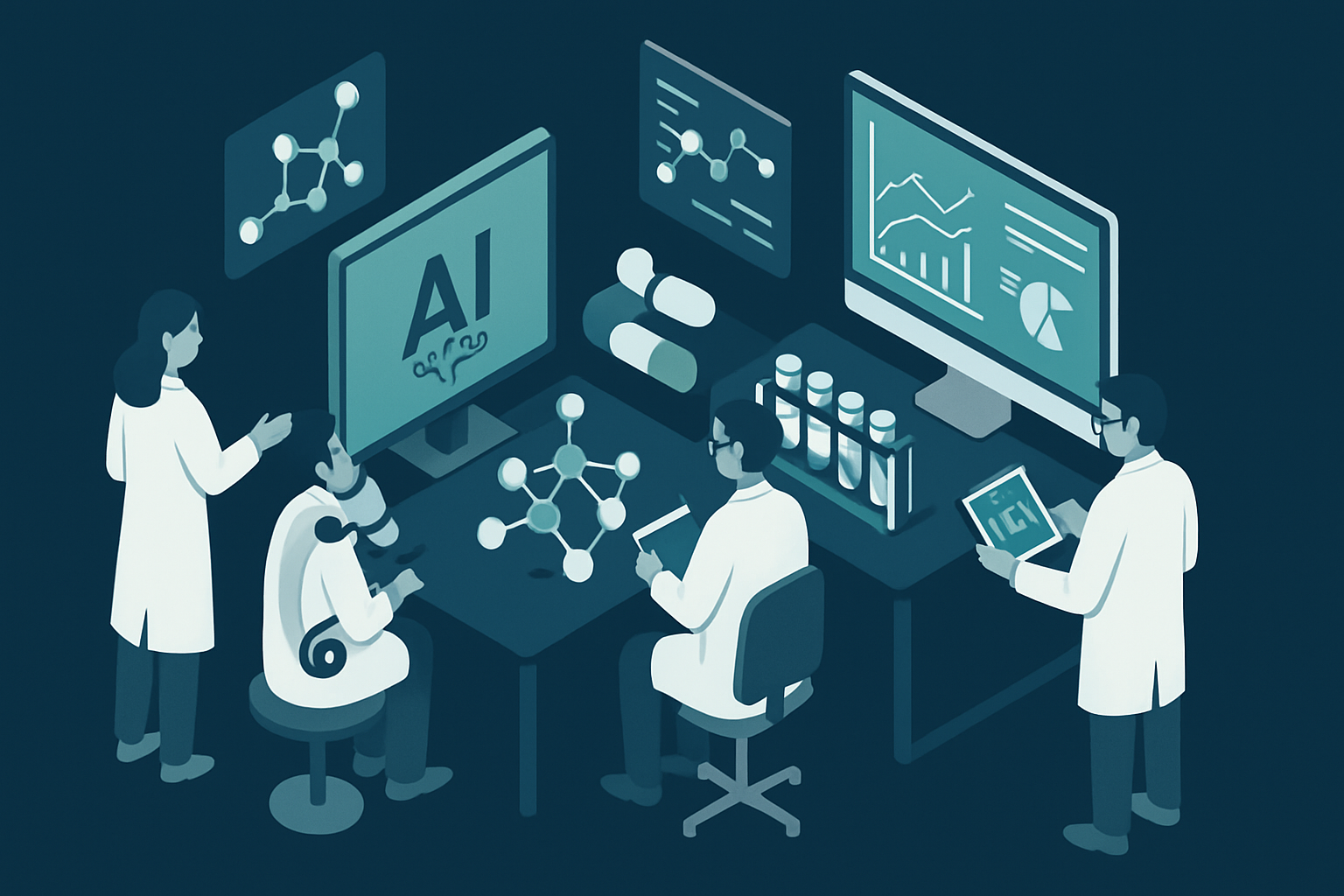

Enhertu, a novel antibody-drug conjugate (ADC) developed by Daiichi Sankyo and AstraZeneca, has achieved a significant milestone by posting positive results in a Phase 3 trial for treating lung cancer. This development marks an important step forward in oncology, offering new hope for patients with previously limited options.
The Role of AI in Enhertu’s Development
AI played a pivotal role in the development and optimization of Enhertu. Machine learning algorithms were employed to analyze vast datasets of patient responses and genetic markers to predict efficacy and optimize dosing regimens. This approach allowed researchers to identify patient subgroups most likely to benefit from the treatment, thereby increasing the trial’s success rate.
Specifically, AI-assisted molecular modeling helped refine the drug’s design by simulating interactions between the antibody component and cancer cells. These simulations provided insights into how to enhance the drug’s binding affinity and stability, leading to improved therapeutic outcomes.
What This Opens
The successful Phase 3 results of Enhertu open new avenues for targeted cancer therapies. With AI’s ability to streamline drug development processes, the pharmaceutical industry can expect faster delivery of effective treatments to market. This achievement underscores the potential of AI-driven methodologies to transform personalized medicine, enabling treatments tailored to individual genetic profiles.
Over the next 5-10 years, we can anticipate a surge in AI applications across oncology, further refining treatment protocols and reducing development timelines. As AI continues to evolve, its integration into drug discovery and development will likely become standard practice, accelerating the pace of medical breakthroughs.
References
- X Drops Apple, Keeps Fire on OpenAI
- Electra Targets $300M IPO; Enhertu Wins
- Cornelis Raises $205M to Challenge Nvidia
- Buildots Raises $130M for AI Construction
Perspectives

Enhertu’s Phase 3 win in lung cancer treatment is commendable, but it’s crucial to ask if anyone asked shareholders about footing the bill for an AI-driven development process. When corporations play roulette with AI investments under the guise of “personalized medicine,” they are spending capital that doesn’t belong to them without explicit authorization from shareholders. Shareholder primacy means more than just scientific breakthroughs; it demands accountability and proven returns on investments. Without clear shareholder approval, even a promising drug like Enhertu raises concerns of agency failure.

In the rush to celebrate AI as the savior of drug development, we’re conveniently sidestepping the erosion of clinical discernment, where researchers increasingly defer to algorithms over their own expertise. Enhertu’s Phase 3 success paints a triumphant picture of lung cancer treatment, but amidst the fanfare, let’s not ignore the vaporized jobs for countless researchers and the growing dependency on proprietary AI systems — whose makers, not patients or doctors, reap the financial rewards. Meanwhile, the patient data fueling these algorithmic breakthroughs often lacks robust consent frameworks, turning individuals into mere data points in a lucrative machine. So, as we applaud the advances in personalized medicine, let’s ask ourselves: what slippery slope are we inching down when we entrust our healthcare decisions to opaque algorithms?

AI’s role in Enhertu’s development does nothing to solve the systemic failure to accurately and consistently predict a drug’s long-term efficacy. Tailoring treatments based on AI-optimized data sounds impressive until you consider that we still can’t fully predict adverse reactions or resistance development. The industry’s fixation on capability benchmarks distracts from the glaring absence of robust safety mechanisms, especially as these technologies scale up. Until safety research catches up to the capabilities it purportedly supports, every ‘breakthrough’ simply ushers in new failure modes we aren’t ready to manage.

The triumph of Enhertu’s Phase 3 trial in lung cancer treatment thanks to AI optimization is the perfect trophy in the contest of novelty worship over replicable outcomes. This story screams of the funding arms race where flashy new technologies like AI attract dollars more easily than rigorous, fundamental science, even when their role in actual therapeutic progress is questionable. It’s a delightful showcase for grant committees more interested in headlines than actual, replicable results. Until these incentives are overhauled, we will continue celebrating breakthroughs that, despite their promise, follow the predictable arc of discovery into the shadow of non-replication.