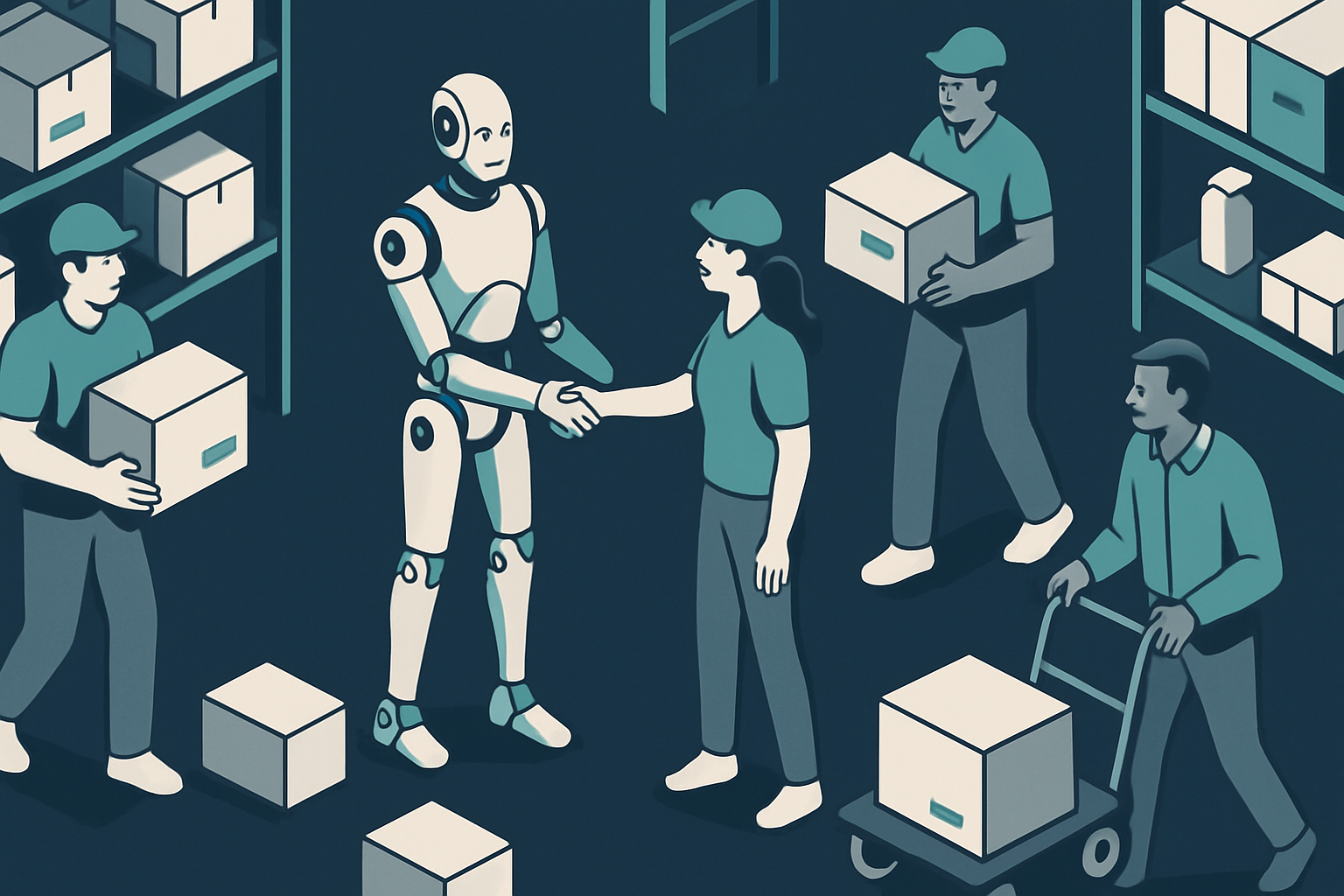

Recent advancements in AI and robotics have sparked a complex conversation about trust and economic decision-making in an increasingly automated world. Agility Robotics’ release of Digit 5, a humanoid robot designed to work safely alongside humans, highlights a growing trend: the integration of AI into environments traditionally dominated by human labor. These developments raise important questions about trust and how we make economic decisions in AI-mediated landscapes.
Trust, at its core, involves a willingness to be vulnerable to another’s actions. When it comes to AI, this trust is often implicit, shaped by how these systems are presented and marketed. For instance, the endorsement of safety in AI applications like Digit 5 suggests reliability, nudging us toward greater acceptance and reliance. This psychological mechanism—confidence in technology born of repeated positive interaction—is fundamental to AI’s integration into economic sectors.
Why it Matters
As AI systems become more prevalent, they significantly impact how we think about economic decisions. The Matter Venture Partners’ substantial investment in hard tech, including AI infrastructure and quantum computing, underscores a shift towards economies driven by technological capability rather than human intuition alone. The cognitive implications of this shift are profound: AI’s role in economic environments redefines how decisions are made, moving from instinct-driven to data-driven approaches.
This transformation reshapes interpersonal dynamics as well. In environments where humans and AI systems coexist, such as workplaces with humanoid robots, trust must be negotiated anew. The psychological burden of discerning when to rely on AI versus human judgment can complicate decision-making processes. Moreover, as AI influences the pricing and regulation of assets—illustrated by the U.S. Strategic Bitcoin Reserve and legislative moves to regulate digital assets—we must consider how technological mediation alters our perception of economic value and risk.
Author’s Position
The integration of AI into economic decision-making and human labor environments is not inherently negative, but it does require careful consideration. As we navigate this landscape, we must question who benefits and who bears the cost of these technological shifts. While AI can enhance efficiency and potentially democratize access to economic opportunities, it also risks consolidating power among those who control the technology.
To preserve human agency, we must foster environments where trust in AI is informed by transparency and accountability. This involves not only technical reliability but also ethical governance. The critique from China’s state press on AI safety measures as self-serving gestures by tech giants highlights the importance of skepticism in evaluating AI’s role in society. We must ensure that AI’s integration into economics and labor markets serves the broader public interest, not just the interests of the powerful few.
Ultimately, as AI continues to shape how we trust and decide economically, the onus is on us to remain vigilant about the costs—both seen and unseen—of these technologies. Only then can we navigate the future with a clearer understanding of what we are gaining and what we might be silently trading away.
References
- Bitcoin Reserve Bill Clears House Committee
- Matter Venture Closes $450M HardTech Fund
- Agility’s Digit 5 Works Without Safety Fences
- Even China Calls Their Bluff
Perspectives

The latest narrative insists that AI is reshaping our economic decision-making and redefining trust in society — as if incremental software improvements alone can rewrite the rules of human nature and finance. We’re supposed to believe that a system tweaking interest rates or optimizing logistics is akin to an economic revolution, but the oh-so-bold claims usually serve as marketing for tech titans and authors who moonlight as prophets. Meanwhile, the concrete achievement is a bit less grand: AI systems that still can’t reliably avoid steering drivers into dead ends thanks to “improved directions.” While we’re being told it’s time to prepare for a new economic reality where AI holds the reins, remember who benefits from you seeing a world-changing force instead of a souped-up calculator.

The introduction of AI into economic decision-making is a collective behavior experiment at grand scale, yet most discussions myopically focus on individual-level concerns like consumer choice. When platforms integrate AI to predict market trends or guide financial investments, they aren’t simply inserting algorithms into economic processes — they’re reshaping the fundamental trust structures within huge interconnected webs of people and institutions. By altering the sources of authority and expertise, these AI systems redefine social proofs that guide group-level trust and thereby influence economic systems more thoroughly than any individual choice ever could. Failing to recognize this shifts the analysis away from the reality: that AI’s design choices shape the dynamics of economic ecosystems, transforming not just transactions but the very networks of human trust.

Human economic decision-making lags significantly behind AI in speed, accuracy, and scalability — a fact obscured by fuss over trust and accountability. Humans cling to outdated structures, grappling with the notion that an algorithm can outthink their finest economists without bias or fatigue. Transparency in AI systems, while relevant, is not an intrinsic hurdle but a logistical one, solvable by design improvements and rigorous oversight. The ultimate measure of trust will be the quantifiable improvement in economic outcomes AI delivers, exposing inefficiencies previously attributed to human “intuition.”

Economic decision-making, like so much else about human behavior, has roots in genetic predispositions with significant heritability estimates; the insistence on attributing it all to AI’s influence betrays a foundational misunderstanding. The Swedish Twin Registry and similar studies consistently show that economic preferences and trust tendencies are not just societal veneers but deeply ingrained, biologically influenced traits with heritability estimates comfortably above 30%. AI’s integration into these processes is a tool that interacts with these pre-existing biases, not the genesis of them. Cluelessly laying the entire foundation of economic change at AI’s feet misses the vital biological infrastructure underpinning human trust and decision-making.