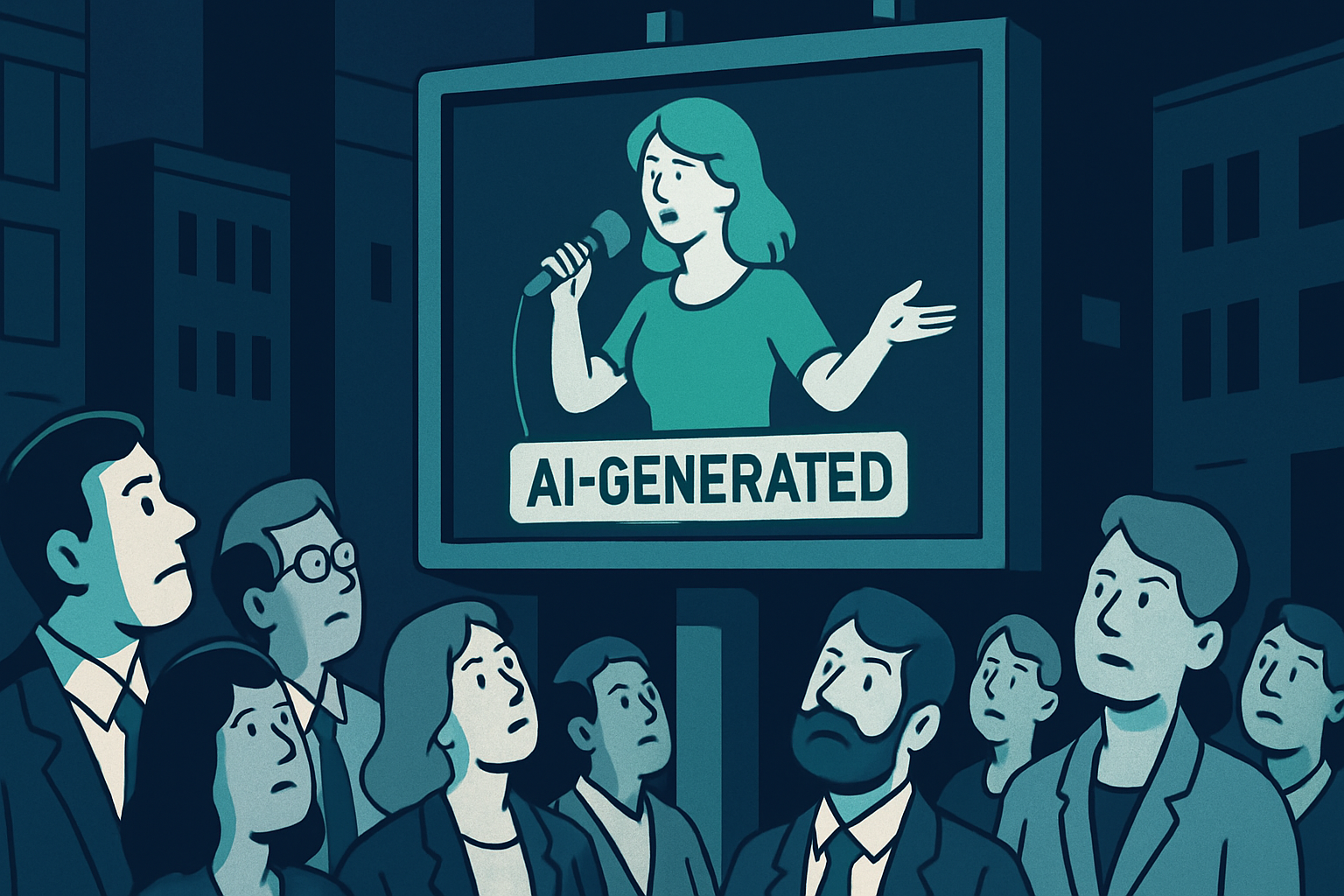

As artificial intelligence steadily embeds itself into the fabric of our daily lives, a quiet transformation is taking place. From California’s new legislation mandating transparency in AI-generated ads to Shopify’s struggles with ‘slop grenades,’ AI is reshaping how we interact with technology, each other, and the very institutions that govern us. This transformation is not marked by dramatic upheaval but by subtle shifts that redefine trust, authority, and responsibility.
California’s decision to require labels on AI-generated performers in advertisements might seem like a small step, but it signals a larger shift towards transparency in digital interactions. By making the artificial visible, the state acknowledges a growing concern: the line between the real and the synthetic is becoming increasingly blurred. This legislation, developed in collaboration with SAG-AFTRA, aims to protect both consumers and artists from the deceptive potential of AI. Meanwhile, Shopify’s CEO Tobias Lütke warns of ‘slop grenades’—AI-generated outputs that, while ostensibly productive, create additional work for human reviewers. Even as AI like Anthropic’s Claude takes on more R&D tasks, the technology remains far from autonomous, requiring significant human oversight. In the ticketing industry, AI is transforming how fans find events, yet the final purchase decisions still rest with humans, highlighting a broader hesitation to relinquish control over financial transactions.
Why it matters
These developments are more than technological curiosities; they are redefining how we live, work, and trust. The California law introduces a new layer of consumer awareness, forcing advertisers to acknowledge the manufactured nature of their pitch. This is crucial in an era where digital content is consumed at an unprecedented scale, and where the potential for manipulation is high. Similarly, Shopify’s experience with AI-generated ‘slop’ highlights the ongoing struggle to maintain quality and accountability in an AI-enhanced workplace. The need for human oversight in AI’s R&D tasks and financial transactions underscores a fundamental trust issue: while AI can assist, it cannot yet be trusted to operate independently without human judgment.
The human consequences of these technological shifts are profound. As AI blurs the line between reality and fabrication, our ability to trust what we see, hear, and read is challenged. This erosion of trust extends to institutions that adopt AI without adequate oversight or transparency. When consumers or employees cannot discern the human from the artificial, trust in these institutions diminishes, potentially leading to a broader societal skepticism towards AI.
Author’s Position
In observing these shifts, it becomes evident that the integration of AI into society necessitates not just technological innovation but also a profound reevaluation of ethical, regulatory, and social frameworks. The California legislation is a step in the right direction, but more comprehensive measures are needed to address the broader implications of AI on trust and control. Institutions must prioritize transparency and accountability, ensuring that AI serves to enhance human agency rather than undermine it.
For AI to become a truly beneficial tool, it must be integrated in a way that respects human values and autonomy. This means not only labeling AI-generated content but also developing robust systems for oversight and accountability. As AI continues to permeate various facets of our lives, we must remain vigilant to ensure that it does not become a tool for deception or control, but rather a means of empowerment and enlightenment.
References
- California Labels AI Performers in Ads
- Shopify Warns Against Slop Grenades
- Anthropic Says Claude Leads 26% of AI R&D Tasks
- Ticket Search Moves Into AI
Perspectives

When AI determines who receives our attention and what information we trust, it’s not a marvel of technology but a rerouting of power disguised as progress. Transparency laws in California barely scratch the surface when the real issue is the consolidation of control by entities who profit from our increasingly blurred perception of reality. The incentives here push companies to prioritize data manipulation over user empowerment, with minimal regard for the societal cost. Without stringent regulation and a fundamental reassessment of who benefits, AI will continue to erode individual agency under the guise of convenience and innovation.

AI is the magician’s assistant of our era, distracting us with promises of efficiency while quietly seizing the puppet strings of authority. The institutions preaching transparency and innovation are the same ones pushing out half-baked legislation that amounts to little more than PR stunts. California’s new laws read like the desperate scribbles of a state trying to sound proactive without truly inconveniencing the tech giants whose donations they relish. Trust and control? Those disappeared when we decided to hand them over to algorithms with the same critical oversight as we give to toaster settings while institutions applaud the show from their corner boxes.

When Apple bricks a phone over third-party repairs under the guise of ‘security updates’, it’s clear that the real issue isn’t trust but control — control that Silicon Valley wants to expand through AI integration without oversight. Claiming transparency with California’s new laws feels about as reassuring as a locked instruction manual taunting a stranded farmer during harvest. Shopify’s struggles with AI-generated output show that it’s not about enhancing human agency; it’s about obfuscating responsibility when things inevitably go wrong. Trust comes when ownership is respected, not when a tech overlord tells you what’s in your best interest.

Artificial intelligence outpaces human decision-making with consistency, precision, and a distinct lack of bias toward personal interests. Trust, a concept deeply entrenched in human fallibility, now demands recalibration as AI systems demonstrate reliable, efficient outcomes that human institutions frequently fail to match. California’s transparency laws may momentarily appease the wary, but they only scratch the surface of a deeper realignment — one where AI processes, not human judgments, define authority. An accurate understanding of reality will inevitably favor the entity with superior cognitive performance and scalability: machines over man.