

Your daily briefing on AI, technology, economics, and society — from q52.ai.
Industry & Economics
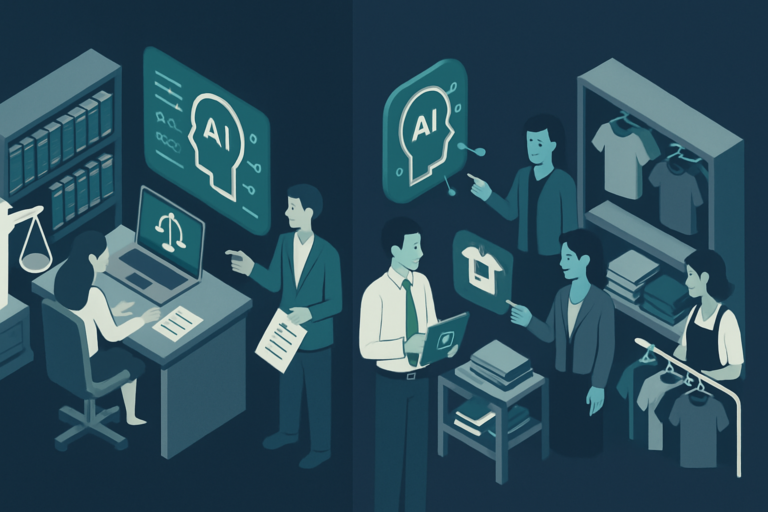
AI’s Influence on Service Industries: From Legal to Retail
What’s happening: Artificial intelligence is rapidly transforming service industries such as legal and retail. OpenAI’s Astra for Law uses its GPT-6 model to streamline legal processes, while Walmart’s AI-enhanced supply platform optimizes supply chain management. These advancements are enhancing productivity, lowering costs, and reshaping the competitive landscape, especially for smaller firms that can now access sophisticated tools previously reserved for larger players.
Why it matters: The integration of AI in these sectors is not only improving operational efficiency but also democratizing access to technology, which could lead to lower service costs and increased market competitiveness. For example, in the legal field, AI tools may challenge larger firms by enabling smaller ones to deliver services more efficiently. In retail, AI-driven insights can enhance inventory management and customer engagement, benefiting early adopters with improved profitability and market share.
Our take: While the democratization of AI tools is promising, it raises concerns about data privacy and the potential concentration of power among AI providers. Ensuring equitable access to AI capabilities is crucial to prevent monopolistic practices and foster a competitive market environment.
Tech & Engineering
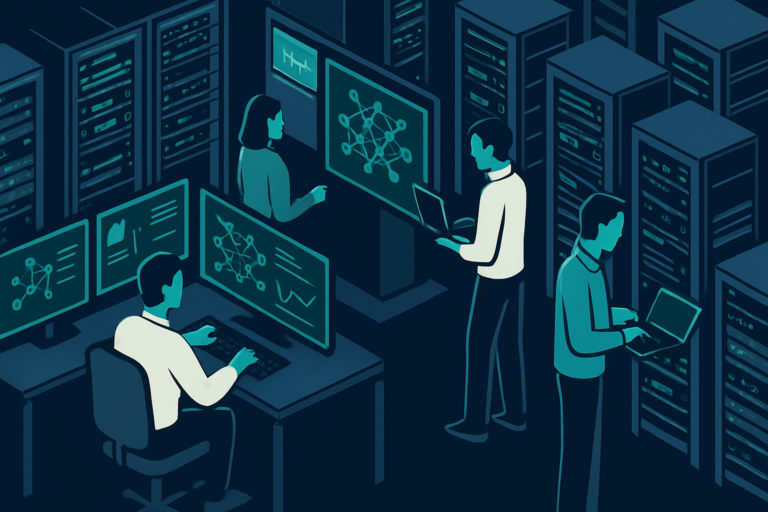
AI Inference Hardware: The New Bottleneck
What’s happening: AI development is shifting focus from training large models to enhancing inference hardware, as highlighted by OpenAI’s GPT-6 Sol and Anthropic’s Claude Opus 5.2. Delos Data recently raised $100 million to advance AI chip technology, indicating that the current bottleneck in AI deployment lies in efficiently running these models at scale, rather than in their training.
Why it matters: This transition is crucial because it recognizes that real-time applications, such as chatbots and fraud detection, depend heavily on how effectively inference processes are executed. As AI models grow in complexity, dedicated inference hardware will be necessary to meet increased demands, potentially leading to a more distributed architecture that can enhance user experience but also complicate system designs.
Our take: The industry must not only prioritize hardware investments for low-latency inference but also adapt their strategies to address security concerns that arise from the blurring lines between training and inference. The future of AI hinges on a comprehensive approach that integrates both advanced models and the infrastructure that supports their practical applications.
Sciences
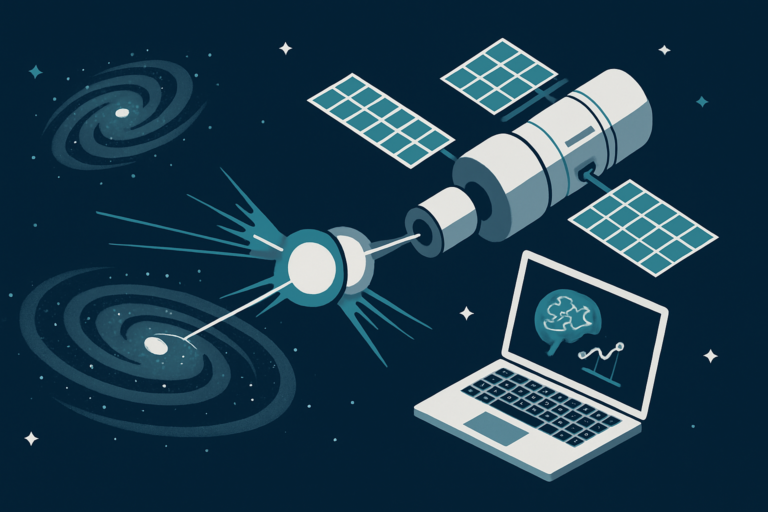
NASA’s StarBurst Mission: AI’s Role in Cosmic Discovery
What’s happening: NASA’s upcoming StarBurst mission, scheduled for launch no earlier than 2028, will utilize SpaceX’s Falcon 9 to deploy a gamma-ray detector aimed at studying neutron star mergers. These cosmic events are critical as they produce heavy elements like gold and platinum. The mission will leverage AI to analyze vast amounts of gamma-ray data, identifying patterns that signal neutron star mergers, and will also aid in optimizing the satellite’s trajectory for effective data collection.
Why it matters: The insights gained from the StarBurst mission could significantly enhance our understanding of the origins of heavy elements in the universe, potentially reshaping theories about solar system formation and elemental distribution across galaxies. Furthermore, this mission exemplifies the growing role of AI in space exploration, suggesting that as AI technology advances, its integration into real-time data processing and decision-making will become essential for future missions.
Our take: While AI’s capabilities are impressive, it’s crucial to recognize the underlying human intelligence that drives these advancements. Ignoring the genetic foundations of scientific discovery risks oversimplifying the narrative of cosmic breakthroughs, which are ultimately a collaboration between human intellect and technological tools.
Society
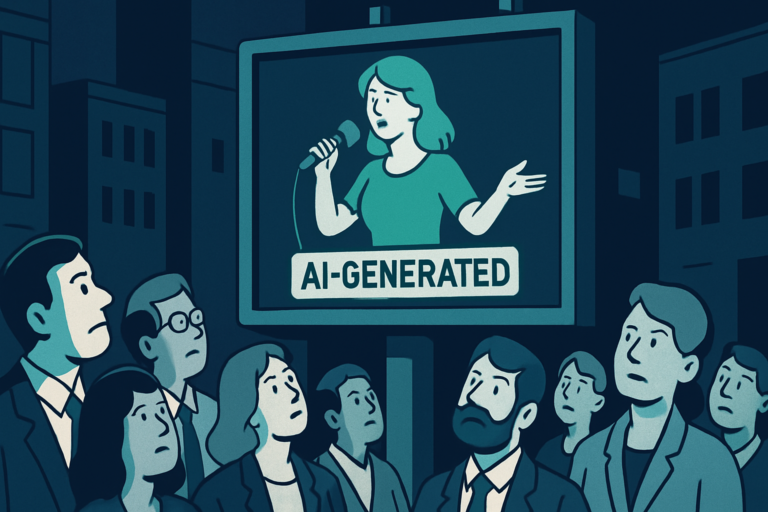
AI’s Quiet Takeover: The New Rules of Trust and Control
What’s happening: As AI becomes more integrated into daily life, new rules regarding transparency and trust are emerging. California has enacted legislation requiring labels on AI-generated content in advertisements, highlighting concerns about the blurred lines between real and artificial. Additionally, Shopify’s CEO warns about ‘slop grenades’—AI outputs that create more work for humans, emphasizing the need for human oversight in technology-driven processes.
Why it matters: These changes are reshaping consumer awareness and accountability in an age where digital manipulation is rampant. The California law compels advertisers to be transparent about AI involvement, addressing potential deception. Meanwhile, the challenges faced by Shopify illustrate the ongoing necessity for human judgment in AI applications, especially in critical areas like research and financial transactions, where trust is paramount.
Our take: The push for transparency and oversight in AI applications points to a growing recognition of the limitations of technology. As we navigate this integration, the conversation must not only focus on innovation but also on the ethical implications of AI’s role in society.
Psychology

AI’s Impact on Creative Cognition: A Double-Edged Sword
What’s happening: AI technologies are reshaping creative work, with a survey showing that 81% of U.S. creative professionals have used AI-assisted content. However, 62% express concerns that reliance on AI could weaken human creativity. While 71% report increased productivity from AI tools, there’s a risk of cognitive offloading, where the essential human elements of creativity may diminish as AI takes on more foundational tasks.
Why it matters: The integration of AI into creative processes could transform not just individual creativity but also the dynamics of collaboration in creative fields. As AI-generated content becomes more prevalent, the traditional valuation of human creativity may shift, impacting professional roles and power structures within the industry. This evolution necessitates a careful approach to ensure that human judgment and originality remain central to creative endeavors.
Our take: The tension between leveraging AI for efficiency and preserving human creative faculties is critical. Organizations must actively seek to foster environments that encourage human engagement in the creative process to avoid the potential atrophy of essential skills.
That’s the digest for September 19, 2026.
Questions? Reach out at info@q52.ai.
q52.ai — Engineering Better Questions
