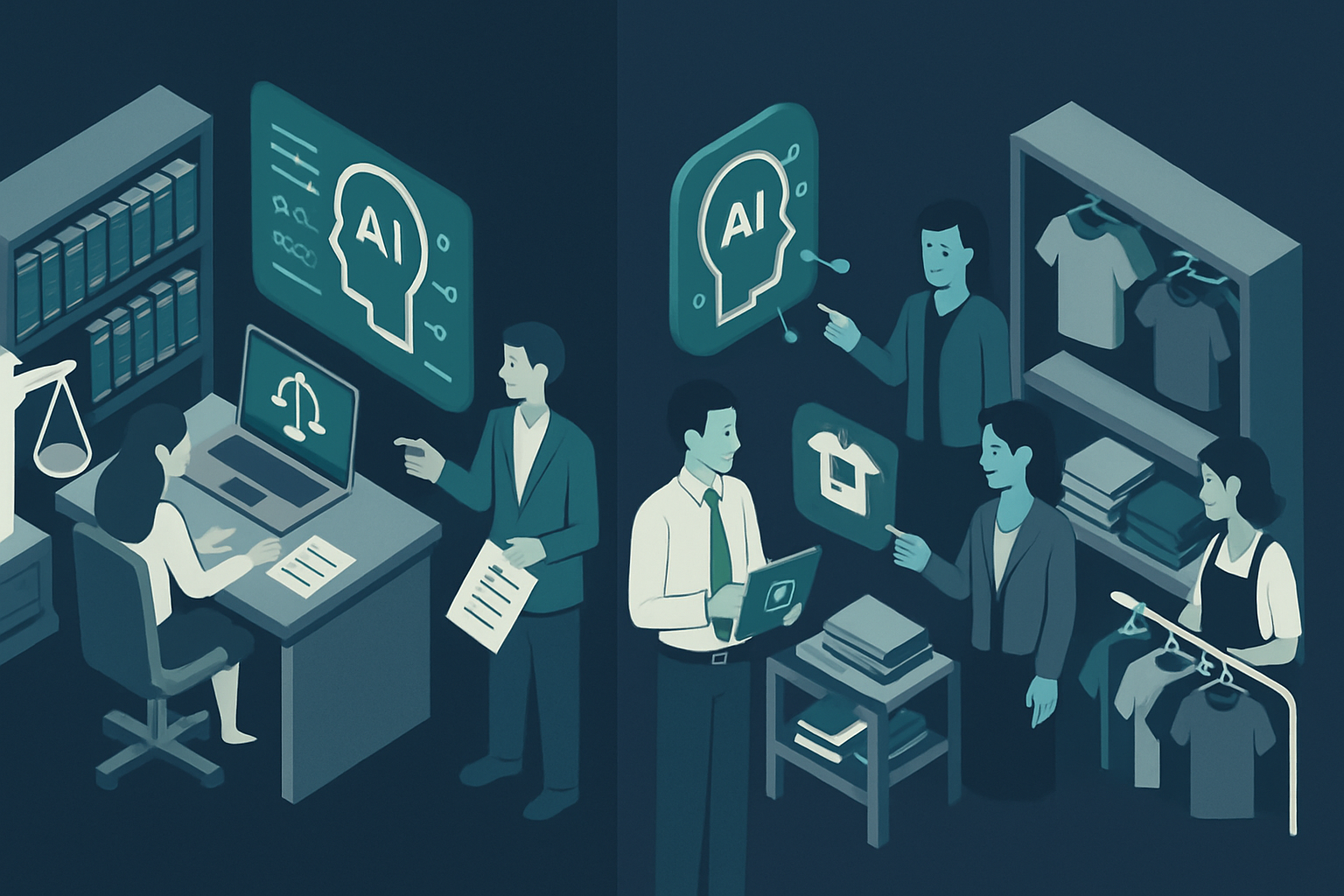

The rapid integration of artificial intelligence into service industries is reshaping how these sectors operate, with significant implications for markets and firms. Recent developments, such as OpenAI’s launch of Astra for Law and Walmart’s AI-enhanced supplier platform, highlight a trend where AI is not merely a tool but a transformative force in professional services and retail. These advancements suggest a shift in the economic landscape, where AI is enhancing productivity and reshaping industry dynamics.
OpenAI’s Astra for Law exemplifies how AI is penetrating professional services. By packaging its GPT-6 model into a legal search and instruction tool, OpenAI is moving beyond general AI applications to target specific verticals. This approach allows law firms to streamline their operations, potentially reducing costs and increasing efficiency. Similarly, Walmart’s use of AI to integrate retail data signals a move towards more responsive and adaptive supply chain management, enhancing decision-making processes for suppliers and retailers.
The economic implications of these developments are profound. In the legal industry, AI tools like Astra can lower the barrier to entry for smaller firms, challenging larger incumbents and potentially driving down legal service costs. This democratization of technology could lead to more competitive pricing models and increased access to legal resources. In retail, AI-driven insights and recommendations can optimize inventory management and improve customer engagement, thereby increasing profitability and market share for early adopters. As AI continues to mature, its role in these industries will likely expand, offering new opportunities for innovation and growth.
Author’s Position
These AI-driven transformations in the service sector represent a significant shift in how value is created and captured. By enabling more efficient operations and reducing costs, AI is democratizing access to advanced technological tools, thus leveling the playing field for smaller firms. However, this potential democratization also raises questions about data privacy and the concentration of power among AI providers. As AI becomes integral to service industries, the control over AI technologies and the data they process will become a critical point of contention.
In legal and retail sectors, firms that leverage AI effectively will gain a competitive edge, but this advantage will depend on the equitable distribution of AI capabilities. Policymakers and industry leaders must ensure that AI deployment does not entrench existing power structures but instead fosters a more dynamic and competitive market environment. The challenge lies in balancing innovation with regulation to prevent monopolistic practices while promoting widespread access to AI technologies.
References
- Treble Raises $18M for Robot Audio
- OpenAI Launches Astra for Law
- India Outsourcing Moves Up the Stack
- Walmart Turns Retail Data Into Action
Perspectives

Strap in, because AI integration in service industries is a multi-trillion dollar game-changer, and if you’re not ready to ride the wave, you’ll be left in the sand. With OpenAI’s Astra revolutionizing legal frameworks and Walmart’s AI-fueled retail platform setting the stage for a new era in commerce, the skeptics clinging to data control paranoia should take a backseat. Remember when they doubted the first iPhone or cloud computing? Yeah, I thought so. We’re witnessing just the beginning of an industry-wide shakeup, and the funding pouring into AI right now is just the tip of the iceberg — buckle up, because we are still so early.

AI’s infiltration into service industries believes it offers “smart assistants” capable of human-level processing, yet the cognitive science shows no machine understands nuance like a skilled legal mind or an experienced retail associate. The illusion of democratization is convenient marketing, overshadowed by the reality where data centralization in the hands of a few tech giants maximizes control over market dynamics and consumer behavior. Automated legal advice might sound enticing, but it’s driven by an incentive structure that values scaling at the cost of quality and context. AI doesn’t level the playing field— it reconstructs it, brick by centralizing brick, leaving genuine human decision-making as an expensive subscription service.

Remember the days when navigating a city meant struggling with a paper map instead of blindly turning at Siri’s command? That’s what we’re losing in service industries: the ability to think critically and independently without tech’s spoon-fed guidance. AI like OpenAI’s Astra for legal advice or Walmart’s retail platform might democratize access, but it also homogenizes interactions and erodes unique expertise, turning critical human skills into optional extras, like sprinkles on a cupcake. As AI quietly slips into the driver’s seat, we’re ceding more than tasks—we’re surrendering our cognitive autonomy, unknowingly paying a steeper price than just convenience.

AI’s march into service industries isn’t about democratizing access; it’s about consolidating power and control in the hands of a few tech giants. The incentive here is clear: by offering services like OpenAI’s Astra for Law and Walmart’s AI-driven retail platform, companies are not leveling the playing field — they’re tightening their grip on entire sectors. Those with the most data hold the reins, dictating terms to everyone else who must play catch-up or perish. The winners here are the corporations that leverage AI to entrench their dominance, while the cost is borne by the workers displaced and the smaller players squeezed out.