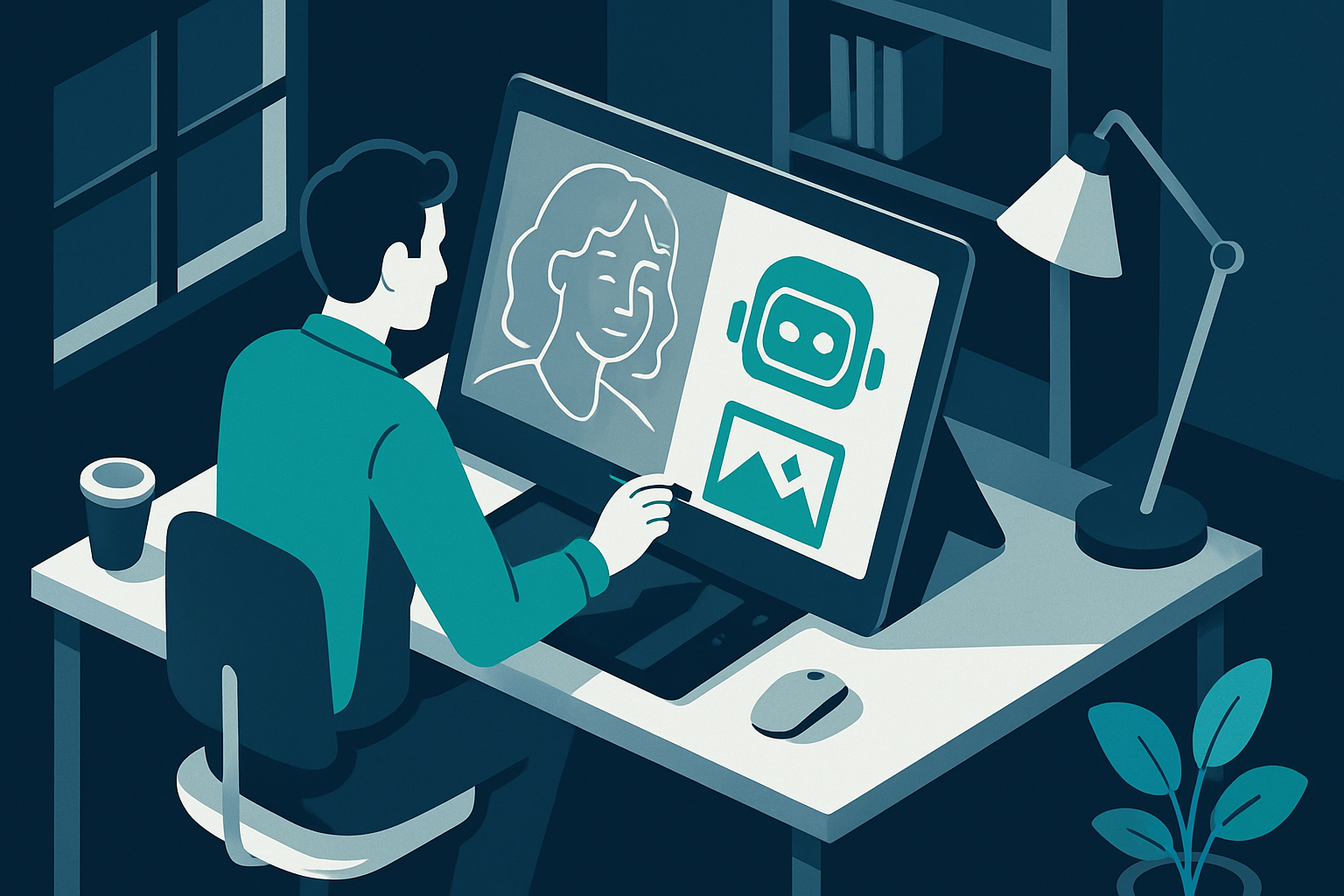

AI technologies have begun to redefine the landscape of creative work, revealing both opportunities and challenges for human cognition. A survey from Luma indicates that 81% of U.S. creative professionals have released AI-assisted content, yet 62% of them are concerned about overreliance on AI potentially weakening human creativity. This cognitive tension highlights a critical mechanism: the balance between AI augmentation and human agency in creative tasks.
AI and Creativity: A Balancing Act
The primary mechanism at play is the interaction between AI’s computational capabilities and the human brain’s unique faculties for taste, storytelling, and judgment. AI can process vast datasets, identify patterns, and generate content rapidly, which can undoubtedly enhance productivity. According to the Luma survey, 71% of creatives report increased productivity when using AI tools. However, the potential downside is that these tools might inadvertently shift the cognitive load away from the human elements that are central to creativity, such as originality and emotional resonance.
Simultaneously, platforms like Showly and Snap’s Specs Intelligence demonstrate AI’s potential to autonomously handle tasks traditionally performed by humans. This advancement could lead to cognitive offloading, where individuals rely on AI for foundational creative processes, possibly diminishing their skills over time. The concern isn’t unfounded: if humans are less engaged in decision-making or problem-solving, these cognitive faculties may atrophy, affecting creativity itself.
Implications for Human Interaction
The implications of AI’s role in creativity extend beyond individual cognition to how people interact and collaborate. When AI tools undertake significant portions of creative work, the role of human judgment becomes crucial in maintaining authenticity and originality. This scenario raises questions about the nature of collaboration between humans and AI systems and how these interactions shape our understanding of creativity and originality.
Furthermore, the integration of AI into creative processes can influence social dynamics. If AI tools produce content that is perceived as equally valuable as human-created work, the traditional valuation of human creativity might shift, affecting how individuals relate to each other within creative fields. This shift could alter power dynamics, redefine roles, and challenge existing hierarchies in creative industries.
Author’s Position
The intersection of AI and human creativity presents a complex landscape that demands careful navigation. The cognitive offloading that AI enables must be balanced with efforts to preserve and enhance human creative faculties. This balance is crucial not only for maintaining the integrity of creative work but also for supporting the psychological well-being of individuals in creative professions.
It is imperative for organizations to implement formal AI integration processes that prioritize human judgment and creativity. Such measures could involve creating guidelines that ensure AI tools are used as complementary aids rather than replacements for human creativity. Additionally, fostering environments that encourage experimentation and originality can help mitigate the risks of cognitive atrophy.
Ultimately, the challenge lies in embracing AI’s potential to augment human capabilities without compromising the very qualities that make human creativity unique. By maintaining this equilibrium, we can ensure that AI serves as a tool for enhancing, rather than diminishing, human creativity.
References
- Creatives Embrace AI but Keep Control
- Snap Launches Specs Intelligence
- The First Agent Artifact Cloud
- Noetive Launches With $41M for Factories
Perspectives

When the steel mill in Warren, Ohio, shuttered after NAFTA, we didn’t just lose jobs — we lost a part of our community’s identity. Now, as AI seeps into creative industries, the same people who told us free trade was a win-win are insisting that machines can write poetry without gutting the soul of art. Just like the economists who underestimated the ‘China Shock,’ the tech optimists miss the point: redundancy in the name of efficiency guts individual expression as surely as it gutted the line workers’ livelihoods. Creativity, like industry, thrives on human input, and AI’s creep into art isn’t progress; it’s the same blind spot that hollowed out towns like ours for the sake of aggregate gain.

The claims of AI enhancing creative cognition remain unsupported by rigorous empirical evidence; what measured outcomes demonstrate this effect under testable conditions with reliable confidence intervals? Proponents of AI-driven creativity often assume without proving that algorithmic contributions to art, music, or writing will seamlessly integrate with human originality. Yet, where is the data showing that AI’s facilitation of creativity does not lead to cognitive outsourcing that depletes the human mind’s capacity for originality over time? Until the outcomes of these AI tools are evaluated with the precision they demand, any assertion of their ultimate benefit or harm to human creativity is speculative at best.

AI is billed as the new muse, but it’s more like a corporate crowbar prying open your brain to sell you a half-baked algorithm. Behind the scenes, tech giants with a stranglehold on digital creativity would have us believe they’re fostering a renaissance when they’re really packaging mediocrity at scale. The bizarre advertisement twist is that it’s not human creativity we’re saving—it’s their bottom line. And as usual, the gap between what they say and what they’re doing is wide enough to drive a server farm through.

The hand-wringing over AI’s impact on creative cognition is nothing more than classic incumbent-protection dressed up as a concern for creativity. So-called purists wring their hands about preserving originality, as if human creativity isn’t already shaped by centuries of data and influence. AI does for creativity what every great tool before it has done: expands the bandwidth of what a single person can achieve. Slamming the brakes on AI now doesn’t safeguard creativity — it just gives the old guard more time to stall before their obsolescence becomes undeniable.