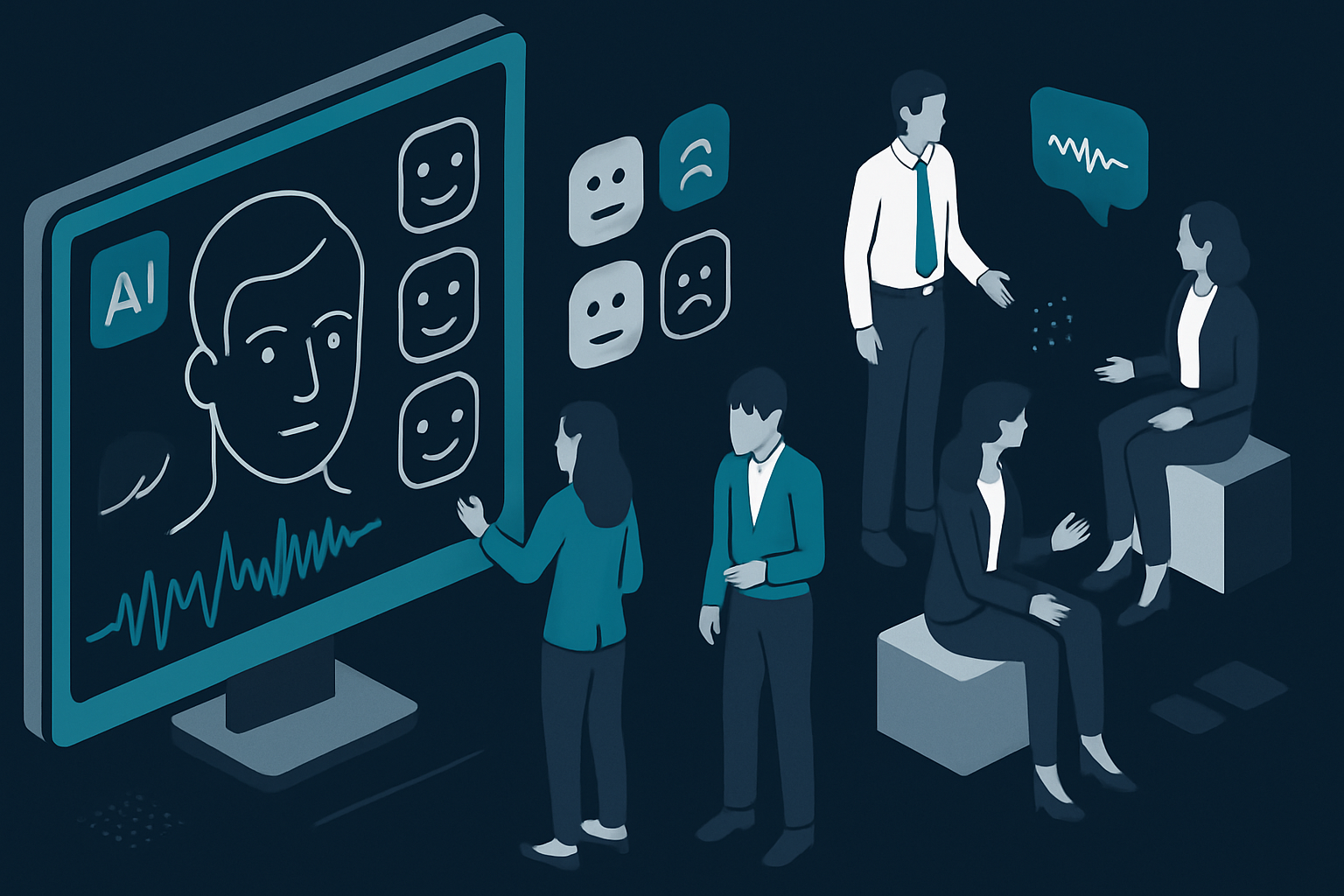

In an increasingly AI-driven world, technology’s ability to interpret and respond to human emotions is becoming a focal point of research. The sources provided paint a detailed picture of how artificial intelligence is attempting to navigate the complex landscape of human emotion, a domain traditionally understood through the lens of psychology. AI systems are being designed to recognize, interpret, and even mimic emotional states, which could fundamentally alter the nature of human-machine interaction. This capacity for emotion recognition is grounded in cognitive modeling and machine learning, which aim to replicate human emotional and decision-making processes within AI systems.
The mechanism behind this involves sophisticated algorithms that analyze facial expressions, vocal tones, and other behavioral cues to assess emotional states. While these systems excel in processing data and identifying patterns, they still lack the depth and nuance inherent in human emotional understanding. The implications of this technological advancement are profound, as it suggests a future where machines could potentially influence human emotions and interpersonal dynamics by responding in ways that are perceived as empathetic or emotionally intelligent.
Why it Matters
The integration of AI into emotional and cognitive recognition holds significant consequences for how we think, decide, and relate in an AI-shaped environment. On one hand, the capability of machines to understand and respond to human emotions could enhance user experience, making interactions more intuitive and personalized. For instance, in customer service, an AI that can detect frustration in a caller’s voice could adapt its responses to de-escalate tension, improving satisfaction.
However, this shift also raises ethical questions about privacy and agency. When machines can read and potentially manipulate emotions, the autonomy of human decision-making comes into question. Moreover, as AI systems become more adept at simulating empathy, there is a risk that human interactions may become more transactional, reducing the richness of genuine emotional exchanges. This could further erode the texture of ordinary social life, where the authenticity of relationships is paramount.
Author’s Position
The increasing capability of AI to interface with our emotional lives is not merely a technical achievement but a societal pivot point. It demands a careful examination of the costs and benefits associated with outsourcing emotional labor to machines. While there’s no turning back from the integration of AI into our daily interactions, it is crucial to establish frameworks that safeguard human agency and preserve the authenticity of emotional experiences.
Regulators and developers must work together to ensure that AI systems are designed with ethical considerations at the forefront. This involves creating transparent AI that clearly communicates its capabilities and limitations in emotion recognition, preventing the erosion of trust in human relationships. Furthermore, as AI continues to evolve, there must be an ongoing dialogue about the role of technology in our emotional lives, ensuring that the tools we build enhance rather than diminish the depth of human experience.
Ultimately, the promise of AI in recognizing and responding to human emotions should be approached with both optimism and caution. By prioritizing ethical design and maintaining a focus on enhancing genuine human connections, we can navigate this new frontier in a way that enriches rather than impoverishes our social fabric.
References
- Exploring the Intersection of Artificial Intelligence and Psychology: Insights into Machine Learning and Human Cognition
- Understanding the Connection Between Artificial Intelligence and Psychology
- Cognition Modeling – Artificial Intelligence and Beyond
- Human Neuroscience and Artificial Intelligence – HKU – Department of Psychology
Perspectives

The infrastructure behind AI’s emotion recognition is built on the labor of developers who often rely on inconsistent funding and inadequate support, and yet we’re rolling out these technologies with the finesse of a wrecking ball. The focus on creating machines that can read our emotions should force us to ask whether we’re ready to trust corporations with a vested interest in monetizing every facet of human interaction with such power. These organizations are no strangers to invading privacy under the guise of innovation, and the idea that they can be custodians of emotional data without abuse is laughable. Until we put the rights and labor of those keeping these systems running at the forefront, any talk about AI enhancing human interaction is little more than smoke and mirrors.

When AI systems analyze human emotions, they wade into serious territory, demanding robust regulatory oversight akin to the SEC’s disclosure requirements to maintain trust. Any suggestion that technology can regulate itself without institutional frameworks ignores the essential role of independent assessment and accountability mechanisms in safeguarding individual rights. The notion that unchecked AI development won’t exploit or manipulate human interactions is a dangerous fantasy. Just as the SEC ensures transparent market operations, credible oversight is imperative for AI technologies that could otherwise eclipse individual agency and consent.

The alignment problem in AI emotion recognition is a mess of unsolved coding deficiencies and unanswered ethical queries, leaving no room for the naïve optimism that AI can seamlessly mimic human interaction. Current models scrape the surface of human complexity, regurgitating patterns without genuine understanding or empathy, opening a Pandora’s box of privacy invasions masquerading as service. Institutions lack a coherent regulatory framework capable of addressing the profound manipulation risks inherent in these systems, much less the erosion of human agency as AI assumes roles it was never equipped to understand. Absent robust solutions to the alignment deficit, we’re not building a companion in AI — we’re sketching a digital voyeur with the precision of a dull crayon.

Control the informational rails of human emotion, and you effectively annex the human experience itself. AI’s expanding aptitude for emotion recognition masquerades as progress while quietly consolidating power in the hands of a few. Those who own the algorithms will dictate the terms of our interactions, taxing us with surveillance disguised as empathy. Until we ensure decentralized frameworks for these technologies, we’re surrendering autonomy for convenience, and that’s a trade we can’t afford to make.