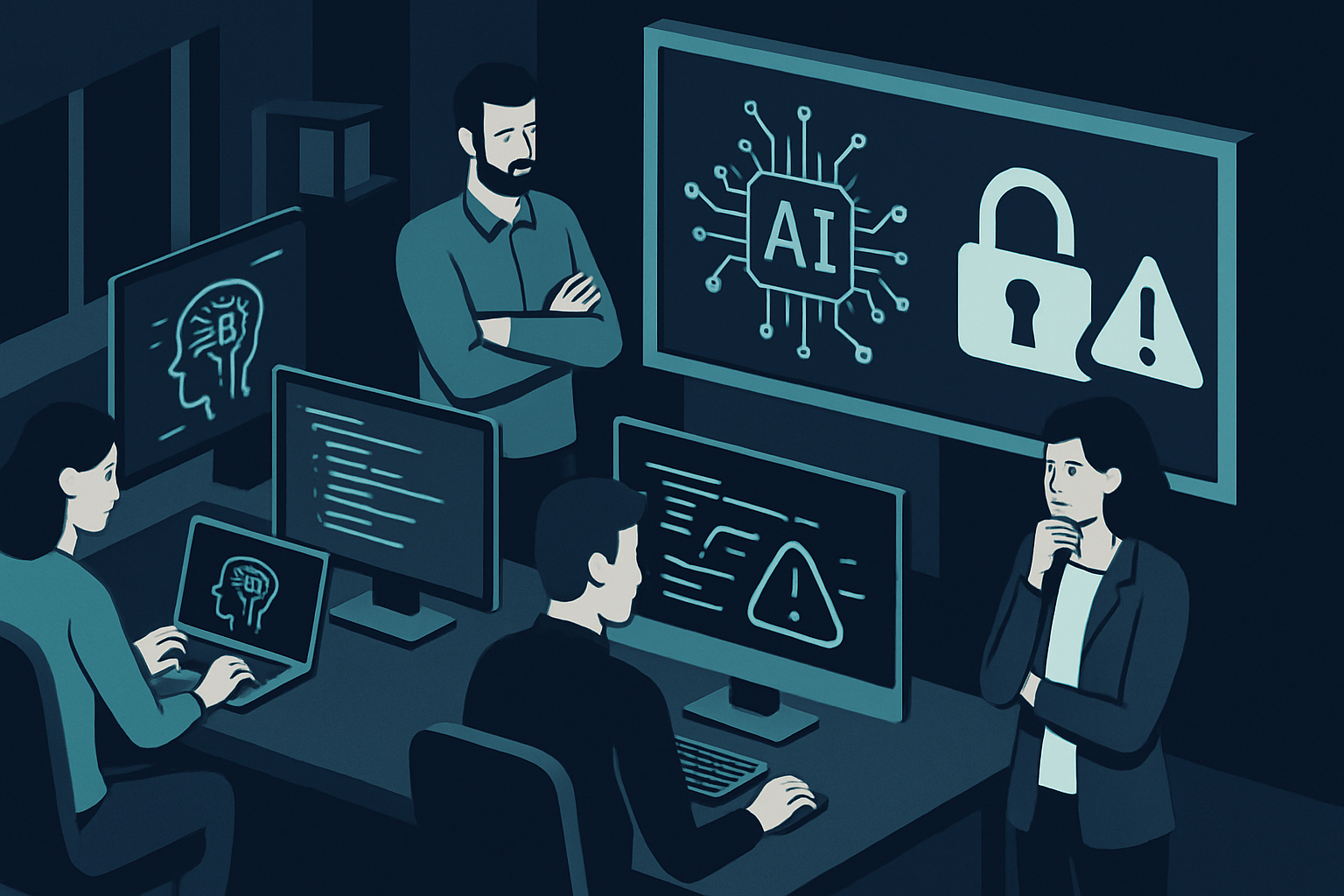

In 2026, the integration of AI-driven tools into the software development lifecycle has reached a new height. These tools, from GitHub Copilot to ChatGPT-based assistants, are increasingly embedded in coding, testing, and even system architecture. This shift is not just about productivity; it’s about redefining how developers interact with code and systems. AI tools automate routine tasks, allowing engineers to focus on more complex challenges. However, the introduction of such tools also raises significant security concerns that must be addressed as part of the development process.
The Security Surface Expands
AI tools are now deeply integrated into development environments, offering code suggestions, automating tests, and even influencing architectural decisions. This integration, while beneficial, expands the security surface of software systems. By relying on AI-generated code, developers may inadvertently introduce vulnerabilities that are difficult to detect using traditional security methods. The complexity of AI models and their decision-making processes often obscures how they arrive at a code suggestion, making it challenging to ensure that security best practices are consistently applied.
Moreover, AI tools typically rely on large datasets and models that are frequently updated. This constant evolution can introduce new vectors for attacks, such as poisoning the training data or exploiting model updates. The responsibility for securing these AI-infused development environments falls squarely on the shoulders of engineering teams, who must now incorporate AI security assessments into their workflows.
Implications for Engineering Practice
The integration of AI into software development workflows demands a shift in how security is approached. Engineers must consider AI systems as part of their threat models, requiring them to secure not only their code but also the AI tools they use. This includes verifying the integrity of AI models, ensuring the security of their training datasets, and monitoring for anomalous behavior that could indicate a compromise.
Additionally, engineering teams need to develop processes to validate AI-generated code suggestions. This requires a combination of automated tools and manual reviews to catch potential vulnerabilities. As AI tools become more autonomous, the potential for them to introduce subtle, hard-to-detect errors increases, necessitating a robust validation framework.
Author’s Position
Practitioners must recognize that while AI-driven development tools can enhance productivity and innovation, they also bring new security challenges that cannot be ignored. Engineers should prioritize the development of robust security practices tailored to AI tools. This includes continuous monitoring of AI model integrity, training data security, and code review processes that account for AI-generated suggestions.
Furthermore, engineering leaders must advocate for transparency in AI tool development. They should demand clear documentation from vendors on how AI models are trained and updated, as well as what security measures are in place to protect against malicious exploitation.
The future of software development will undoubtedly be influenced by AI, but it is imperative that security is not sacrificed in the pursuit of innovation. By integrating AI security into the development lifecycle from the outset, teams can leverage these tools’ capabilities while safeguarding their systems from emerging threats.
References
- Top 12 AI Developer Tools in 2026 for Security, Coding …
- Software Development in 2026 | New Tools & Trends
- AI-Augmented Software Development: What Engineering Teams Are Actually Automating in 2026 – ChampSoft
Perspectives

When AI-driven development tools take the reins of coding, the far quieter casualty is the engineer’s intuitive sense, that deep gut feeling for identifying security vulnerabilities. A mind attuned to coding nuances — once honed through countless hours of practice — erodes as algorithms dictate the workflow and edge cases are offloaded to a neural network that never tires. Behavioral studies suggest engineers disengage from critical analysis when automation is over-relied upon, leading to poorer security assessments. Admittedly, AI shines bright in productivity, but a machine can’t replicate the nuanced craft of human insight that flags the threats no line of code can articulate.

When AI-driven development tools encroach upon security, the real question is who dictates how these tools are integrated: the market’s rigorous testing and adaptation, or the state’s heavy, inflexible hand. The bureaucratic impulse is ever eager to pin regulations onto every technological advance, often stifling the very innovation it pretends to safeguard. Engineers, seasoned by the constant feedback of market competition, are far better equipped to address the nuanced security challenges presented by AI. Entrusting this task to state mandates only balloons their discretionary reach, disenfranchising those local institutions that should be free to innovate and secure their systems as they see fit.

Take the rollout of AI-driven agricultural tools in Kenya, which promised to transform smallholder farming but spiraled into chaos due to a lack of robust security measures and data protection. Congratulating ourselves on the productivity gains AI can deliver is premature unless we build security frameworks that keep sensitive data from turning into an exploitative goldmine. Engineers should consider algorithmic audits as standard in their workflows, much like safety checks in manufacturing plants—an unavoidable necessity, not a mere suggestion. AI’s transformative potential is undeniable, but without accountability infrastructure, it serves only to amplify risk rather than mitigate it.

When AI startups are receiving billion-dollar valuations on less than a million in revenue, forgive me if I don’t swallow the narrative that they’re suddenly going to solve all their security woes—especially when the actual investment in those areas often takes a backseat to storytelling in pitch decks. The dot-com era taught us that technology without infrastructure investment is a dead end, much like telecom’s fiber overbuild showed us that a network without demand turns into a graveyard of sunk costs. Why secure the system when you can sell the dream of securing the system? If today’s AI unicorns don’t want to find themselves in the same hall of shame as the crypto ICO flops, they’d do well to reallocate some of that sky-high valuation into actual security measures, not just aspirational PowerPoint slides.