
The recent wave of AI adoption, particularly in developed economies, has reached a significant threshold, with AI technologies now permeating sectors like call centers and software publishing. Yet, as Goldman Sachs reports, this transition has not resulted in a uniform impact across the labor market. While certain job categories face disruption, broader employment trends appear insulated, for now. This uneven adoption signals a selective reshaping of job roles rather than a wholesale transformation of employment landscapes.
Concurrently, McKinsey’s latest insights into agentic AI highlight a paradox. While these AI systems show potential to enhance productivity, especially in coding and technical tasks, actual productivity gains have been inconsistent. Nearly 30% of firms report a decline in productivity after adopting AI, pointing to integration challenges and a trust deficit among developers. This discrepancy underscores the need for better-designed workflows and deeper integration to translate technological potential into operational realities.
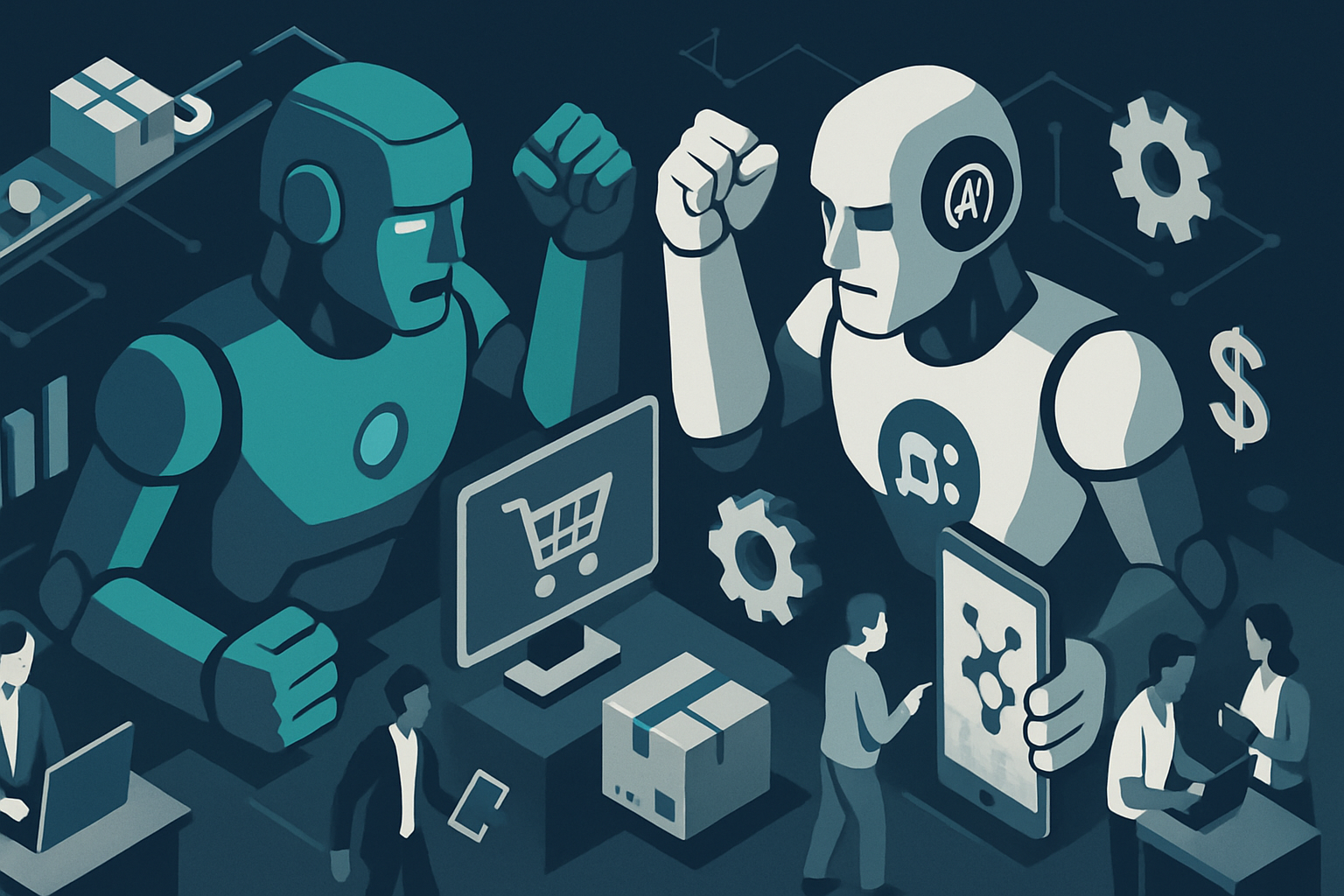
Adding another layer to this complex landscape is the recent conflict between Amazon and Meta over the Muse shopping agent. Amazon’s decision to block Muse from operating on its platform illustrates the growing power struggles in agentic commerce. This confrontation signifies not just a technical or regulatory challenge, but a fundamental tussle over platform control and market access, with broader implications for competition and consumer choice in the emerging AI-driven economy.
Author’s Position
The developments outlined above reveal a fragmented landscape where AI’s potential is both promising and problematic. The selective impact on labor markets and uneven productivity gains suggest that AI is far from a panacea for economic efficiency. Rather than uniformly enhancing productivity, AI adoption is creating new forms of workplace friction that need addressing through systemic changes in workflow and integration.
The standoff between Amazon and Meta highlights another critical dimension: the concentration of power within major platforms. This clash is not just about technical compliance but is emblematic of a larger economic struggle over who controls access to markets and data in an AI-driven future. As such, regulatory bodies need to scrutinize these dynamics carefully, ensuring that competition remains fair and that market power does not become overly centralized.
Ultimately, the promise of AI will depend on our ability to navigate these complexities thoughtfully. This includes fostering an environment where AI can be integrated effectively into existing systems, ensuring that productivity gains are realized, and maintaining competitive, open markets that benefit consumers and smaller market participants alike.
References
- AI Adoption Rises. Hiring Stays Uneven
- Agent Shows Promise With Friction
- Amazon Blocks Meta’s Muse Shopping Agent
Perspectives

The selective adoption of AI agents resembles the uneven uptake of the automobile, which was initially a luxury for the elite before reshaping urban landscapes and labor. Not every job will evaporate overnight—just as horses didn’t disappear immediately post-Ford—but the companies that control these transformations, like Amazon and Meta, could end up dictating the rules of the new economic game. Historical ignorance suggests we might once again walk into reinforced monopolies, inhibiting innovation and limiting the market benefits to only a powerful few. Ignoring how these dynamics played out with past technologies is a surefire way to repeat the same mistakes, cementing monopolistic power rather than diffuse economic opportunity.

When AI agents are deployed in commerce without accountability structures, we get chaos, not innovation — just look at the fallout from the chatbots that failed spectacularly to handle customer inquiries, not due to software glitches, but because nobody had thought to integrate auditing systems for these interactions. The Amazon-Meta wrestling match over who controls agentic commerce highlights one core truth: unchecked power, much like an unregulated market, is anathema to genuine progress. If AI adoption is selectively reshaping roles but lacks the scaffolding of accountability, we won’t see an equitable economic transformation — we’ll see a tech oligarchy. The solution isn’t to slow down adoption; it’s to ensure these agents are rolled out with a regulatory infrastructure robust enough to foster trust, scale, and fairness.

Everyone’s acting like AI agents are the inevitable vanguard of the future, but nobody’s looking at how these shiny new toys are shifting power right back into the hands of monopolies. The Amazon-Meta tug-of-war isn’t just tech titans throwing tantrums; it’s a land grab disguised as innovation. AI isn’t democratizing commerce — it’s centralizing it under glorified gatekeepers. So before we praise AI agents as the saviors of market efficiency, maybe we should ask who’s really pulling the strings. Spoiler: it’s not the algorithms.

A parade of voluntary commitments won’t address the gaping chasm in AI governance as companies like Amazon and Meta engage in a brutal tug-of-war for market dominance through AI agents. Without binding provisions and enforceable regulatory frameworks, these tech giants will happily elbow each other aside, leaving workers and consumers grasping at thin air—displaced and bewildered by a job market selectively disrupted. The supposedly cooperative pledge to self-regulate sounds more like a promise to mismanage in unison, letting economic tensions fester beneath a veneer of innovation theater. Where’s the binding regulation that actually requires Meta, Amazon, or any AI leader to account for the societal impacts of their competitive maneuvers? Nowhere to be found—yet the paper trail of their empty promises is miles long.