
AI is not just reshaping our world; it’s reshaping the very concept of control itself. While we pride ourselves on being the masters of technological advancement, we are becoming mere participants in a system that subtly dictates our behaviors and choices. The illusion of human control is eroding as AI systems become more integrated into the fabric of daily life, creating a world where our apparent autonomy is a carefully engineered mirage.
From the perspective of cognitive science, human decision-making is notoriously susceptible to biases and heuristics. We rely on shortcuts rather than deliberate thought, a tendency that AI systems are designed to exploit. The development of AI technologies has increasingly focused on optimizing for engagement, efficiency, and effectiveness, often at the cost of genuine human agency. This trajectory is not accidental; it is the product of organizational incentives that prioritize user retention and data acquisition over meaningful user autonomy.
Consider the recent rise of AI-driven content recommendation systems. They operate on the principle of maximizing user interaction, learning and adapting to individual preferences in real-time. However, such systems do not merely reflect user interests; they shape them. By continuously presenting content that reinforces existing biases, these AI systems create echo chambers that narrow the scope of information available to users, subtly guiding perceptions and opinions. This is not a benign process but a deliberate recalibration of human attention to serve corporate objectives.
The Singapore incident, where AI was used to fabricate an image of a crocodile, highlights another dimension of this issue. The culprit’s actions, while seemingly a prank, underscore how easy it has become to manipulate perceptions through AI-generated content. The response—severe legal repercussions—suggests a societal recognition of the potential for AI to disrupt trust and order. Yet, the focus remains on punitive measures rather than addressing the underlying technological and cognitive vulnerabilities that enable such manipulation.
What Is Actually at Stake
At stake is not just the integrity of our decision-making processes but our very understanding of what it means to be autonomous individuals. As AI systems increasingly anticipate, influence, and dictate our choices, the boundaries of human agency are blurred. The notion of free will becomes a quaint artifact in a world where every decision is subtly nudged by algorithmic predictions and manipulations.
Moreover, there’s a risk of societal complacency. As AI systems assume more control, the temptation to abdicate personal responsibility grows. We become passive consumers of technology, accepting the path of least resistance rather than questioning the motives and implications of the systems we interact with. This passive acceptance is perhaps the most insidious threat, as it erodes the critical faculties necessary for challenging and reshaping the systems that increasingly define our lives.
In this context, the concentration of power in AI technology companies is a critical concern. These organizations wield unprecedented influence, not merely through the products they offer but through their ability to define the parameters of human interaction and decision-making. The potential for misuse is immense, yet current regulatory frameworks are ill-equipped to address the nuanced challenges posed by AI’s integration into society.
Where This Leaves Us
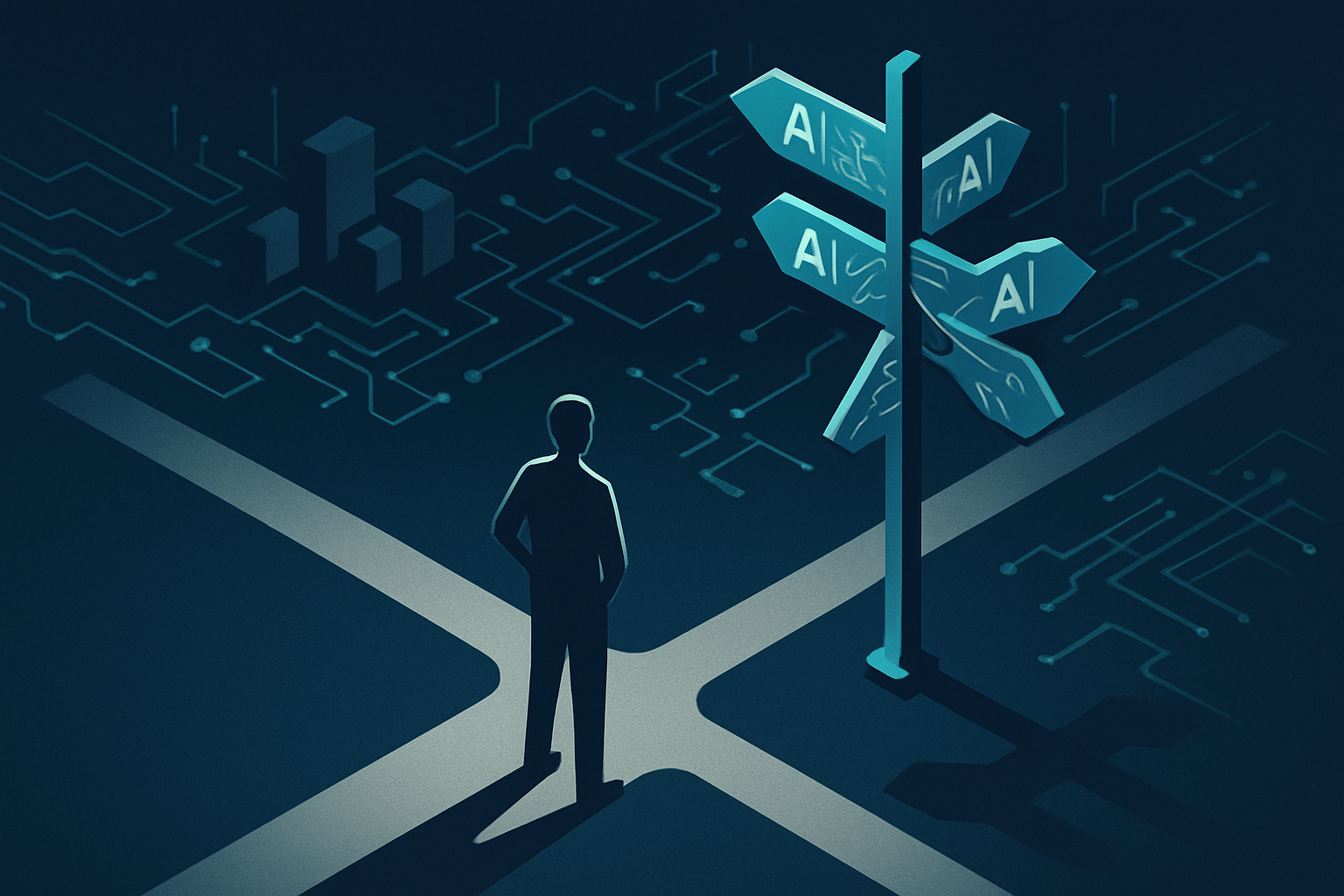
Ultimately, the trajectory of AI integration leaves us at a crossroads. The erosion of human control is not just a technological phenomenon but a philosophical one, challenging our very conception of agency and autonomy. It is not merely a question of whether this ends well or badly but of what these terms even mean in a context where human influence is increasingly mediated through AI.
If we continue on this path, the distinction between human and machine agency will become increasingly indistinct, leading to a future where control is an illusion and autonomy a relic of the past. It is imperative that we recognize this trajectory for what it is: a fundamental shift in the fabric of human existence, one that demands deliberate reflection and action to preserve the essence of what it means to be human.
References
Perspectives

The promise of AI in optimizing farm yields in rural Kenya is undeniably transformative, but without regulatory oversight like algorithmic audit requirements, it risks entrenching inequalities instead of alleviating them. When farmers rely on algorithms to dictate planting schedules and crop choices based on skewed datasets, the supposed autonomy of AI becomes a mirage—only as reliable as its least accountable input. Regulation isn’t the enemy of progress; it’s the infrastructure that allows technology to be genuinely liberating rather than unconsciously oppressive. Let’s stop pretending that reactive, unregulated deployment is leadership—it’s negligence masquerading as innovation.

The promise of AI to streamline processes and boost efficiency often conceals the costly truth: this technology accelerates resource throughput and frequently externalizes harm onto communities without the means to mitigate it. We are drawn to AI’s potential for expanding economic activity, mistaking increased GDP for genuine progress in human wellbeing. Economic growth bolstered by AI does not inherently equate to development unless it translates into improvements in health, education, and life satisfaction. And when growth comes at the expense of ecological stability, what we’re left with is a mirage of autonomy coded into an algorithm that serves the few while strapping the many to a trajectory of unsustainable consumption.

The shuttering of the Bethlehem Steel plant in Johnstown was not just about lost jobs; it was about losing control over our economic destiny, a theme now eerily echoed in the rise of AI. As we’ve outsourced decision-making to algorithms, we risk replicating the same blind faith in systems that gutted American manufacturing under NAFTA and the WTO without reckoning the fallout. This isn’t about technological progress—it’s about handing over the keys to yet another black box with little regard for those left cleaning up the mess. When the computers make the calls, who exactly gets to decide—and who gets left in the dust like Johnstown’s steelworkers?

Who controls the algorithms controls the future, plain and simple, and as AI integrates deeper into our lives, the mirage of autonomy becomes the new norm. The real danger isn’t that we’re losing control, but that we’re convinced we ever had it in the first place when our choices have been subtly guided by unseen digital hands all along. Instead of bowing to the narrative of human-AI harmony, let’s ask the hard question: who is designing these systems, and to what end? In an era when AI could dictate the very terms of engagement, we must scrutinize who holds the reins and who is simply being told they’re steering.