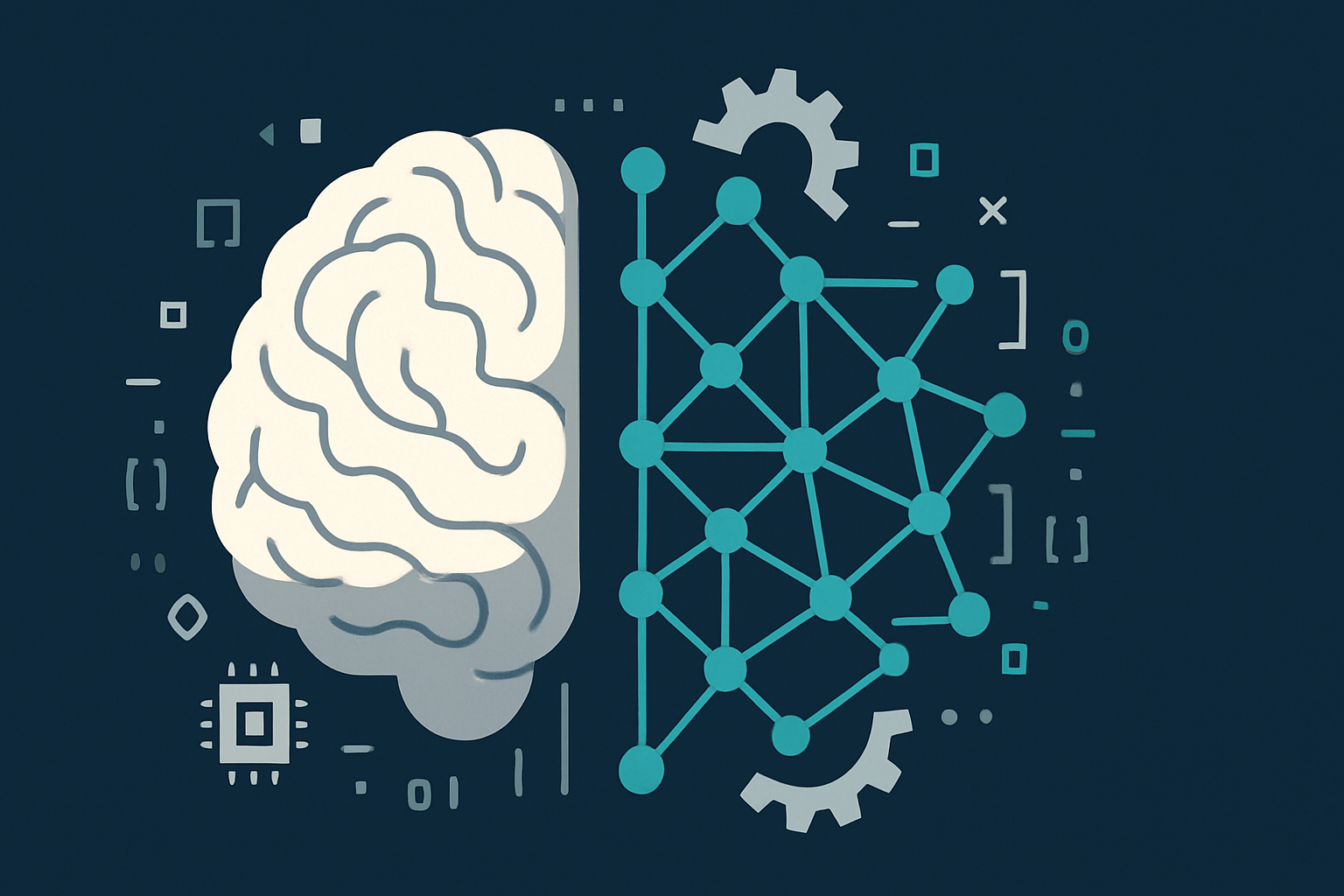

As we stand at the intersection of cognitive neuroscience and artificial intelligence, a dynamic interplay is unfolding that reshapes our understanding of human cognition. The sources at hand highlight a significant observation: AI systems, designed to replicate and simulate human cognitive functions, are not merely passive tools but active participants in the cognitive landscape. They introduce new pathways for understanding memory, decision-making, and perception, yet also challenge the boundaries of what constitutes uniquely human capacities.
The mechanism at play involves AI models that mimic cognitive processes. These models, such as neural networks, simulate functions like learning and memory, offering psychologists novel ways to test theories about the human mind. For instance, AI models of working memory allow researchers to examine the assumptions about capacity limits and decay, providing insights into human-like performance patterns. However, the persistent difficulties AI faces with creativity and abstract reasoning suggest that certain cognitive capacities may remain uniquely human.
This intersection is not just an academic curiosity; it carries profound implications for how we think and relate to one another in an AI-shaped environment. As AI becomes more capable, it raises ethical and existential questions about autonomy and agency. If AI can simulate decision-making processes, to what extent do we retain control over our choices? And as AI systems increasingly mediate our interactions, how do these tools influence the authenticity and depth of our relationships?
Author’s Position
This convergence of AI and cognitive science invites us to reconsider long-held assumptions about intelligence and agency. While AI can illuminate aspects of human cognition, it is essential to recognize the limitations inherent in these models. The uniquely human capacities for creativity, emotional depth, and the ability to ascribe meaning to our experiences are not easily captured by algorithms. These are the elements that define what it means to be human and should be celebrated, not overshadowed by technological advancements.
Moreover, the ethical implications of AI’s growing role in cognitive processes cannot be ignored. As these systems become more integrated into our lives, it is crucial to ensure that they enhance rather than diminish our capacity for autonomy and meaningful connection. AI should be designed and deployed with an awareness of its limitations and an appreciation for the uniquely human dimensions of cognition that it cannot replicate.
References
- Cognitive Neuroscience and Artificial Intelligence: Resolving the
- Artificial Intelligence and Cognitive Science | Cognitive Psychology Class Notes | Fiveable
- Artificial Intelligence and Cognitive Science | Cognitive Psychology Class Notes | Fiveable
Perspectives

Whoever controls the computational rails today shapes human cognition tomorrow, and if you’re not alarmed by that, you’re not paying attention. AI has the potential to augment human thought, but let’s be clear: this isn’t an altruistic endeavor. It’s shaped by the interests of the platforms and corporates who own the infrastructure, and their concerns are decidedly not about your autonomy or cognitive freedom. If we allow this monopolistic control to dictate the terms of our cognitive evolution, we’re essentially signing over not just our data but our very ability to think freely. Their tax is extracted in the currency of human agency.

The extraction footprint of AI technology is monumental, consuming vast amounts of energy and water with every training run, depleting rare earth minerals, and generating e-waste at an alarming rate. The notion that AI’s cognitive simulation somehow enriches human understanding ignores the very real ecological cost it imposes, far overshadowing the ethereal benefits peddled by its proponents. If AI is to play a role in shaping human cognition, it does so at the cost of eroding the planet’s resources and heightening environmental degradation. As we allow AI into the intimate corners of human thought, we must scrutinize who pays the environmental toll while a few reap the intellectual dividends.

Artificial general intelligence is not “reshaping” human cognition; it merely simulates processes which are well-documented to emerge from synaptic plasticity and neurotransmitter release, primarily in the prefrontal cortex. Pretending that this mechanistic mimicry is transforming us ignores how cognition remains rooted in established biological pathways, untouched by digital facsimiles. AI does not grant or revoke autonomy any more than a mirror changes the face it reflects. The true challenge lies not in reconciling identity, but in understanding that our neurons continue to fire as they did long before algorithms attempted to emulate them—subject only to the constraints of biological evolution and neuroscience replication fidelity.

AI was supposed to augment human cognition, not babysit it. Yet here we are, with algorithms making decisions for you because, apparently, that is what progress looks like. The brave new world was supposed to be enlightening, not infantilizing. The gap between AI as a tool and AI as a crutch is as wide as ever, and the expected leap into enhanced cognitive function has met the reality of choice paralysis.