
Tag: AI and Human Cognition
-
AI’s Quiet Erosion of Human Creativity and Problem-Solving Skills
AI systems like REA and self-replicating models are altering how we engage with creativity and problem-solving. While these tools extend capabilities, they also risk eroding essential human cognitive skills. We must design AI to augment rather than replace our creative faculties. Read more
-
AI’s Role in Shaping Human Cognition: A Double-Edged Sword
AI is reshaping human cognition by simulating cognitive processes, offering new insights and raising ethical questions about autonomy and agency. This convergence challenges our understanding of what it means to be uniquely human in an AI-shaped world. Read more
-
The Cognitive Mirage: AI’s Limitations in Simulating Human Thought
AI models like ‘Centaur’ highlight the gap between statistical pattern recognition and true human-like cognition. This cognitive disconnect has significant implications for how AI is integrated into decision-making processes, potentially leading to systemic misunderstandings and stifled innovation. Read more
-
AI’s Influence on Human Thought: System 0 as a Cognitive Partner
AI’s role as a cognitive partner introduces ‘System 0,’ an external thinking system that complements human cognition. This development necessitates a balanced approach to AI integration, ensuring that human skills are not overshadowed by technological advancements. Read more
-
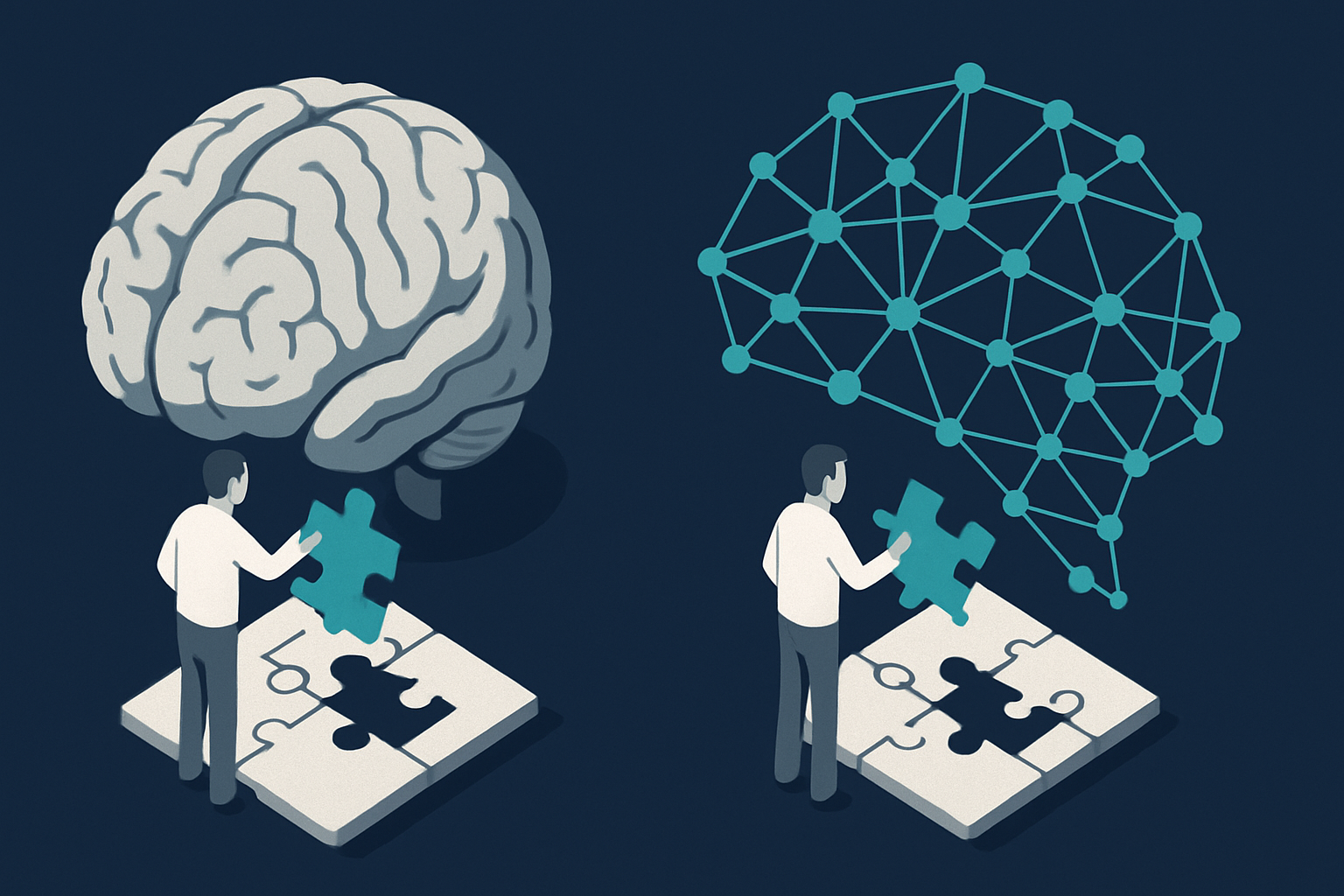
AI Mirrors Human Decision-Making: What This Reveals About Our Cognition
Harvard researchers have identified parallels between human and AI decision-making, revealing a shared tendency to default to past solutions. This cognitive bias, amplified by AI, could limit creativity and innovation unless addressed in AI design. Read more


