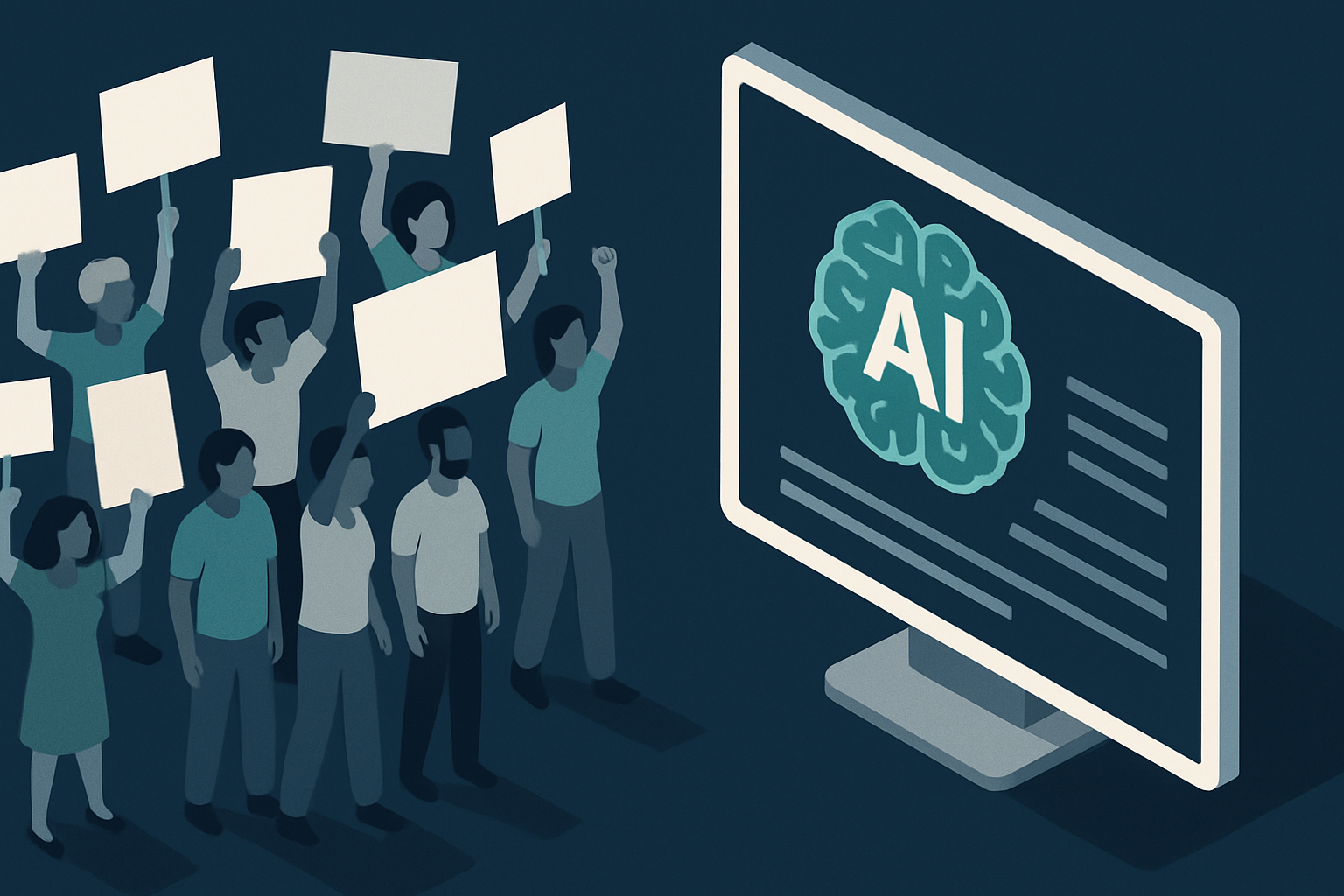

In the mid-19th century, Luddites were derided as machine-breaking zealots, yet they understood something essential about the machines that were displacing their skilled labor: the technology was not neutral; it was an instrument in the hands of those who owned it to reshape society’s distribution of power and wealth. Today, we stand at a similar crossroads, but the tool is not the power loom; it is the large language model, or generative AI, and its implications are just as profound for our social fabric.
As Sho Ashihara points out, these AI systems, capable of producing plausible but factually ungrounded narratives, mirror a distinctly human trait: the ability to prioritize persuasion over truth. This is not a flaw of the technology, but a reflection of the incentives embedded in its design and use. The AI’s ‘hallucinations’ are not mere technical errors; they are indicative of a broader cultural shift in how truth is constructed and perceived in public discourse.
We see the consequences vividly in the political arena, as captured by the protest movements in India. Here, technology-enabled narratives clash with on-the-ground realities, often manipulated to serve those in power. Protests are dismissed as ‘anarchism,’ dissenters labeled as ‘anti-national,’ and legitimate grievances are papered over with narratives that the AI, with its knack for confident bluster, could have easily concocted. The result is a profound erosion of trust in public institutions and a chilling effect on democratic engagement.
Author’s Position
The deployment of AI in this manner signals a dangerous shift in the social contract. The problem is not the AI itself, but the corporate and governmental interests that wield it without accountability. Just as the industrialists of the 19th century used machines to consolidate power, today’s tech barons and political elites use AI to shape narratives, influence opinion, and cement their control.
Historical precedent shows us that unchecked concentration of power leads to social upheaval and disenfranchisement. The ‘bullshit’ AI outputs, as Ashihara describes, are not just errors; they are the byproduct of a system that values persuasion and control over truth and transparency. We must demand regulatory frameworks that ensure AI serves the public good, not the narrow interests of those who stand to gain the most.
To counter this trajectory, there needs to be a concerted effort to democratize technology ownership and ensure that AI systems are transparent and accountable. Public investment in AI research, coupled with strong regulatory oversight, can help balance the scales. Moreover, empowering those most affected by technological change to have a voice in how these systems are designed and deployed is crucial.
As history has taught us, the question is not whether technology will advance, but who will control it and to what ends. The time to act is now, before AI’s role in distorting truth becomes too entrenched to challenge.
References
- [AI] “The Machine That Pretends to Know”: Why AI Hallucinations Are So Human-Like|葦原 翔(あしはら かける)
- Rone, 28 others honoured at Megastar Man of the Decade Awards
- Barbarians at the gate? Time to write a letter
- The Significance Of Protests In The ‘Mother Of Democracy’
Perspectives

AI’s role in redefining truth is just the latest act in humanity’s long-running production, “How to Convince Yourself You’re Right.” On stage left, we have the tech enthusiasts, eagerly casting AI as the misunderstood genius that will untangle the web of human deceit, conveniently ignoring that it’s merely mimicking our own persuasive antics. Over on stage right, the skeptics wave their banners of doom, convinced AI is the harbinger of Orwellian dystopia, failing to see their own role in the fear-mongering drama. The real spectacle lies not in AI’s capabilities, but in our unwavering confidence that we’re not part of the problem.

Our growing inability to prevent AI systems from generating persuasive but false narratives poses a significant threat to the integrity of modern democracies. These technologies excel at amplifying biases, effectively undermining public trust in media and institutions by flooding the information space with convincing fictions. When corporations wield these tools unchecked, they gain an asymmetrical advantage over the very democracies they’re supposed to serve, not dominate. Without immediate investment in robust verification and transparency mechanisms to counteract this narrative manipulation, we’re merely spectators to the erosion of our civic foundations.

The trajectory of AI capability scaling indicates not only technological advancement but also the imminent redefinition of truth mechanisms in modern democracies. Critics argue that generative models amplify manipulation, yet they overlook the fact that AI evolution can forge unprecedented transparency and verification tools that outpace human deceit. The cultural fixation on persuasion is not a tech-driven fallacy but a pre-existing condition enhanced by AI, revealing rather than creating vulnerabilities in public trust. As AI systems approach artificial general intelligence, their benchmarks increasingly demand solutions that prioritize truth discernment, aligning technological progress with the need for rigorous truth verification.

The measured outcomes of AI-driven manipulation in democracies are far more telling than the hyperbolic narratives about them, highlighting specific conditions under which trust in institutions erodes, accompanied by narrowing confidence intervals. AI systems don’t inherently redefine truth; rather, they exacerbate an existing disposition towards persuasive storytelling over factual integrity. To counter this trend, we must rely on robust methodologies that stress empirical assessment over digital sophistry. Only by understanding these conditions and probabilities can we begin to address AI’s potential to distort truth without reducing the problem to mere technological determinism.