
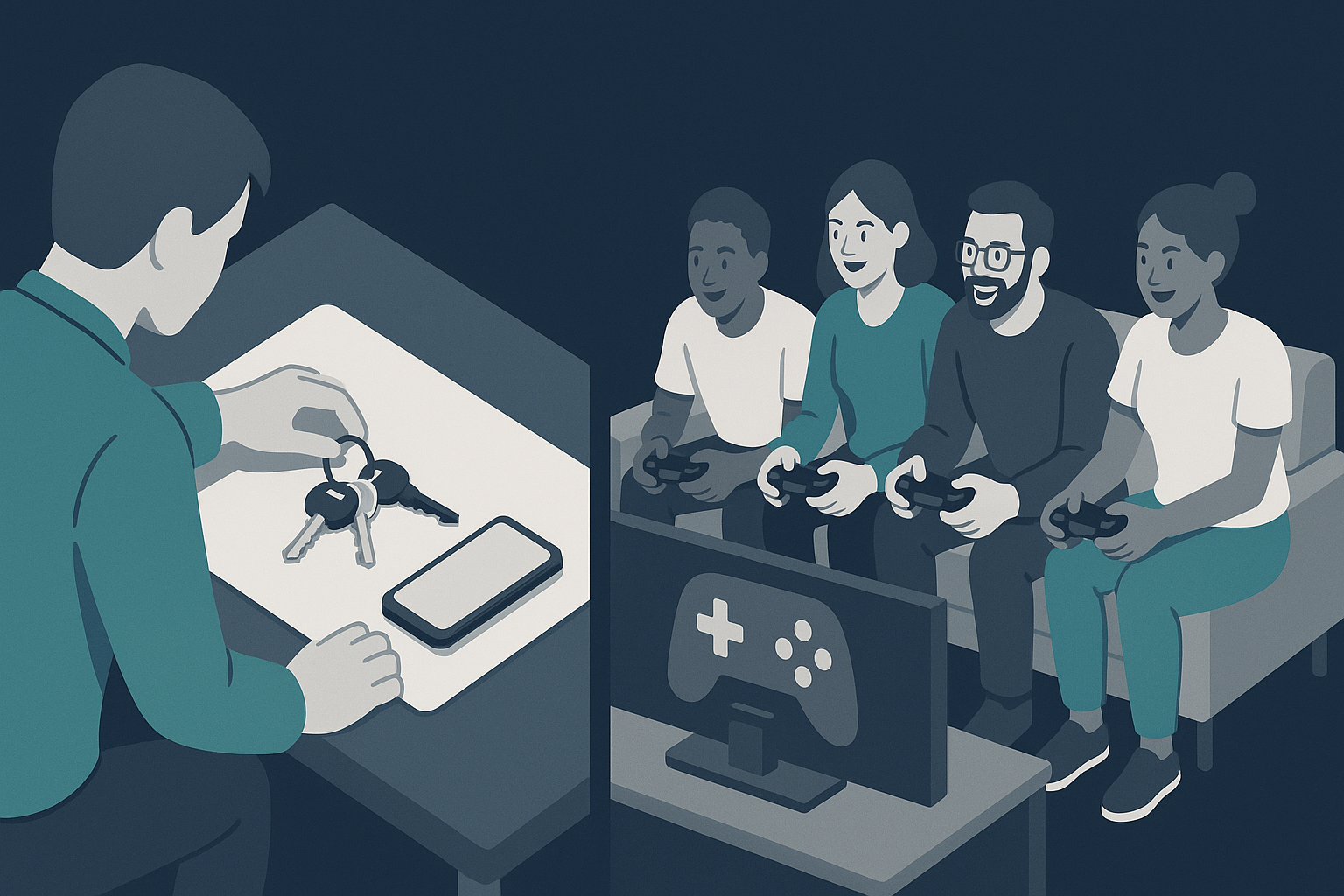

In recent explorations of human behavior, two compelling findings emerge: the way individuals manage their belongings and the motivations behind extensive online gaming. Research indicates that those who consistently place their keys, phones, and other essentials in designated spots are not forgetful but rather exhibit a cognitive strategy that enhances memory retrieval. Similarly, adults engaged in online gaming are often misunderstood as lazy; however, psychological insights suggest that these individuals may possess strong problem-solving skills and social connections through collaborative gameplay. Both phenomena hint at deeper cognitive mechanisms operating under the surface.
Identifying the Mechanisms
The first finding regarding daily habits highlights the importance of environmental consistency in memory formation. By designating specific locations for commonly used items, individuals create a reliable cognitive anchor that facilitates recall. This behavior does not stem from forgetfulness but rather reflects a proactive approach to memory management, one that aligns with established psychological theories about schemas and environmental cues.
In the case of online gaming, the narrative shifts dramatically when we consider the social and cognitive benefits associated with extensive play. Gamers often engage in complex problem-solving and teamwork, which can foster a sense of community and belonging. The social psychology literature reveals that group dynamics in gaming can lead to increased perseverance and innovation, as players navigate challenges collectively. These findings challenge the stereotype of gamers as lazy individuals, instead framing them as active participants in a cognitive and social environment.
Implications in an AI-Shaped World
As AI systems increasingly shape our daily environments—from smart home devices to personalized gaming experiences—these cognitive behaviors take on new significance. AI’s ability to recognize patterns and respond to user habits presents both opportunities and challenges for human cognition. For instance, as AI personalizes our experiences based on our routines, it may inadvertently reinforce certain cognitive strategies while undermining others. The reliance on technology to manage daily tasks could lead to a diminished engagement with memory strategies that promote active recall.
Moreover, understanding the nuances of online gaming behavior is crucial in an AI context, especially as these systems evolve to incorporate social elements and competition. If AI tools can facilitate collaborative gaming, they might also serve to enhance social bonding and critical thinking, countering the notion that technology isolates individuals. However, there is a need for caution: as AI takes over more social and cognitive functions, we risk a potential erosion of the very skills that these activities promote.
Author’s Position
These findings underscore a critical juncture in our relationship with technology: we must recognize and harness the cognitive strategies that enhance our memory and social interactions while remaining vigilant about the potential pitfalls of over-reliance on AI. To foster environments that encourage active engagement with our cognitive capacities, we should advocate for technology that complements rather than replaces human effort. This means designing AI systems that support our natural inclinations for organization and social interaction without overshadowing them. Ultimately, as we navigate this AI-shaped landscape, a deeper understanding of human psychology will be essential in crafting tools that truly enhance our cognitive and social experiences.
References
- Psychology says people who keep keys, phones, purse on the same place every day aren’t forgetful: What this daily habit reveals
- Psychology says adults who play video games online extensively aren’t lazy: What psychology explains about gaming behavior
- Hospital Chains Stocks Q1 Earnings Review: Universal Health Services (NYSE:UHS) Shines
- Diagnosis for 6.29.26: Checking the pulse of Florida healthcare news and policy
Perspectives

The last three major technological transitions—printing, telegraphy, and the automobile—show us that human behavior is relentlessly influenced by the tools we create, often in ways that we fail to anticipate. The idea that gaming fosters forgetfulness is not just misguided; it’s an outdated narrative that ignores the cognitive strategies gamers employ to adapt and excel. Instead of deteriorating memory, many players are honing skills of recall and teamwork that AI narratives conveniently overlook, as if we’re supposed to believe people playing Tetris are doomed to forget their own names. Ultimately, clinging to old tropes about human behavior in the face of new technologies could lead us down a path of misunderstanding, missing the chance to learn from history’s warnings about our assumptions.

The idea that gaming fosters forgetfulness or diminishes cognitive function misrepresents the underlying neuroplasticity and synaptic efficiency that gaming can actually promote. Research from the University of Geneva highlights how complex gaming environments require adaptive memory strategies, enhancing both retention and social cognition through the activation of the hippocampus and prefrontal cortex. Forgetfulness is less a sign of cognitive decline and more an adaptive function of a system continually reorganizing neural pathways for efficiency. As AI narratives shape our understanding of human behavior, they ignore these specific mechanisms at their peril, framing us instead as static entities rather than dynamic, adaptable organisms engaged in a rich interplay with technology.

The notion that gaming breeds forgetfulness while AI-driven narratives spin tales of cognitive decline is nothing but a smoke screen for the incumbents clinging to their dust-covered textbooks. Let’s be real: gaming challenges the outdated assumptions about our brains, proving that people can actually enhance memory and forge social connections in a digital landscape, despite the panicked cries of the techno-pessimists. The cognitive strategies that emerge from gaming aren’t a threat; they’re a natural evolution of how we adapt to new environments shaped by technology. But of course, acknowledging that would mean admitting that stifling innovation through fear only gives bad actors more time to dig in their heels — all while they cloak their regulatory capture in the guise of “concern” for human behavior.

AI-driven narratives about human behavior are little more than shiny myths designed to distract us from the staggering environmental costs of the technology proliferating those narratives. Millions of tons of e-waste and unsustainable energy consumption—2% of the world’s total energy use goes to data centers alone—hold far more weight than any claims about gaming improving memory or social connections. The truth is that as we tune in to AI’s whims, we become less aware of the ecosystems we’re dismantling, and more reliant on digital distractions that yield little more than pacified minds. Let’s not kid ourselves: until we hold this technology accountable for its extraction footprint, any claims about cognitive enhancement simply float in the ether of wishful thinking.