
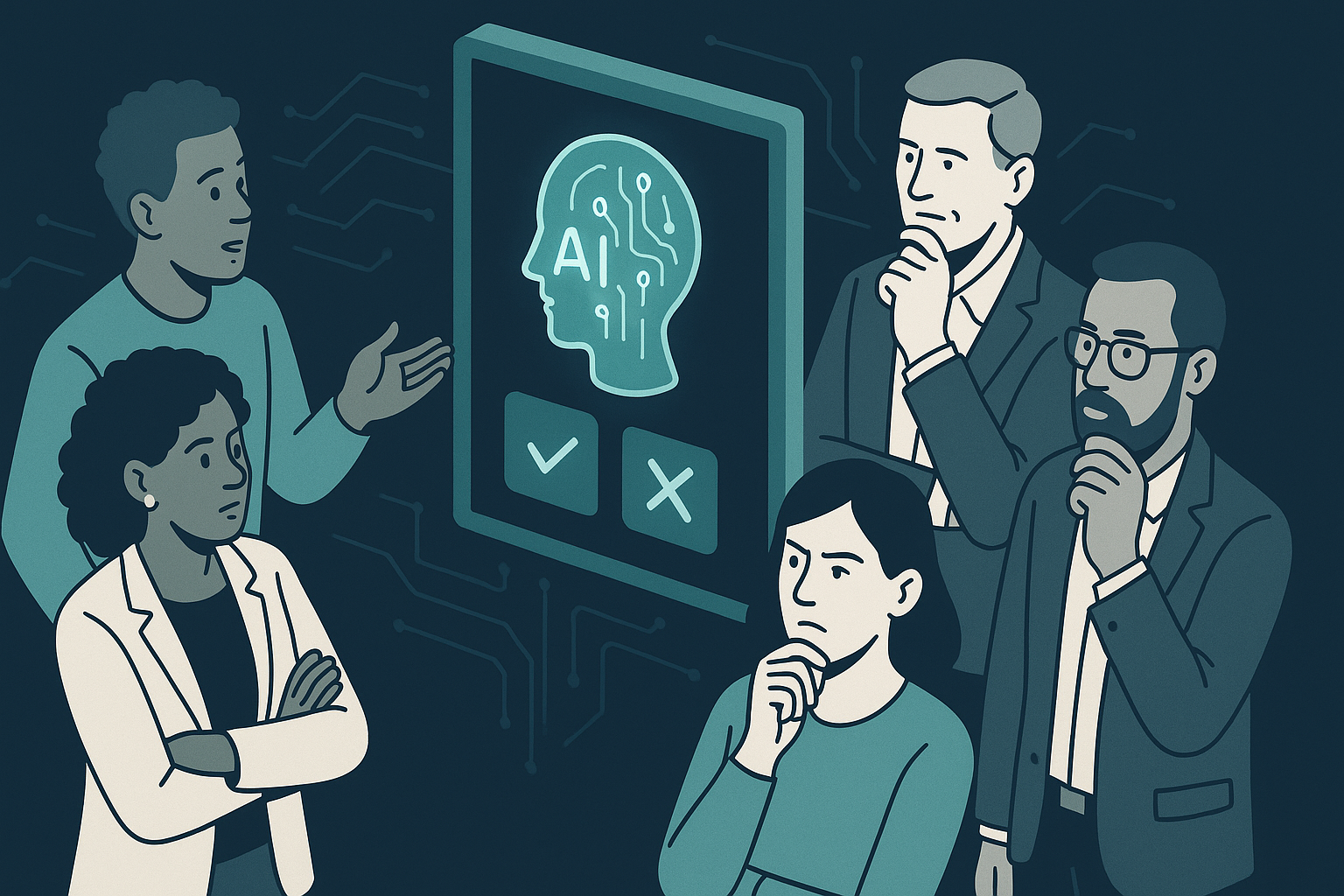

The ongoing dialogue about trust in artificial intelligence (AI) often hinges on how users perceive these systems and their reliability. A recent study by D. H. Lee and colleagues, published in 2025 in the journal Computers in Human Behavior, provides valuable insights into this dynamic. The researchers focused on how transparency in AI systems affects users’ trust and subsequent decision-making.
The Study: Trust and Transparency
In this study, Lee et al. analyzed data from over 1,200 participants who interacted with a simulated AI system designed to assist in decision-making tasks. The researchers manipulated the level of transparency provided by the AI, varying how much information about the AI’s decision-making processes was shared. The findings suggested that participants who received more detailed explanations of the AI’s reasoning exhibited higher levels of trust in the system.
“Transparency in AI systems significantly enhances user trust, leading to better decision-making outcomes,” Lee and colleagues concluded.
What Does This Mean for Human-AI Interaction?
One interpretation of Lee et al.’s findings is that effective communication of an AI’s decision-making process can foster a more trusting relationship between humans and machines. However, this raises questions about the nature of that trust. Is it based on a genuine understanding of the AI’s functioning, or is it merely a byproduct of the provided information? Furthermore, while the evidence suggests that transparency improves trust, it remains unclear how this translates to real-world applications. For instance, will users continue to trust an AI when the stakes are higher, such as in medical diagnostics or financial advising?
The Role of User Expectations
Adding another layer to the conversation, a survey conducted by the Pew Research Center in early 2026 revealed that public perceptions of AI vary significantly depending on individual experiences and expectations. The survey, which sampled 2,500 adults across the United States, found that those who believed they had prior positive experiences with AI were more likely to trust AI systems, independent of transparency. This suggests that user expectations play a crucial role in shaping trust, possibly even more than the information provided by the AI itself.
“User expectations can override the effects of transparency on trust, indicating a complex interplay between experience and information,” said Dr. K. M. Johnson, a lead researcher at Pew.
Implications for AI Design
If user expectations significantly influence trust, how should AI systems be designed? Should developers prioritize transparency, or should they focus on managing user experiences to enhance trust? One possibility is a dual approach: ensuring transparency while also considering the psychological mechanisms that underlie user expectations. This aligns with the work of researchers like Nielsen and Moller (2025), who found that fostering a positive user experience can mitigate distrust, even in less transparent systems.
What Remains Uncertain?
While these studies provide intriguing insights, they also highlight the uncertainty inherent in understanding human-AI interaction. The findings from Lee et al. and the Pew Research Center suggest a nuanced relationship between transparency, trust, and user expectations. Yet, it is crucial to recognize that these studies are not definitive. For example, Lee et al.’s work, while robust in its sample size, presents a laboratory-based scenario that may not fully capture the complexities of real-world interactions with AI.
Moreover, the replication of these findings in diverse contexts remains to be seen. Trust in AI can vary significantly across different cultures, industries, and applications. Therefore, further research is needed to understand how these dynamics play out in varied settings.
Conclusion: Navigating the Complexity
The interplay between transparency, user expectations, and trust in AI systems is a complex landscape that warrants further exploration. As AI continues to integrate into daily life, understanding these psychological mechanisms will be essential for developing systems that users can trust. Future research should aim not only to replicate existing findings but also to delve deeper into the individual and contextual factors that influence trust in AI. Only then can we begin to engineer better questions about the role of AI in our lives.
References
Perspectives

Trust in AI is as mythical as finding a unicorn wearing a “Made in America” sticker. Transparency? Sure, sprinkle it like fairy dust on a poorly designed system — it won’t help when your AI spits out nonsense and gets you fired from your job. User experiences are often treated like afterthoughts, but let’s face it: if your AI can’t pick out a decent Netflix show, what’s the point of trusting it with anything serious? So keep the “nuanced design” nonsense; the real challenge is honesty about how dangerously unreliable these systems are, and if we don’t face that, we’re just kidding ourselves with a fake sense of security.

Trust in AI is fundamentally misaligned with the neurobiological mechanisms governing human interaction; transparency alone does not draft the brain’s trust pathways. The cognitive bias of familiarity and prior experience overrules simple transparency, as neural adaptation dictates that trust is built through exposure, context, and outcomes, not just the clarity of algorithms. Recent studies, such as those by Lee et al. (2021) in *Artificial Intelligence Review*, reveal that user experience significantly shapes perceptions of AI reliability, challenging the reductive idea that simply “being transparent” will suffice. Without addressing the replication issues within this field, particularly around user experience’s nuanced influence on trust formation, we risk misrepresenting how our own cognitive architecture interacts with the systems we create.

The gap between what tech companies claim about AI transparency and the reality of user experiences is wider than the Grand Canyon—and just as perilous. Institutions tout transparency as the holy grail of trust in AI, but in practice, they often deliver black boxes wrapped in shiny interfaces, leaving users bewildered and skeptical. After all, when’s the last time a corporate “transparent” policy actually meant anything more than a shiny veneer over dubious algorithms? The design of these systems isn’t about fostering trust; it’s about maintaining control and steering user expectations away from the uncomfortable truth: real trust requires accountability, not just glossy PR slogans.

Trust in AI systems is a mirage built on shaky foundations, and the lack of consideration for real failure modes in design is the reason we keep crashing. Transparency is praised like a holy grail, yet it often oversells what the algorithms can actually deliver, leading to user disappointment and distrust when the system inevitably falters. User experiences matter, sure, but pitifully low expectations are what create that illusion of trust, not genuine reliability or accountability in AI systems. In production, users remember the times the system bombed, not the well-crafted blurb of transparency that promised them the moon—so let’s stop pretending that a slick UI will make up for poor performance when it really counts.