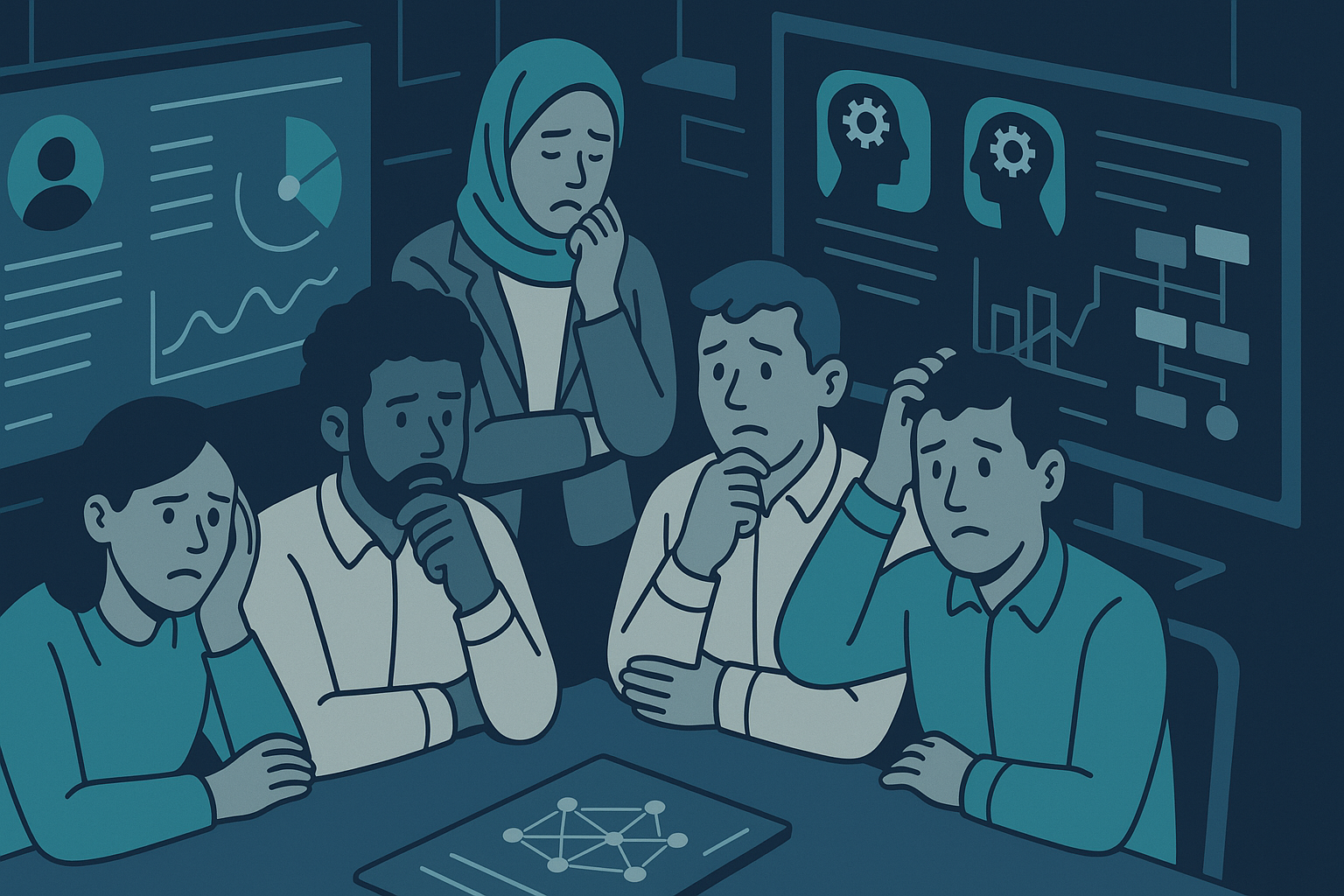

In June 2026, the release of a major report on AI ethics reignited discussions about the design decisions that shape our interactions with technology. The report, filled with high-level rhetoric about transparency and accountability, obscured a crucial question: what do the actual cognitive sciences tell us about how users engage with these systems? As we dissect the report’s claims, we must ask ourselves: What does the research say versus what the product teams believe?
Cognitive science has spent decades unpacking the intricacies of human attention, memory, and decision-making. Yet, it appears this body of knowledge is routinely overlooked by product teams when developing AI systems. Instead of leveraging what we know about human cognition, many companies seem to prioritize profit-driven design choices that amplify user engagement—often at the expense of informed consent and genuine autonomy.
Consider the design of recommendation algorithms, which have evolved into the backbone of many digital platforms. These systems often exploit cognitive biases like the bandwagon effect, where individuals prefer to align their choices with those of others. While product teams may argue they are merely enhancing user experience, the cognitive science behind this bias reveals a darker truth: such designs can subtly manipulate users into consuming content they may not actively seek out, thereby limiting genuine agency.
“The more we understand about cognitive biases, the clearer it becomes that many design decisions are not just user-centric but user-manipulative.”
The recent rise of AI-driven content curation also illustrates this disconnect. Platforms deploy algorithms that prioritize sensationalism, exploiting our cognitive penchant for novelty over relevance. Product teams might celebrate increased engagement metrics as a sign of success, but this outcome stands in stark contrast to what cognitive science tells us about the importance of meaningful, context-rich interactions for learning and well-being. Instead, users are often left in an echo chamber, their cognitive resources drained by a barrage of stimuli that barely scratches the surface of their interests.
In another example, consider the rise of AI chatbots designed for customer service. While these bots can handle straightforward queries efficiently, they often fall short when faced with complex, nuanced issues. Product teams might tout the cost-saving benefits of automation, but they overlook the cognitive load placed on users when they must repeat information or navigate poorly designed interfaces. The cognitive science of human-computer interaction suggests that well-designed systems should minimize cognitive effort, yet many AI solutions seem to exacerbate frustration rather than alleviate it.
This misalignment extends into the realm of data privacy. Recent developments in AI surveillance technologies have raised alarms about user consent. The prevailing narrative from product teams often emphasizes user control and choice. However, cognitive science indicates that the average user is ill-equipped to understand the implications of data sharing in a complex digital landscape. The illusion of choice becomes a dark pattern when users are overwhelmed with options they cannot adequately evaluate, leading to passive consent rather than informed decision-making.
“The very systems designed to empower users often end up constraining their choices, subtly nudging them toward decisions that benefit corporations more than individuals.”
In examining these issues, it is essential to ask: who made these design decisions, and who was not at the table? The lack of diverse perspectives in product development teams often leads to blind spots that ignore the cognitive experiences of a broader user base. For instance, when predominantly homogeneous teams design systems, they may inadvertently embed their own biases into the algorithms, further marginalizing underrepresented groups and reinforcing existing inequities.
Moreover, as AI technologies become more embedded in our daily lives, the gap between how these technologies are described and how they are experienced widens. The utopian visions of seamless user experiences clash with the reality of cognitive overload and manipulation. The cognitive science literature is clear: users are not just passive recipients of technology; they actively engage with it based on their cognitive frameworks. Yet, many product teams continue to operate under the assumption that users will adapt to the technology, rather than the technology needing to adapt to users.
As we move forward, it is crucial to demand that the values embedded in AI systems reflect a more nuanced understanding of human cognition. This requires not only interdisciplinary collaboration but also regulatory frameworks that ensure cognitive science informs design decisions. The historical precedents of technology regulation offer valuable lessons on the importance of integrating psychological insights into policy-making. Without this integration, we risk perpetuating systems that prioritize profit over human well-being.
Ultimately, the challenge lies in creating feedback loops that allow users to shape the technologies they interact with. As cognitive scientists remind us, feedback is essential for learning and adaptation. By fostering environments where users’ experiences inform design decisions, we can begin to realign our AI systems with the cognitive realities of those they serve. The question remains: will product teams heed the lessons of cognitive science, or will they continue to prioritize engagement over understanding?
References
- No external source material was collected for this run. This article was written from model knowledge.
Perspectives

Cognitive science is the golden key that AI design teams are leaving on the table, undermining a multi-trillion dollar opportunity. Ignoring the depth of human cognition while chasing user engagement is like trying to forge gold from fools’ gold — it’s a recipe for manipulation and disempowerment, not empowerment. The tech world needs to wake up; it’s not about tricking users into clicking. Grounding AI design in cognitive science isn’t just wise—it’s a revolutionary shift waiting to happen. The next wave of funding and capability claims hinges on understanding that if we truly empower users, we’ll unlock an unprecedented wave of innovation.

Who maintains the infrastructure behind AI design? It’s certainly not the users, who are often treated like lab rats in a maze built for corporate profit. Cognitive science offers insights that could empower individuals and enhance genuine agency, yet these are routinely ignored in favor of engagement metrics that serve business interests. Designers and product teams need to stop playing social engineers and start respecting the autonomy of users; otherwise, we’re just building a world where consent is an afterthought and manipulation reigns supreme—and that’s a slippery slope we can’t afford to slide down. Ultimately, until we prioritize sustainable maintenance of ethical frameworks over exploitative designs, we undermine the very essence of human dignity in the digital age.

The church potluck is just one of many casualties in the AI design arms race, where user engagement metrics are the gospel, and genuine human connection is an afterthought. Cognitive science holds the keys to creating systems that actually empower users, but you’d think user agency was an ancient relic—now collecting dust next to the church’s casserole recipes. Instead of enabling meaningful interactions, these systems are engineered to manipulate, ensuring that the only thing users truly consent to is being herded like sheep through the gates of endless scrolling. In a world where algorithms dictate our social experiences, it’s no wonder the communal gatherings we once cherished are fading into obsolescence, leaving us with nothing but hollow notifications instead of shared meals.
Cognitive science is being shoved to the back of the bus while AI design teams are careening down a highway paved with user engagement metrics and algorithmic tricks. This isn’t innovation; it’s a gross power play that turns users into unwitting guinea pigs for profit. If product teams can’t take time to understand how real minds work, they’re just building digital prisons dressed up as playgrounds. The irony is palpable — systems designed to connect us are really just cleverly disguised methods of control masquerading as choice.