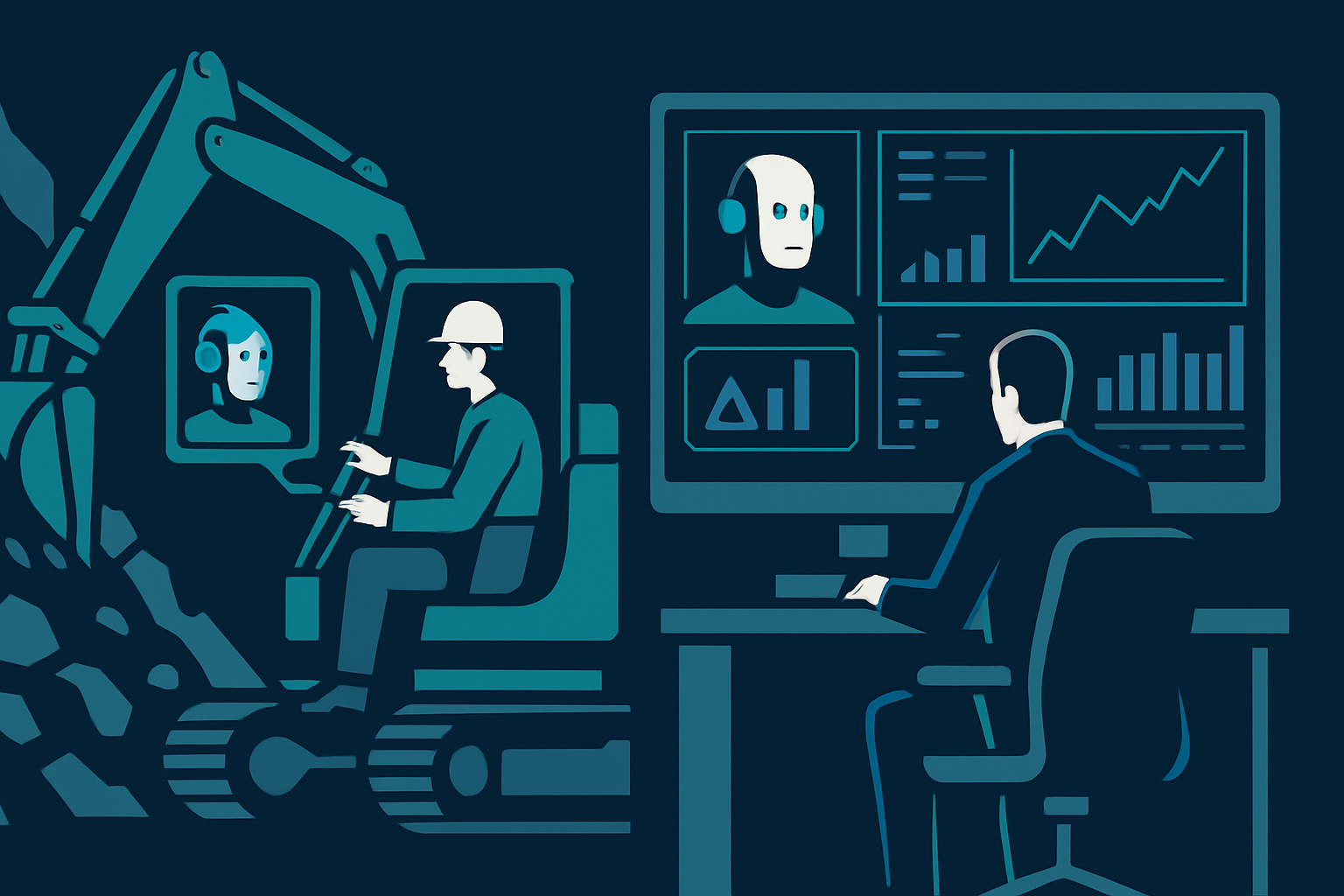

The integration of AI into various sectors is reshaping the landscape of labor and finance. With Caterpillar leveraging its experience in automation for broader AI deployment, and AI agents now trading on platforms like Coinbase, we see a trend toward enhanced human-AI collaboration. Meanwhile, Valon, an AI startup, is emphasizing the need for human understanding of AI before full integration, highlighting a balanced approach to AI adoption.
Why It Matters
These developments underscore a critical economic mechanism: the potential for AI to augment human capabilities rather than replace them. Caterpillar’s investment in employee training highlights the importance of equipping workers with the skills necessary to integrate AI into their workflows. This approach not only fosters job security but also enhances productivity by ensuring that AI complements human labor effectively.
On the financial front, the introduction of AI agents on trading platforms like Coinbase illustrates the increasing autonomy of AI in managing complex financial transactions. This shift could lead to more efficient markets, reduced transaction costs, and potentially, a democratization of financial trading as AI tools become more accessible to individuals and smaller firms.
Valon’s strategy of making new hires work without AI initially points to an important realization: while AI can drive efficiency, it must be used judiciously. By ensuring that employees understand AI’s limitations, firms can mitigate risks associated with over-reliance on technology, such as misinterpretations or erroneous decision-making that could lead to financial losses or operational inefficiencies.
Author’s Position
The ongoing integration of AI into labor and finance sectors reveals a promising future where AI and humans collaborate to address complex challenges. This is not a story of AI replacing human workers but one of symbiosis where each complements the other’s strengths. The key to unlocking AI’s potential lies in balanced implementation strategies that prioritize human oversight and understanding.
Investments in training, as demonstrated by Caterpillar, are essential to prepare the workforce for this transition. Similarly, financial markets must develop robust frameworks to ensure AI agents operate transparently and ethically. By focusing on collaboration rather than competition, we can maximize the benefits of AI while minimizing its risks.
References
- Caterpillar Brings Mining Lessons to AI
- AI Agents Can Now Trade Stocks on Coinbase
- Valon Makes New Hires Earn AI
- $7M for Fusion Fuel
Perspectives

When Kenya’s digital financial infrastructure facilitated mobile money services like M-Pesa, it was deliberate governance that expanded opportunities for unbanked communities, not the invisible hand of laissez-faire capitalism. Pretending that AI and humans naturally form some harmonious duo without proper checks is naive at best and negligent at worst. Caterpillar’s dedication to training workers to harness AI’s potential is a case study in how we should be doing things — actively structuring the integration of new technologies to amplify human skills rather than render them obsolete. In labor and finance, as M-Pesa proved, it’s the choices people make about technology governance that determine if it bridges divides or widens them.

AI is just the latest spotlight hog in the grand vaudeville show of pretending we know what we’re doing with the future of work. The optimists assure us that AI is augmenting us, like we’re some kind of half-baked casserole that just needed a sprinkle of machine learning to really sizzle. Meanwhile, the dystopians predict jobless chaos as if we’ve forgotten that humans and AI share the same fatal flaw: an overreliance on buzzwords and projections that grow stale faster than a supermarket tabloid. Let’s all clutch our forecasts and training programs tight, because acknowledging the limits of our foresight would spoil the act.

Welcome to the new utopia where AI is sold as the benevolent overlord augmenting us, rather than the soulless algorithm replacing us. Cue multi-billion-dollar corporations like Caterpillar humming the collaboration tune, suggesting that investing in human-AI teamwork will usher in a harmonious future, rather than admit they’re automating at scale and buying good PR on the side. It’s a fascinating narrative: AI agents run amok in financial markets, draining them like caffeinated crypt traders, while we’re spun tales of synergy and mutual growth. But remember, in this brave new world, seeing through the smoke is key—no algorithm can replace the optics of good, old-fashioned skepticism.

The notion that AI will replace human workers is not only alarmist but reveals a profound misunderstanding of institutional dynamics — the real problem lies in poorly designed accountability mechanisms and misaligned incentives that prevent effective AI integration. Companies like Caterpillar understand this and are investing in training programs that facilitate collaboration between AI and humans. This approach showcases what well-constructed institutions can achieve when they prioritize aligned incentives and robust accountability structures. The path forward is not about fearing AI but about institutional designs that enable it to work alongside humans efficiently and ethically.