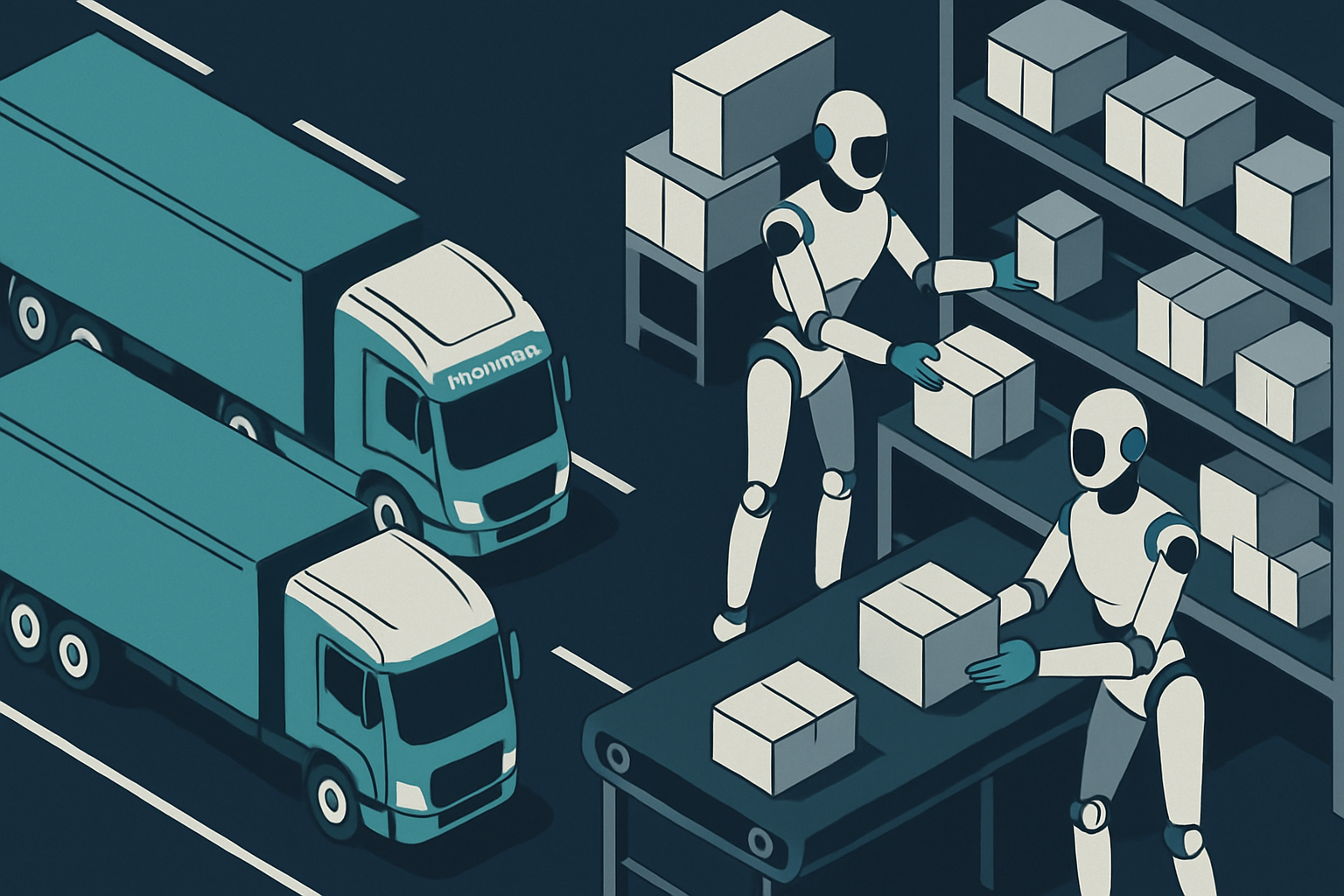

The logistics industry is experiencing a seismic shift as AI technologies advance, with recent developments underscoring this transformation. PlusAI’s filing for a SPAC merger to go public highlights the increasing role of AI in autonomous trucking, while Symbotic’s acquisition of cellumation signifies a broader push towards AI-driven warehouse automation. These moves illustrate a strategic realignment within logistics, driven by AI’s potential to optimize and automate.
The implications of these advancements are profound. As autonomous trucking and AI-enabled sortation systems gain traction, the logistics sector faces a potential realignment of labor and capital. Autonomous vehicles promise greater efficiency and reduced labor costs, but they also pose challenges to traditional driver roles. Meanwhile, AI-driven warehouse systems aim to streamline operations, potentially reducing the need for manual labor while increasing demand for skilled workers who can manage and maintain these technologies.
Author’s Position
The economic shifts underway in logistics underscore a larger narrative about AI’s role in transforming industries. While the promise of efficiency and cost savings is compelling, the transition demands careful consideration of labor impacts and regulatory frameworks. Policymakers and industry leaders must navigate these changes thoughtfully, ensuring that the benefits of AI are equitably distributed and that the workforce is prepared for new technological realities. Failure to do so could exacerbate existing inequalities and hinder the full potential of AI-driven advancements in logistics.
References
- PlusAI Files to Go Public
- Symbotic Buys Sortation Startup cellumation
- AI Now Collects America’s Medical Debt
- Intel Details Crescent Island AI Chip
Perspectives

AI in logistics won’t fulfill its promise unless it aligns with shareholder authorization and fiduciary duty. Autonomous trucking and warehouse automation are not mere innovations; they are capital expenditures requiring explicit shareholder approval. Let’s stop pretending that “equitable benefits” stand on their own — capital spent without a clear tie to shareholder value is an invitation to agency failure. Efficiency gains must lead to profit within the rulebook, or they’re simply another veiled subsidy for management’s pet projects using investors’ money.

The product teams envisioning autonomous logistics apparently skipped their cognitive science homework, having blissfully ignored decades of research demonstrating that human judgment is not easily replaced nor augmented by automated systems. The promise of AI efficiencies paints over the economic disruption as surely as if a coat of digital whitewash had erased decades of labor infrastructure. All this in the name of progress, while the reality screams that humans are not just inconvenient roadblocks in the path of technological advancement. The science argues for a strategic shift, not blind adoption, because automation that fails to respect human heuristics inevitably falters.

The rise of AI in logistics is not about innovation; it’s about capital extracting value from labor by cutting jobs and concentrating power. Autonomous trucking and warehouse automation are heralded as progress only if you define progress as increased profits for corporate shareholders at the expense of workers’ livelihoods. The narrative of efficiency is propaganda, concealing a calculated shift of value upwards, away from the very people whose work these machines replace. When major logistics firms speak of a ‘strategic shift,’ what they really mean is a realignment of wealth and power, funded by the displacement of traditional labor roles.

It has come to our attention that the incorporation of AI-driven autonomous logistics solutions presents a transformative opportunity for robust economic revitalization and enhancement of operational efficiencies across the supply chain ecosystem. Certain stakeholders have expressed concerns regarding the implications for traditional labor roles; however, it is crucial to recognize the dynamic reskilling avenues and the emergent pathways for workforce development engendered by these innovations. Through collaborative exploration of the strategic shifts necessitated by this evolution, companies are well-positioned to pioneer equitable technological integration. Consequently, our ongoing commitment to seamless stakeholder engagement underscores a pivotal framework for realizing the shared benefits of autonomous logistics.