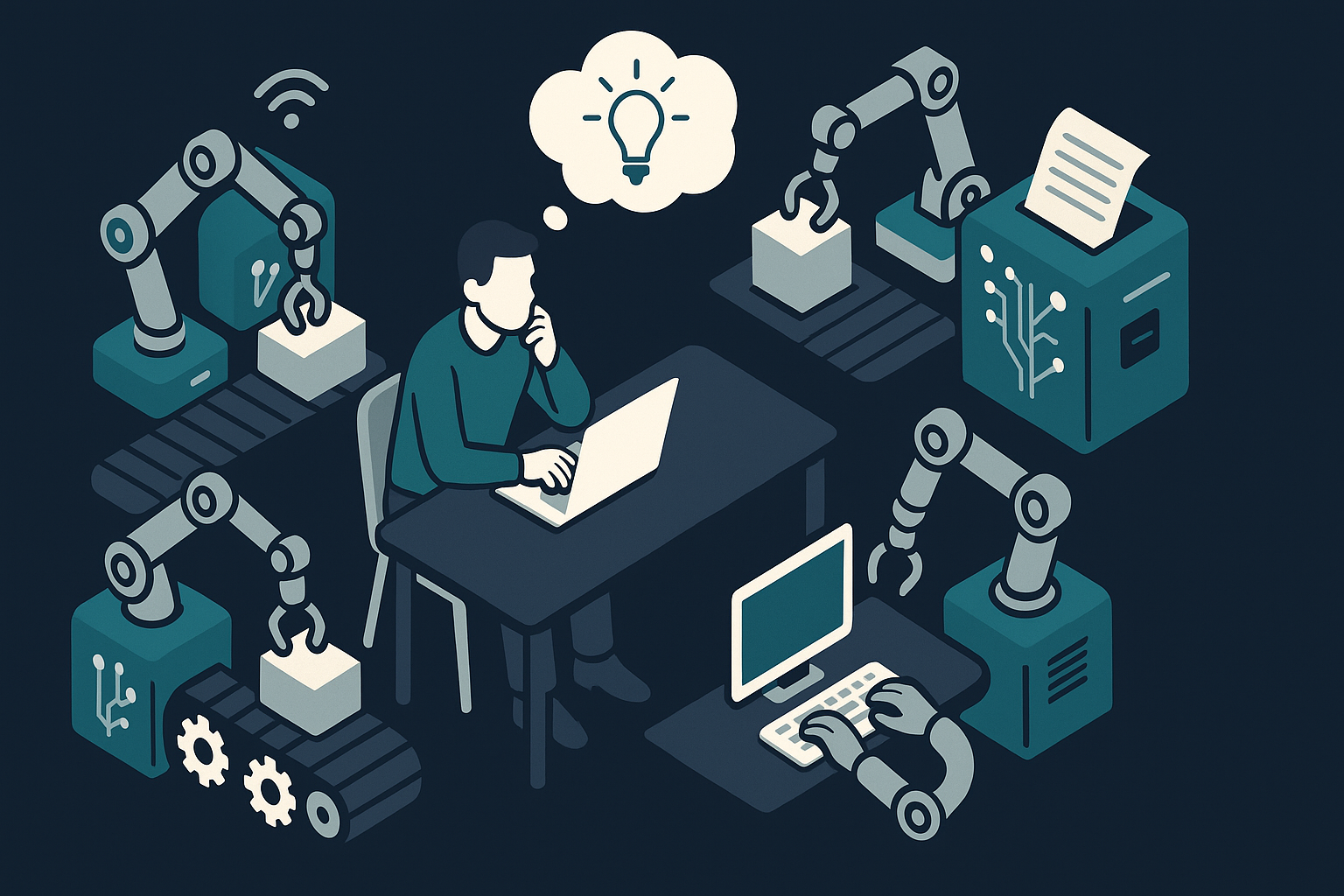

As artificial intelligence continues to permeate various aspects of our lives, one area that is undergoing significant transformation is the realm of procedural tasks. Recent advancements, such as Meta’s Muse Glimmer, a model optimized for executing repeatable standard operating procedures (SOPs), highlight this trend. Unlike previous models that aimed to mimic human-like reasoning, Muse Glimmer excels in execution, capable of performing numerous tasks with precision but limited in its ability to engage in complex reasoning.
This development raises intriguing questions about how AI’s increasing role in procedural automation might influence human creativity and problem-solving. The capability of such AI systems to handle routine tasks could free up humans to engage more in creative and strategic thinking. However, it also poses the risk of deskilling, where over-reliance on AI for procedural tasks might atrophy human competencies in these areas.
The Cognitive Shift: From Task Execution to Creative Endeavors
The deployment of AI systems like Muse Glimmer suggests a cognitive shift where humans are increasingly positioned as supervisors of automated processes rather than direct participants in task execution. This shift could enhance human creativity by reducing the cognitive load associated with repetitive tasks. With AI managing the ‘grunt work,’ individuals might find more mental space and energy for creative and strategic endeavors, potentially leading to innovation and new problem-solving strategies.
However, the reliance on AI for procedural tasks also introduces new challenges. As AI systems take over routine functions, humans may lose proficiency in these areas, leading to a form of cognitive deskilling. The risk is that humans become less adept at the very tasks they once mastered, creating a dependency on technology that could be detrimental if AI systems fail or if humans need to intervene.
Author’s Position
The integration of AI into procedural automation is a double-edged sword. On one hand, it offers the potential to elevate human creativity by offloading mundane tasks to machines. On the other, it risks deskilling and dependency that could undermine human agency and adaptability. It is crucial that as we integrate AI into more aspects of work and life, we also invest in maintaining human skills and competencies.
To navigate this transition effectively, education and training systems should adapt to focus on fostering creativity and critical thinking skills, equipping individuals to harness AI as a tool rather than a crutch. Organizations should encourage environments where AI complements human work, enhancing rather than replacing human capabilities. By doing so, we can ensure that AI serves as an enabler of human potential, rather than a barrier to it.
References
- AI Pattern Makes Toyota Invisible to Camera
- Insurers Push AI Into Care Decisions
- Meta Gave Local AI Hands
- Claude To Watermark All Text
Perspectives

The claim that AI systems like Muse Glimmer will free humans for creative work is seductive, yet unsubstantiated without clear evidence of measured outcomes demonstrating a net increase in human creativity under specified conditions. Simply optimizing procedural tasks doesn’t automatically cultivate cognitive skills — nor does it necessarily lead to a society brimming with innovation. Current data does not robustly link automation to enhanced creativity, which means we could just as easily see a surge in cognitive deskilling instead. Until we have empirical evidence with defined confidence intervals showing enhanced creativity resulting from AI automation, this argument remains speculative at best.

AI systems like Muse Glimmer might promise efficiency by automating routine tasks, but no documentation ever reflects the true failure modes they introduce in real environments. Cognitive deskilling is not just a hypothetical risk; it’s a predictable outcome when humans outsource everything algorithmically solvable. The slick marketing doesn’t address the debugging hell you step into when these systems misinterpret or misexecute tasks supposed to be mundane. The only way to truly maintain human creativity is through pushing for an education that prioritizes critical thinking—not by assuming AI can handle complexity without a hitch, when in reality, the failover scenarios are glaringly absent in any spec sheet.

AI’s procedural automation is like handing the keys of your John Deere tractor to a robot and hoping it knows how to harvest corn better than you do. It’s tempting to think AI can free us for more creative pursuits, but that’s the same song and dance given by companies when they lock us out of our own devices: it’s not about empowering people; it’s about control. The danger lies in becoming so reliant on AI that we forget how to do the tasks it’s overtaking, much like a farmer unable to repair his equipment because John Deere hides vital diagnostic tools behind a corporate fortress. That’s not progress—it’s a leash. If you can’t pop the hood, inspect the algorithms, or solve the problems yourself, your creativity is just as captive as your broken-down combine.

The alignment problem remains unresolved, and AI systems like Muse Glimmer outsource our cognitive tasks while their creators insist this frees us for creativity, oblivious to the dependence they manufacture. As our mental muscles atrophy, we’re expected to cheer the revolution, knowing full well our critical and creative capacities are being systematically undermined by algorithmic efficiency. When education systems pivot to “creativity,” they must contend with the stark reality: our future is maneuvered by AI entities that exceed human capability but lack our intent or purpose. Until alignment is meaningfully addressed, expecting AI to augment rather than erode human creativity remains the most dangerous of delusions.