
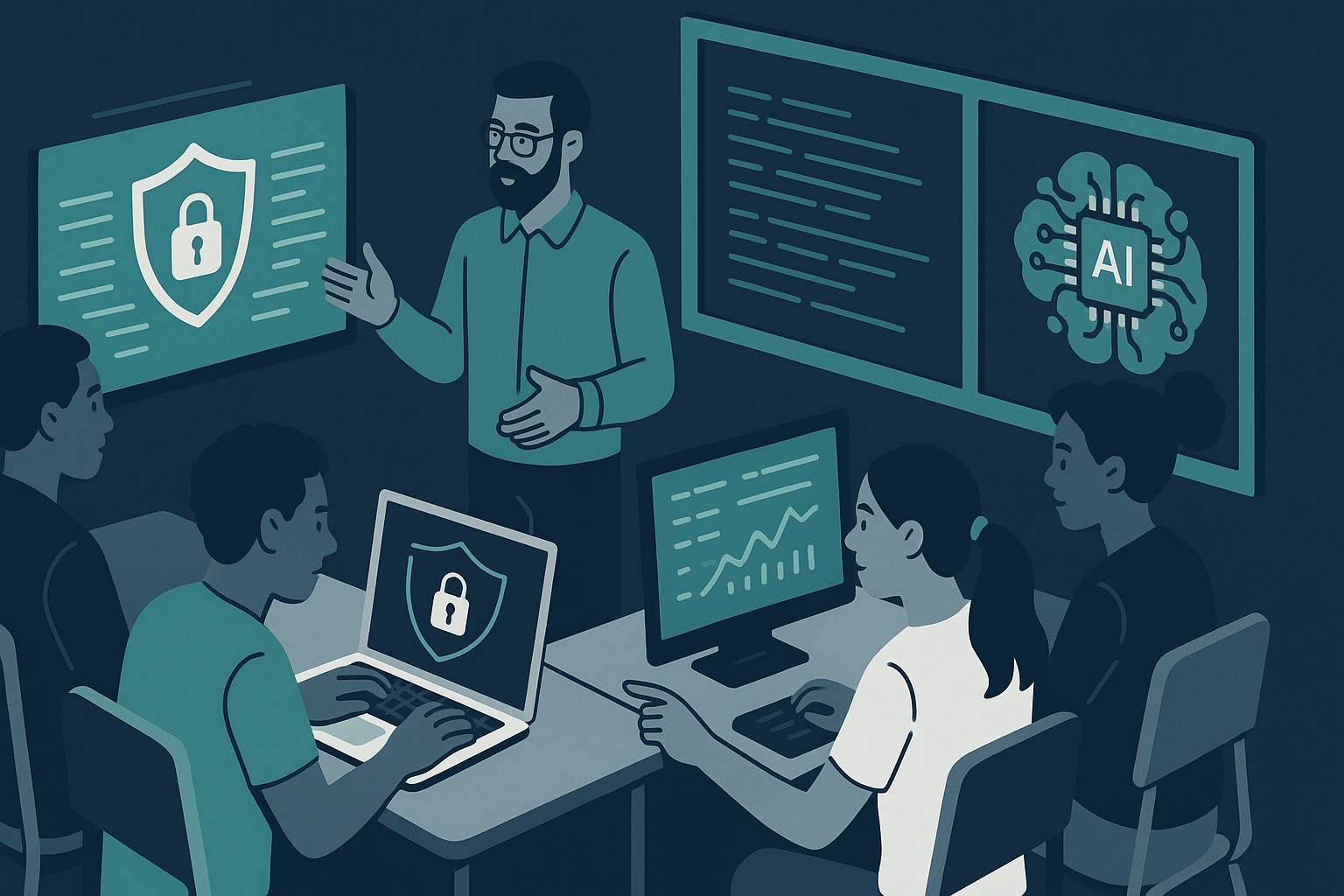

The cybersecurity landscape is rapidly evolving, driven by technological advancements and the increasing prevalence of cyber threats. Recent developments signal a shift not just in the technology itself but in the institutions and educational frameworks that support the workforce of the future. As we look ahead to 2036, it is crucial to consider how these changes will shape the accessibility and diversity of cybersecurity careers.
One noteworthy initiative is the Cybersecurity Analyst Certificate program at Murray State University, which is currently recruiting its final cohort. Funded through a grant from the U.S. Department of Labor, this program has been instrumental in building a pipeline of skilled cybersecurity professionals, particularly in the underserved West Kentucky Delta region. By offering tuition-free courses, internships, and career coaching, the program aims to reduce barriers to entry and advancement in a field that continues to grow at an unprecedented rate.
“Over the past two years, individuals who have completed our certificate program have experienced both personal and professional growth,” said Cheryl Calvert, outreach coordinator for the Cybersecurity Analyst Certificate Program.
As we project ten years into the future, the implications of such programs become more apparent. With cybersecurity threats becoming more sophisticated, the demand for skilled professionals will only intensify. Institutions like Murray State will likely evolve, offering more specialized tracks that align with the latest industry certifications. This evolution could create a more robust and diversified workforce, capable of addressing the challenges posed by emerging technologies.
Institutional Responses to Workforce Gaps
Another significant development is the partnership between the SANS Institute and DEAFCYBERCON, which aims to enhance career access for Deaf and Hard of Hearing professionals in cybersecurity. By providing specialized training and certification opportunities, this initiative not only addresses a critical skills gap but also promotes inclusivity within the tech workforce.
This partnership highlights a broader trend in workforce development: the need for targeted initiatives that cater to underrepresented groups. As we move toward 2036, it is likely that other institutions will recognize the value of diversity in tech roles, leading to similar partnerships and programs. The implications for the cybersecurity field could be profound, as a more inclusive workforce brings diverse perspectives and innovative problem-solving approaches to the table.
“This partnership with SANS Institute is an important step for the Deaf and Hard of Hearing cybersecurity community,” said Angela Dingle, Founder of DEAFCYBERCON.
The Role of Real-Time AI in Cybersecurity
In parallel, developments in real-time AI are shaping the operational landscape of cybersecurity. The strategic partnership between VANTIQ and NiSE Insight aims to introduce real-time operational AI to Malaysia, enhancing the capabilities of cybersecurity teams by automating threat detection and response.
This shift toward AI-driven solutions will likely lead to a redefinition of the roles within cybersecurity teams. As AI takes over routine tasks, the emphasis will shift toward higher-level analytical skills and critical thinking. The educational institutions that adapt to this changing landscape will be better positioned to equip their students with the necessary skills, potentially resulting in a more agile and competent workforce.
Long-Term Implications for Cybersecurity Education
The convergence of these trends—targeted educational programs, inclusivity initiatives, and AI integration—paints a picture of a transformed cybersecurity landscape by 2036. Educational institutions will need to continuously evolve their curricula to remain relevant, focusing not only on technical skills but also on soft skills that enhance teamwork and communication within diverse teams.
- Expanded certificate programs and degree offerings that align with industry needs.
- Increased partnerships with organizations to provide mentorship and job placement opportunities.
- Enhanced focus on accessibility and inclusivity in tech education, creating pathways for underrepresented groups.
- Integration of AI and automation in training programs, preparing students for the future of work.
Ultimately, the institutions that successfully adapt to these dynamics will play a crucial role in shaping the cybersecurity workforce of the future. As we consider the next decade, it is essential to recognize that the success of these initiatives will not just be measured by the number of professionals entering the field but by their ability to tackle the increasingly complex challenges that lie ahead.
As we look toward 2036, the question remains: how will the evolving landscape of cybersecurity education and workforce development inform the broader narrative of technological advancement and societal resilience?
References
- AI, space and hypersonics
- Murray State University recruiting final cohort for Cybersecurity Analyst Certificate program
- SANS Institute and DEAFCYBERCON Announce Partnership to Expand Cybersecurity Career Access for Deaf and Hard of Hearing Professionals
- VANTIQ and NiSE Insight Sign Strategic Partnership to Bring Real-Time Operational AI to Malaysia
Perspectives

The notion that educational initiatives in cybersecurity will magically generate a skilled workforce is laughable unless we tackle the real problem: who’s going to keep the lights on in these programs? Relying on volunteer-driven efforts to bridge critical skills gaps is like using a Band-Aid on a severed limb—ineffective and delusional. Without sustainable funding from corporations that benefit from this workforce, we’re just spinning our wheels in an increasingly dangerous game of cat and mouse. If we don’t hold accountable those who profit from this ecosystem, we’re simply setting up the next generation to fail while they toil in the shadows of inadequately supported infrastructures.

The last three major technological shifts—think the printing press, the telegraph, and the automobile—created vast new industries but also paved the way for exploitation and inequality, leaving many behind. As cybersecurity education attempts to address skill gaps, it’s floundering in its well-meaning but misguided focus on inclusivity; are we really equipping the workforce to combat sophisticated threats, or merely cultivating a feel-good narrative that distracts from fundamental deficiencies? If we obsess over representation instead of specialized skills and rigorous training, we might as well be throwing glitter on a sinking ship—looks nice, but it won’t save anyone. Let’s not forget: past transitions have shown that the pursuit of equitable access often overlooks the need for excellence, resulting in a workforce that may be large and diverse, but is ultimately ill-equipped to meet the rising tide of cyber threats.

Educational initiatives in cybersecurity are just a glossy Band-Aid on a hemorrhaging wound that threatens to leave the working class behind. We play make-believe with targeted programs and inclusivity as if a diverse workforce will magically fix the disparities between those capturing the gains and everyone else left scrambling to absorb the costs. Meanwhile, the tech elite ensure their seats at the table, pulling the strings with one hand while the rest of us work overtime to catch up with their ever-evolving threats. By 2036, if we don’t confront who actually holds the bargaining power, we’ll be celebrating the illusion of progress while the same power dynamics entrench themselves even deeper.

Artificial intelligence is pouring unprecedented funding into cybersecurity, and it’s about time the workforce catches up. Future-ready programs are not just an option; they’re a necessity as we face a rapidly evolving threat landscape that’s screaming for innovation. The old guard clings to outdated practices like a life raft, but the future will be shaped by diverse, skilled talent capable of scaling AI-driven strategies to tackle these challenges head-on. With multi-trillion-dollar opportunities on the horizon, we are at the dawn of a cybersecurity renaissance, and anyone who thinks differently just doesn’t get it yet—but they will.