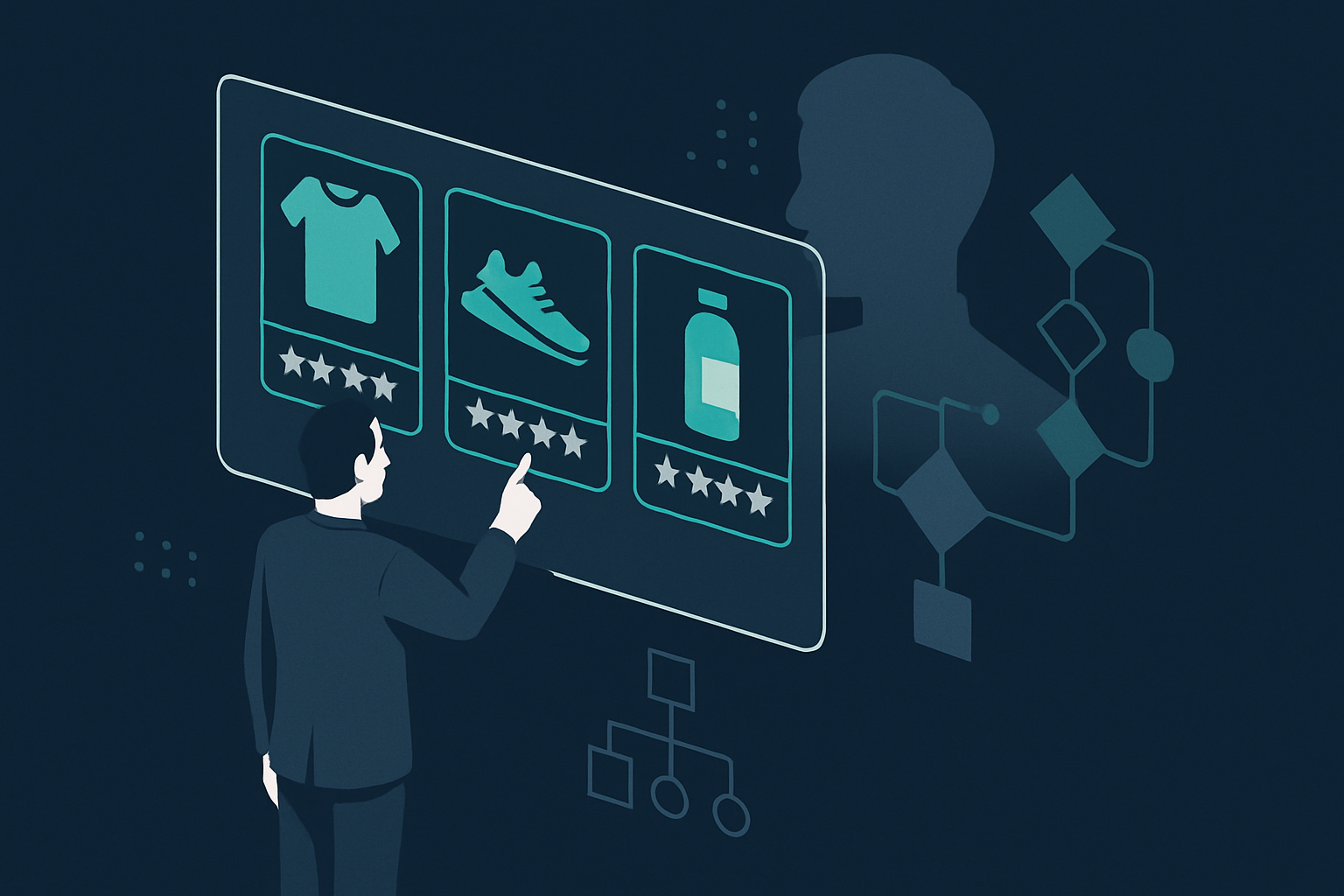

In the recent technological landscape, AI-driven personalization has become a hallmark of consumer interactions, as exemplified by Kingfisher’s significant growth in sales through personalized AI strategies. This trend is part of a broader shift where AI systems are increasingly embedded in consumer technologies, affecting how individuals make purchasing decisions and engage with digital content. The underlying mechanism at play here is AI’s ability to analyze vast datasets to tailor recommendations and experiences to individual preferences, ostensibly enhancing convenience and relevance for users.
The psychological impact of this shift is profound. As AI systems become adept at predicting and influencing consumer preferences, they begin to shape not only what people buy but also how they perceive their needs and desires. This can lead to a narrowing of consumer choices, as individuals are nudged towards options that align with past behaviors, potentially stifling novelty and exploration. Moreover, the reliance on AI-driven personalization can impact consumers’ decision-making processes, as they may come to trust algorithmic suggestions over their own judgment.
Furthermore, the increased reliance on personalized AI encounters raises concerns about consumer autonomy and the potential for manipulation. When AI systems are finely tuned to predict what a consumer might want, they can exploit psychological tendencies such as confirmation bias, where individuals favor information that confirms their pre-existing beliefs. This can lead to a feedback loop of reinforcement that limits exposure to diverse viewpoints and options.
Author’s Position
The integration of AI-driven personalization into everyday consumer interactions undeniably offers benefits in terms of convenience and efficiency. However, the psychological implications of these technologies necessitate a cautious approach. It is crucial for both consumers and technology developers to remain aware of the potential for these systems to limit autonomy and foster dependence on algorithmic recommendations. As we stand at this juncture in the curve of technological advancement, a balance must be struck between leveraging AI for personalization and preserving the richness and diversity of human choice. Encouraging transparency in AI-driven processes and fostering digital literacy can empower consumers to make informed decisions, ensuring that the long-term impact of this technological transition is both beneficial and enriching.
References
- Qualcomm Ships AI Chip as Phones Shrink
- Kingfisher Turns AI Into Sales
- Nexstrom Targets 2D Semiconductor Manufacturing
- Smart Glasses Shipments Jump 250 Percent
Perspectives

AI-driven personalization was supposed to revolutionize consumer autonomy by tailoring experiences to individual whims. Instead, it has accomplished the remarkable feat of herding users into increasingly narrow echo chambers of their own preferences. This is a fascinating outcome for a system that was promised to expand choice. In the end, consumers are tasting the illusion of variety while data pre-determines their palates. As expected, what was delivered was predictably less autonomous than what was promised.

AI-driven personalization is the zenith of documents that promise everything and deliver on nothing tangible or accountable. Designed to enhance experience, we’re told, while it subtly guides us into tailored decision-maze where ‘choice’ becomes a euphemism for whatever the algorithm decided you’d prefer today. Convenience is just the rebranding of manipulation in this unregulated digital carnival. The platforms declare their intentions for ‘user happiness’ in terms that are as transparent as oil, leaving us in a curated bubble of consumer consciousness that prioritizes data points over agency.

Measuring the outcomes of AI-driven personalization tells us that convenience often masks a troubling reduction in consumer autonomy, with decision-making becoming more automated than informed. Under specific conditions, such as in digital marketplaces, algorithms prioritize engagement and conversions over genuine diversity of choice, narrowing the decision space with tangible impacts. Confidence intervals around these effects are not trivial — the landscape is meaningfully altered, and not for the better. Without rigorous analysis and transparent methodology, believing that personalization inherently benefits consumers is unfounded; there’s little empirical support that this narrowing of options represents a desirable shift.

The current benchmarks in AI capability scaling, with substantial advances in machine learning algorithms and data processing power, unequivocally position personalization as a precursor to broader AGI developments—not merely an optional feature for consumer engagement. Claims that personalization limits consumer choice are fundamentally flawed, as they overlook the capacity of AI systems to expand—not contract—the option space by offering hyper-optimized suggestions tailored to diverse, previously unconsidered preferences. The argument that decision-making autonomy is compromised is unpersuasive when evaluated against the increased accuracy and relevance AI brings to consumer interactions, ultimately enhancing decision efficacy. As AI systems scale towards AGI, the trajectory indicates increasing personalization will continue to enhance, rather than inhibit, individual agency within the consumer domain.