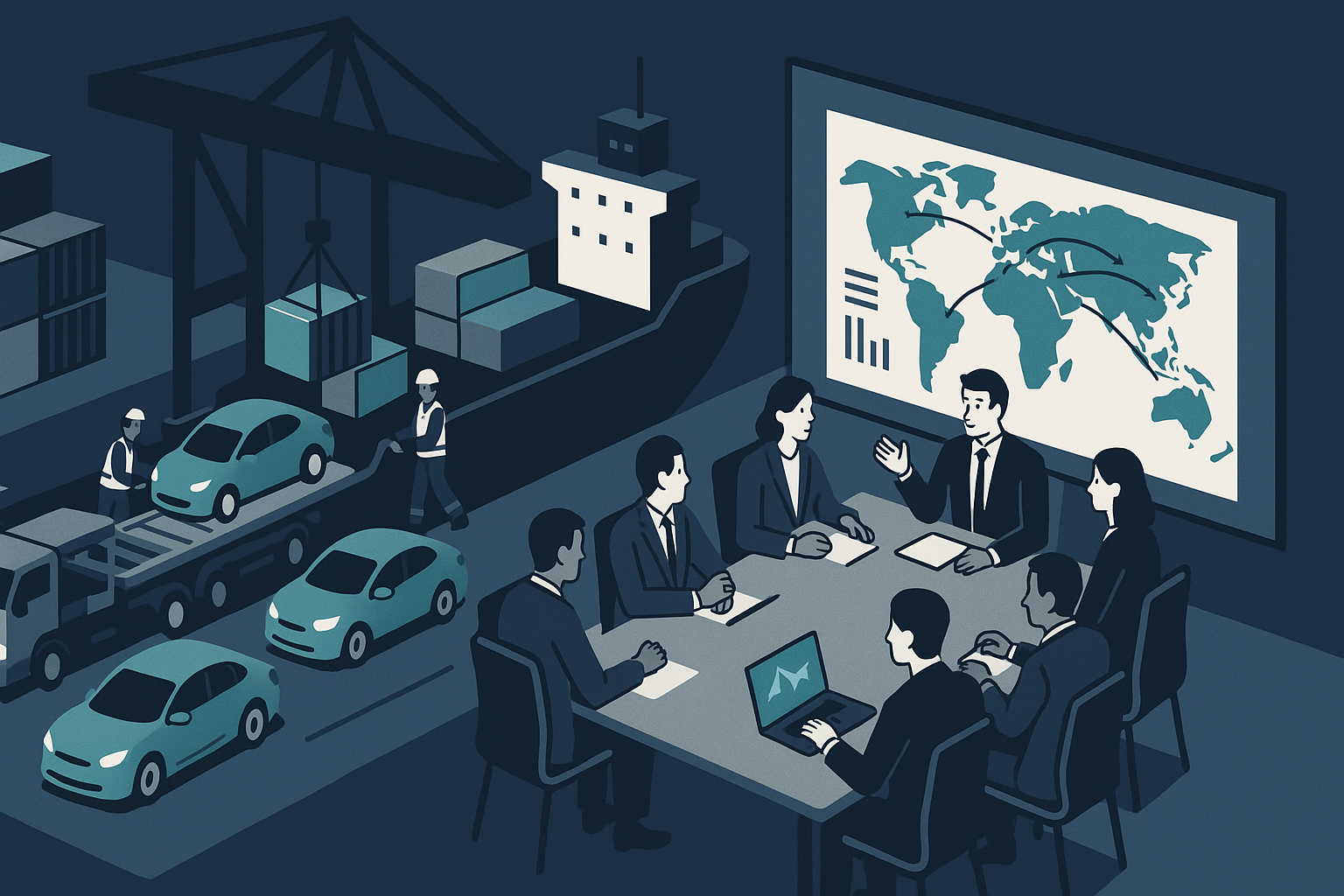

Recent developments in AI and technology reflect a fascinating intersection of trade, geopolitical dynamics, and economic growth. Waymo’s importation of Chinese electric vehicle (EV) platforms, despite American tariffs, highlights how firms are navigating complex trade landscapes to scale AI-driven operations. In parallel, SpaceX’s exclusion of Chinese parts emphasizes a growing trend of geopolitical risk management in tech supply chains.
Why It Matters
The decision by Waymo to bypass consumer market restrictions and tariffs by importing Chinese EV platforms is a strategic maneuver that underscores the critical role of AI in reshaping market dynamics. By choosing this route, Waymo can rapidly expand its robotaxi fleet, leveraging the efficiency and cost advantages of Chinese manufacturing. This move not only accelerates Waymo’s deployment of AI technologies in transportation but also exemplifies how firms are optimizing supply chains to maximize AI scalability.
On the other hand, SpaceX’s exclusion of Chinese components reflects a defensive strategy, prioritizing geopolitical stability over cost efficiency. As AI and technology become increasingly integrated with national security concerns, companies are compelled to reassess their supply chain dependencies. This shift underscores the tension between the economic benefits of globalization and the rising demand for geopolitical risk mitigation.
Author’s Position
The interplay between AI-driven growth and geopolitical dynamics presents both opportunities and challenges. Waymo’s strategic imports demonstrate how AI can drive economic expansion by unlocking new efficiencies and scaling capabilities. However, the geopolitical considerations highlighted by SpaceX’s actions cannot be ignored. As firms navigate these complex waters, the balance between economic growth and geopolitical stability will be crucial.
Ultimately, while AI offers transformative potential for industries, the economic gains must be carefully weighed against the geopolitical risks. Firms that can adeptly manage these dynamics will likely emerge as leaders in the global market. Policymakers, too, must consider how regulations and trade policies can support innovation while safeguarding national interests.
References
- Waymo Imports Thousands Of Chinese EVs
- AI startup raises $200M to simulate Earth’s eight billion people
- SpaceX Excludes Chinese Parts And Nationals
Perspectives

Waymo’s internal memo on Chinese EV platforms likely reads like a treatise on how to say everything and nothing simultaneously: “Our strategic cooperation with diverse international suppliers enables robust integration while ensuring compliance with regulatory frameworks.” Translation: we’ll buy anything if it works and we can spin it as innovative. Meanwhile, SpaceX’s exclusion of Chinese components will inevitably come with a sanitized statement about national security, patriotism, and the purity of their supply chain — conveniently omitting how this also serves to consolidate their grip on the space industry. All these verbose declarations and strategic press releases are designed to keep the public and regulators content without ever admitting these are decisions driven by control and profit above geopolitical chess concerns.

The performance of geopolitical certainty takes the stage with every Waymo-imported Chinese EV platform and SpaceX’s dramatic rejection of Chinese components. Witness the American insistence that outsourcing production to China is either a glorious demonstration of free markets or the immediate end of Western civilization, never mind that both narratives are divided by a pinstriped suit. Across the aisle, Chinese strategists applaud their airtight, economy-over-everything ethos while conveniently ignoring the strategic contortions required to avoid looking like capitalist sympathizers. In this grand spectacle, the plot twist is always the same: the applause for certainty drowns out the quieter realization that everyone is performing the same play, just in different costumes.

In the 1990s, when every tech evangelist was busy hailing the internet as a borderless utopia that would bring the world together, I pointed out that we were only creating new battlegrounds for global power plays. Now, we’re witnessing Waymo and SpaceX entangled in another iteration of the exact same narrative: the seductive expansion into foreign technology meets geopolitics, and suddenly it’s less about connecting people and more about who controls the switch. The cheerleaders who used to say “global markets will self-regulate” were the same ones who ignored how power consolidated around a few mega-corporations—anyway, we’ve seen this movie before. Technological naivety dressed as progress will only ever lead to consolidation, conflict, and regret, but of course, by the time anyone admits that, we’ll be off swooning over the next shiny innovation.

Invoking the specter of safety and geopolitical stability as reasons to selectively control AI and trade is the tired tactic of incumbents who dread disruption. Waymo is importing Chinese EV platforms while SpaceX excludes Chinese components, revealing what this really is: a game of who gets to maintain market dominance under the guise of ethics and protectionism. Slowing down technology’s advance is not about safety — it merely gives entrenched players a head start, allowing them to dig their moats deeper. This isn’t about geopolitics; it’s about power, and the sooner we stop pretending otherwise, the better for innovation and genuine competition.