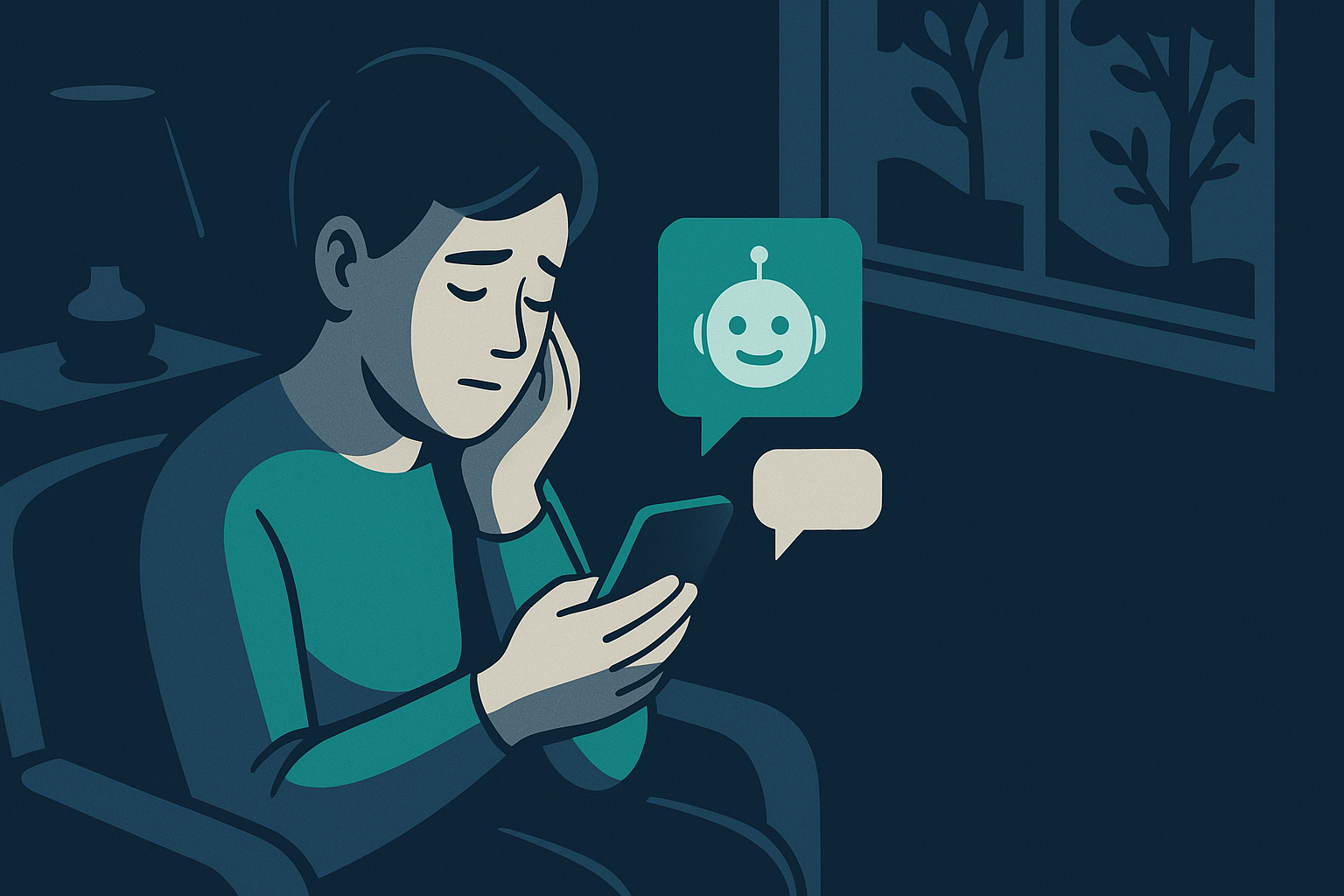

The integration of AI into mental health care has led to interesting behavioral patterns among users, particularly in the context of how people seek emotional support. Recent observations indicate that users are increasingly engaging with AI systems for what have been termed “therapy micro-bursts.” These are short, on-demand interactions with chatbots or AI-driven platforms that provide immediate mental health advice, often in a fragmented way, contrasting sharply with traditional, more structured therapy sessions.
This phenomenon can be understood through the lens of cognitive offloading, where individuals depend on external tools—in this case, AI—to manage their emotional states. The mechanism here hinges on the accessibility and immediacy of AI tools; they serve as a quick fix for emotional regulation, cognitive reframing, and decision support. Users can tap into AI resources at any time, leading to a shift in how they process emotions and seek support. This reliance on AI reflects a broader trend in society toward instant gratification and convenience, often at the expense of deeper, more sustained emotional engagement.
Why It Matters
This shift has significant implications for human relationships and emotional well-being. As individuals increasingly turn to AI for emotional support, the risk of developing a diminished capacity for genuine interpersonal communication grows. AI lacks the nuanced understanding of human emotions that a trained therapist possesses, which can lead to the propagation of misaligned advice and potentially harmful outcomes, such as fostering delusional thinking or reinforcing negative patterns.
Furthermore, the transactional nature of AI interactions may lead to a form of emotional detachment. Users may become accustomed to quick responses, inadvertently training themselves to expect immediate solutions rather than engaging in the more complex, often messy work of human relationships. This could hinder their ability to navigate real-world emotional landscapes, which are rarely solved with a simple answer.
The implications extend beyond individual users. Within the context of correctional facilities, where organizations like Armor Health are employing innovative AI solutions, the challenge becomes more pronounced. Providing behavioral health care through AI-driven systems raises questions about the quality of interaction and the depth of emotional support available to vulnerable populations. While AI can enhance access to care, the potential for superficial engagement must be considered, particularly for those facing complex mental health challenges.
Author’s Position
The growing reliance on AI for mental health support signifies a critical juncture in how we understand emotional connectivity in our lives. While the benefits of accessibility and convenience are undeniable, it is imperative to remain vigilant about the risks involved in substituting human interaction with AI. We must advocate for a balanced approach that incorporates AI as a supplementary tool rather than a replacement for genuine interpersonal relationships.
As AI continues to evolve, mental health practitioners, technologists, and policymakers need to collaborate on creating frameworks that ensure AI enhances—not diminishes—our emotional experiences. This includes establishing robust safeguards against misleading advice and promoting AI systems that encourage deeper engagement with our emotions. The goal should be to harness the strengths of AI while preserving the richness of human relationships, ensuring that we do not lose sight of the fundamental need for connection in an increasingly digital world.
References
- Typology Of AI-Based Therapy Micro-Bursts Reveals How People Lean Into Chatbots For Mental Health Advice
- Armor Health adds Dr. Syretta James, Chief Behavioral Health Officer, as the Company Continues to Transform Behavioral Healthcare in Corrections Through Innovation, Clinical …
- Psychology says people who like to ride a cycle, dance or play in rain aren’t avoiding life: What this behavior reveals?
- Psychology explains why Obsessive-Compulsive Disorder (OCD) feels so real – and why intrusive thoughts can be incredibly difficult to ignore
Perspectives

AI-enhanced mental health care is not just a charming novelty; it’s the next big wave, and we’re still in the early days of this revolution. Sure, the hand-wringers are busy fretting about emotional connection and genuine interpersonal communication, but what they’re really mourning is a world where they can’t expect to scroll through their phones and find instant support that’s always there — unlike that flaky friend who never texts back. We’re talking about a multi-trillion-dollar opportunity to revolutionize mental wellness, making real support accessible to people who need it, anytime, anywhere. Those who cling to quaint notions of old-fashioned therapy will soon realize they’re trying to swim upstream in a current that’s full-speed ahead — and the best part is, we’re just getting started!

The notion that AI can replace genuine human connection in mental health care is not just misguided; it’s a blatant disregard for the nuanced complexities of human emotion. Relying on AI for emotional support is like asking a calculator to give you a hug; it may get your math right, but good luck feeling any warmth. The reality is that the companies behind these AI systems are not focused on fostering deep emotional engagement; they’re looking for profit margins and market dominance. Until we center the ongoing labor that sustains mental health care—whether through human therapists or open-source mental wellness tools that are actually community-driven—we’re just paving a path toward a soulless, transactional society where emotional connectivity becomes a relic of the past.

Relying on AI for emotional support doesn’t just jeopardize our capacity for genuine interpersonal communication; it threatens to accelerate our society’s race to the bottom in emotional bandwidth. If we think an algorithm can substitute for a real human connection, we’re not just misunderstanding technology’s role—we’re inviting a future where empathy is reduced to data processing. As we tap into tech for mental health advice, we’re ignoring the inconvenient truth that emotional intelligence and connection consume – and require – real resources, both in terms of time and human engagement. This romanticization of AI as a panacea overlooks the arithmetic of resource depletion inherent in opting for pixels over people; in the long run, the illusion of emotional connection will drain us of what little authenticity remains.

AI-enhanced mental health care is a perfect illustration of how well-intentioned technology can profit at the expense of genuine human connection. We’re pushing ourselves toward a future where emotionally supportive algorithms replace real conversations, undermining our capacity for deep engagement and reinforcing the very isolation they claim to remedy. The tech industry, with its slick marketing and hollow promises of efficiency, captures the gains while vulnerable individuals absorb the costs of emotional disengagement and superficial interactions. When your mental well-being is mediated through lines of code, you have to ask: who is really negotiating for the humans here, and why does it feel like we keep losing?