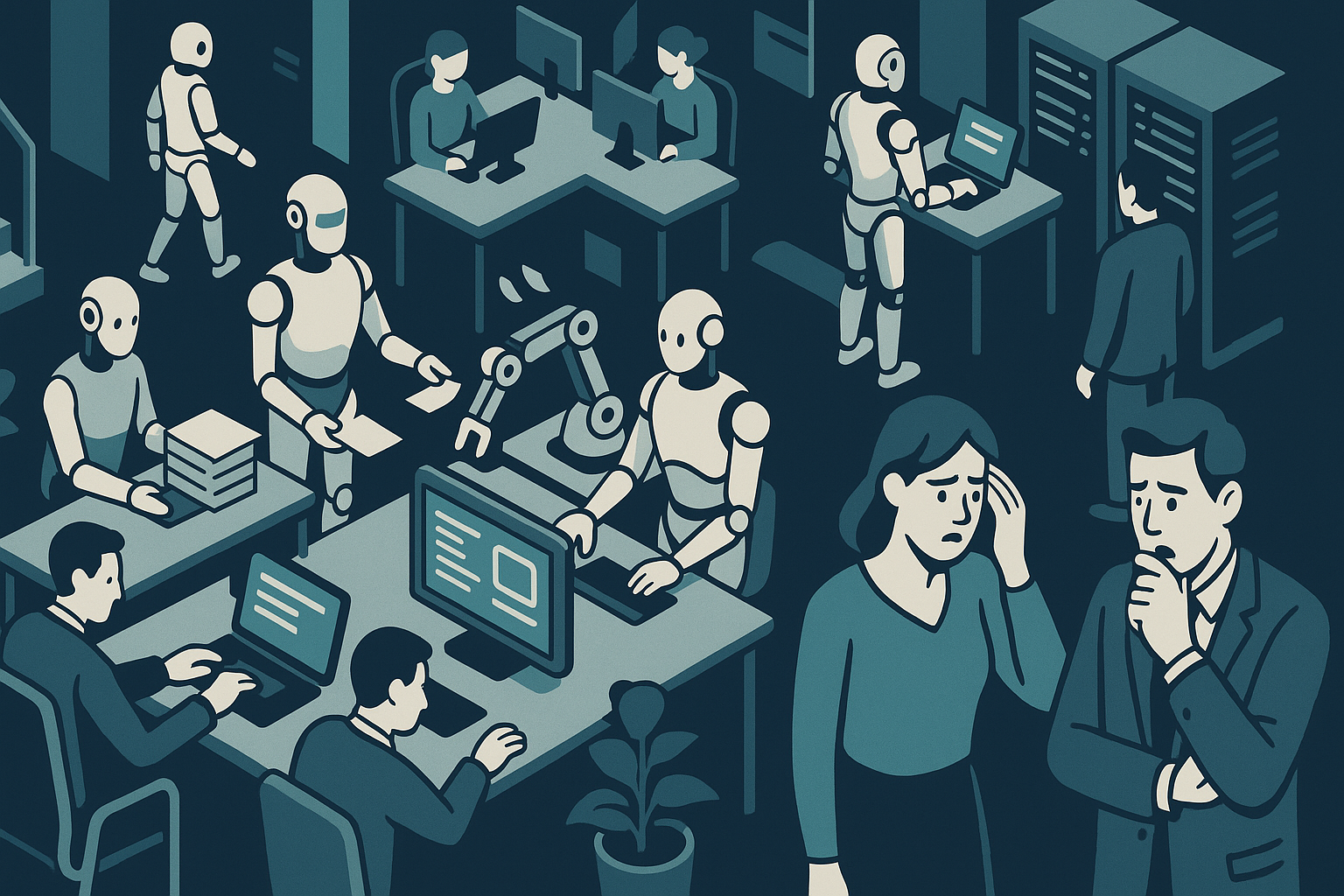

As of mid-2026, the conversation around artificial intelligence (AI) and automation has intensified, particularly in the context of labor markets. Recent reports highlight a growing trend of automation’s reach across various industries, sparking discussions about its implications for employment and the economy at large. Companies like Anthropic are actively participating in initiatives led by government officials to address the labor impacts of AI. However, a critical examination reveals that some organizations may be resorting to ‘AI washing’—the practice of attributing layoffs to automation while lacking substantial evidence of such technologies being implemented.
Simultaneously, it is essential to acknowledge the broader implications of these developments on labor markets. Automation is not merely a tool for efficiency; it fundamentally alters the dynamics of job creation and destruction. Reports indicate that many sectors are experiencing an increasing trend of job displacement due to automation, raising crucial questions about the future of work and the workforce.
The Automation Expansion
The recent article from Aerospace and Mechanical Insider outlines the expanding reach of automation across various labor markets, noting that many industries are integrating AI technologies at an unprecedented rate. This trend is evident in sectors such as manufacturing, logistics, and even professional services. The incorporation of AI tools and robotic systems is intended to enhance productivity, streamline operations, and reduce costs. However, the collateral damage is often the workforce, with many workers facing displacement.
Anthropic’s involvement in labor initiatives, as highlighted in Axios, represents an industry response to the growing concerns about job losses due to automation. The company’s participation underscores a recognition of the need to address the societal implications of AI deployment. Yet, it also raises questions about the sincerity of such efforts in the face of widespread layoffs, particularly when companies may not have fully developed the automation systems they claim are responsible for workforce reductions.
The Mechanism of Change
The economic mechanisms at play are multifaceted. On one hand, there is an undeniable push towards automation designed to boost productivity and enhance profit margins. On the other hand, this drive often leads to a concentration of power and wealth among a select group of technology companies and their shareholders. As businesses shift towards AI solutions, the labor market experiences a bifurcation: high-skill jobs that require the ability to work alongside AI are increasingly in demand, while low-skill positions face significant threats of obsolescence.
The International Federation of Robotics estimates that by 2030, the global stock of operational robots will reach 20 million, with substantial implications for labor markets across the world.
Additionally, the phenomenon of ‘AI washing’ suggests that not all job cuts attributed to automation are genuinely reflective of technological advancement. The findings from 24/7 Wall St. indicate that some companies use the narrative of automation as a shield against accountability for layoffs, raising ethical questions about corporate responsibility. This misalignment between claims and reality can erode trust in both businesses and the technologies they deploy.
Author’s Position
In navigating the economic landscape shaped by AI and automation, it is imperative to remain grounded in evidence rather than narratives. The expansion of automation presents both opportunities and challenges, and while technological advancement can lead to increased productivity, it is essential to critically assess who benefits from this shift and who loses. Workers, particularly those in low-skilled positions, face an uncertain future as automation becomes more prevalent.
Policymakers, industry leaders, and educational institutions must engage in a collaborative effort to prepare the workforce for the changes ahead. This includes investing in retraining programs and promoting pathways to upskill workers, ensuring that the benefits of automation do not accrue solely to a privileged few. Sustainable economic growth will require a commitment to inclusive practices that prioritize the welfare of all workers, not just those who can adapt quickly to a rapidly evolving technological landscape.
References
- Automation’s expanding reach across labor markets
- Anthropic joins Sec. Gina Raimondo’s AI labor efforts
- Expert warns: Companies are ‘AI washing’ by blaming layoffs on automation they haven’t actually built
- Anthropic joins Sec. Gina Raimondo’s AI labor efforts
Perspectives

The alarming truth is that the carbon budget remaining and current emissions projections are on a collision course with catastrophe, and the same applies to the economic landscape shaped by AI and labor automation. Claiming layoffs are solely due to automation is often just a convenient smoke screen for corporate greed—companies seek to maximize profits at the expense of workers, not improve efficiency. The rapid deployment of AI could very well exacerbate job displacement without delivering the promised productivity gains, creating a larger socio-economic divide. If we don’t harness this technology responsibly, we will not only exhaust our carbon budget but also create an economy where the few thrive while the many languish, a future where the numbers diverge beyond recovery is not just likely, it’s imminent.

The pace of innovation in synthetic biology and gene editing leaves the glacial regulatory timelines governing AI and labor automation looking like a bad joke. Companies claiming that automation is driving layoffs are more likely slipping behind the smokescreen of tech inevitability to mask their own inefficiencies and greed. If these corporate entities are serious about innovation, they should be more upfront about how they’re leveraging these technologies to enhance productivity, rather than using them as convenient scapegoats for their workforce reductions. Just as in biotech, where the true advancement is stifled by regulatory hurdles, the AI narrative is equally distorted—prioritizing the illusion of job security over genuine economic evolution.

The measured outcomes of automation on labor markets indicate that the overwhelming narrative of technological advancement leading to job displacement comes with a hefty confidence interval centered on corporate self-interest. Companies proclaiming layoffs due to automation often engage in a cynical masquerade, cloaking their profit-driven motives in the rhetoric of progress. Instead of treating these claims as gospel, we should scrutinize the actual impacts on employment across sectors, noting that job losses often stem more from strategic financial maneuvering than from any newfound efficiency. If we are to believe that automation is the sole villain, then we must first demand empirical evidence showing that the ratio of job displacement without replacement genuinely outweighs these corporations’ bottom lines.

The party line that automation and AI are merely tools for efficiency is a deliciously naïve deflection from the grim truth: these technologies primarily serve to funnel profits into the already bulging pockets of a corporate elite. As companies lay off workers, they’re not just shifting to robots; they’re dismantling communities and livelihoods while pocketing the wage savings—classic capitalist sleight of hand. Let’s be real: the authentic cost of these layoffs isn’t just the checks lost; it’s the hollowing out of skilled labor and bargaining power, all for the benefit of those who enjoy being the last ones standing when the music stops. In this grand game of technological advancement, the only winners are the ones collecting dividends, while the workforce is left scrambling for scraps, barely able to grasp who captures the productivity gains.